Digital marketing is entering a transformative era, with global ad spend set to surpass £200 billion by 2026 and ppc ads leading this unprecedented surge. Businesses are facing a landscape shaped by rapid innovation, advanced automation, and tighter privacy regulations.
This guide arms you with in-depth, practical insights to master ppc ads in 2026. Discover how AI, shifting consumer behaviour, and evolving platforms are rewriting the rules of paid search and display.
Imagine reaching your ideal audience and achieving record-breaking conversions. Ready to future-proof your strategy? Dive in and unlock the full potential of ppc ads in a fiercely competitive online world.
Understanding PPC Ads: Fundamentals & 2026 Landscape
Pay-Per-Click (PPC) advertising remains a cornerstone of digital marketing as we head into 2026. At its core, PPC ads allow businesses to pay only when someone clicks on their ad, making every pound spent accountable and measurable. As the digital ecosystem evolves, understanding how ppc ads function is more crucial than ever. For a deeper dive into the basics, see Pay-Per-Click Advertising Explained.

PPC ads in 2026 span a diverse range of models, each tailored to different marketing objectives. The most established format is search advertising, where ads appear alongside search engine results. Display ads leverage visually engaging banners across websites, while shopping ads feature product listings with images and prices. Social PPC ads thrive on platforms like Meta and TikTok, targeting users based on interests and behaviours. Video ads, particularly on YouTube and emerging networks, continue to rise in popularity. Newer formats, such as interactive and augmented reality ads, are gaining traction as brands seek innovative ways to capture attention with ppc ads.
Several key components drive PPC success. Keywords remain foundational, guiding ads to relevant queries and audiences. Bidding strategies determine how much advertisers are willing to pay for each interaction. Compelling ad copy, paired with strong calls-to-action, increases click-through rates. High-quality landing pages ensure continuity and maximise conversions. Quality Score, an algorithmic rating used by platforms like Google Ads, rewards relevancy and user experience, ultimately lowering costs for well-optimised ppc ads.
A variety of major platforms dominate the PPC landscape in 2026. Google Ads leads with broad reach and versatility, from search to shopping. Microsoft/Bing Ads offers a valuable alternative, especially for certain demographics. Meta, encompassing Facebook and Instagram, excels in social and visual formats. LinkedIn is the top choice for B2B campaigns, focusing on professional targeting. TikTok’s rapid ascent has made it a powerhouse for video and influencer-driven ppc ads. Amazon remains essential for product-focused campaigns, while YouTube continues to set the standard for video advertising.
Market data underscores the explosive trajectory of PPC. Global PPC ad spend is projected to surpass £200 billion in 2026, with Google and Meta maintaining the largest market shares. Average cost-per-click (CPC) trends show modest increases, with intensified competition in high-value verticals. Table 1 below summarises estimated platform market shares and average CPCs for 2026:
| Platform | Est. Market Share (%) | Avg. CPC (£) |
|---|---|---|
| Google Ads | 38 | 1.30 |
| Meta (FB/IG) | 25 | 0.95 |
| Amazon | 15 | 1.10 |
| TikTok | 10 | 0.80 |
| Microsoft/Bing | 7 | 1.15 |
| 5 | 2.20 |
Privacy regulations are reshaping PPC ads. The tightening of GDPR enforcement and the gradual deprecation of third-party cookies challenge traditional targeting methods. In response, marketers are prioritising first-party data, consent-driven campaigns, and privacy-safe measurement tools to maintain campaign effectiveness.
AI and automation have transformed how ppc ads are managed in 2026. Machine learning powers smart bidding, optimising bids in real time for conversions or return on ad spend. Automated creative tools personalise ad content based on user intent and context. Platforms like Google’s Performance Max campaigns consolidate channels and automate much of the optimisation process, freeing up marketers to focus on strategy and creative direction.
Examples of this evolution are everywhere. Google’s Performance Max unifies search, display, shopping, and video within a single campaign type. TikTok’s surge in paid social is fuelled by AI-driven targeting and short-form video innovation. Amazon Sponsored Products now leverages predictive algorithms for product placements, enhancing visibility and sales.
The PPC landscape in 2026 is unmistakably omnichannel, data-driven, and intent-focused. Advertisers who embrace these shifts are well positioned to leverage ppc ads for maximum impact and sustainable growth.
Planning a Winning PPC Strategy for 2026
A robust PPC strategy is the backbone of digital marketing success in 2026. With the landscape evolving rapidly, careful planning ensures your ppc ads deliver measurable outcomes, even as competition intensifies and new technologies emerge.
Setting Clear Objectives & KPIs
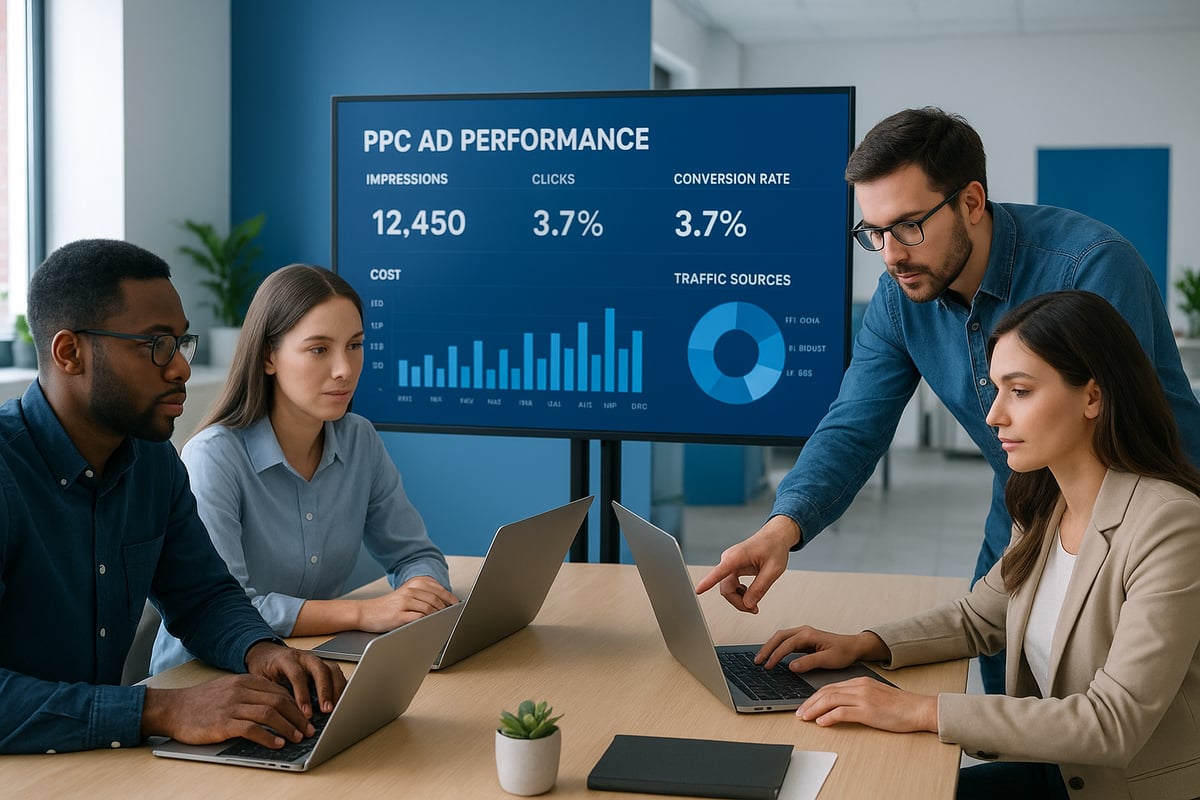
Every successful ppc ads campaign starts with crystal-clear objectives. Align your PPC goals with wider business aims, whether you are seeking increased sales, more qualified leads, or enhanced brand visibility.
Define actionable KPIs to measure progress. Common examples include:
- Click-through rate (CTR)
- Cost per acquisition (CPA)
- Return on ad spend (ROAS)
- Conversion rate
For instance, an e-commerce brand might prioritise ROAS and sales volume, while a B2B company focuses on lead quality and CPA. According to industry studies, businesses with well-defined KPIs achieve up to 30% higher ROI from their ppc ads campaigns. If you want to see how these objectives translate to real-world results, explore Ecommerce Marketing with PPC for practical examples and best practices.
Regularly review and refine your KPIs as your strategy matures.
Audience Targeting & Segmentation
In 2026, targeting the right audience for your ppc ads is more precise than ever. Leverage first-party data and CRM integrations to build detailed audience profiles. AI-driven insights now enable predictive modelling, helping you anticipate user behaviours and intent.
Advanced segmentation allows you to tailor ads based on:
- Demographics (age, gender, location)
- Interests and affinities
- Behaviours (past purchases, site engagement)
- Customer lifecycle stages
For example, retargeting high-intent website visitors with tailored offers often outperforms broad prospecting. By segmenting audiences, your ppc ads become more relevant, driving higher engagement and conversions.
Continually experiment with your segmentation strategies to uncover new high-performing segments.
Budgeting & Forecasting
Effective budgeting is key to sustaining and scaling ppc ads performance. Set realistic budgets that align with your objectives and account for market competition. Automated budget allocation tools and scenario planning are now standard, making it easier to adapt spend based on real-time data.
AI-powered forecasting models help predict spend and results with greater accuracy. Consider average SME ppc ads budget allocations by channel in 2026 when planning your strategy. Allocate more to platforms and formats that consistently deliver results, but always retain flexibility to shift funds when new opportunities arise.
Regular monitoring and adjustment of budgets ensure you avoid overspending and maximise ROI.
Competitive & Keyword Research
Staying ahead in ppc ads requires diligent research. Use advanced keyword planners and competitive intelligence platforms to identify high-value, low-competition keywords. Analysing competitor ad strategies reveals market gaps you can exploit.
Essential tools include:
- Google Keyword Planner
- SEMrush
- Ahrefs
Evaluate which keywords drive conversions for your rivals and adapt your approach accordingly. Look for opportunities to bid on emerging search terms or negative keywords to improve efficiency.
A continuous loop of research and refinement keeps your ppc ads relevant and competitive in a fast-changing marketplace.
Creating High-Performance PPC Campaigns
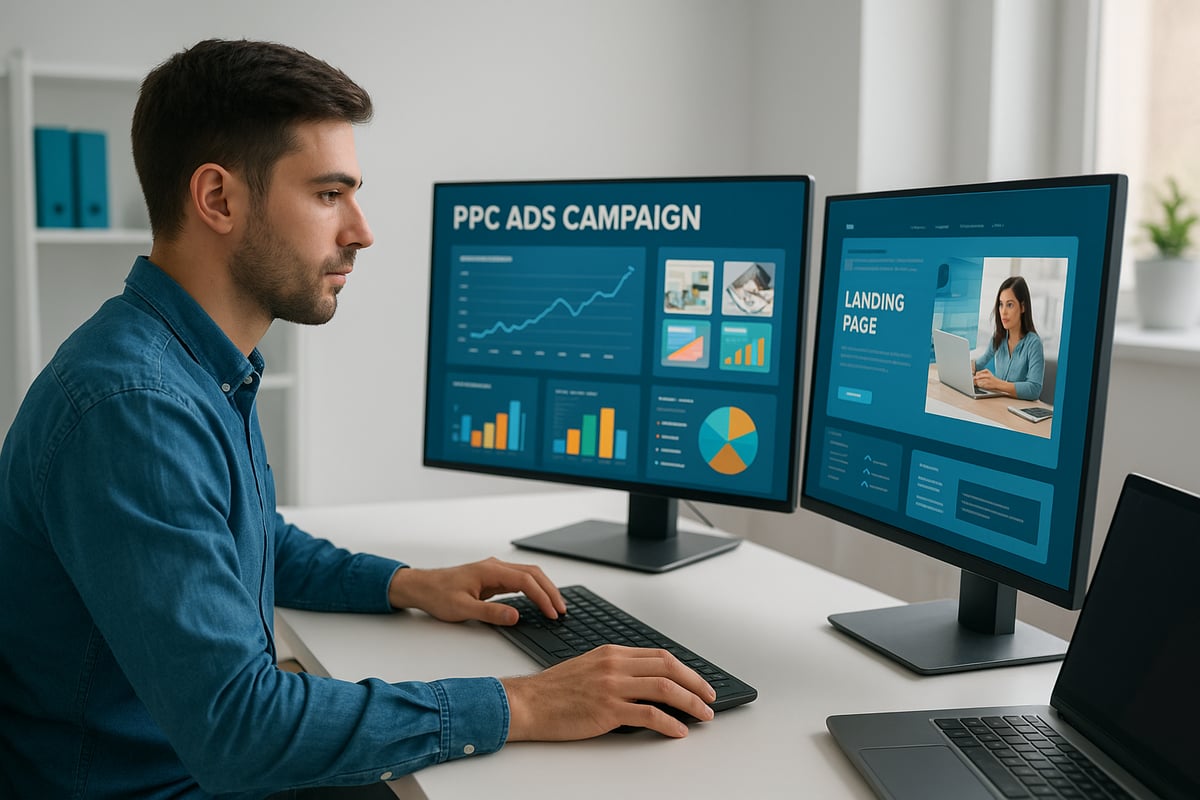
To achieve exceptional results with ppc ads in 2026, you need more than just a basic understanding of paid search. High-performance campaigns are built on a foundation of compelling creative, seamless user journeys, smart automation, and precise measurement. Let us break down the essential elements that transform ordinary ppc ads into consistent revenue drivers.
Crafting Compelling Ad Copy & Creative
Great ppc ads start with persuasive, benefit-focused ad copy that grabs attention and drives action. Headlines must be direct, relevant, and offer a clear value proposition. Descriptions should reinforce the promise, highlight unique selling points, and include a strong call to action.
In 2026, dynamic ad formats and personalisation have become standard. Responsive search ads allow AI to mix and match headlines and descriptions for optimal performance, while static text ads provide more control but less flexibility. Always test multiple ad variants to discover what resonates with your audience.
Consider these best practices:
- Use emotional triggers and address pain points.
- Incorporate keywords naturally for improved relevance.
- Leverage personalisation by inserting location or product details.
A/B testing is crucial. By experimenting with different headlines, descriptions, and calls to action, marketers can improve click-through rates and conversion rates for their ppc ads.
Landing Page Optimisation
Landing pages are where your ppc ads convert interest into results. In 2026, users expect fast, mobile-first experiences that match the promise of your ad. Consistency between ad copy and landing page messaging is key to building trust and reducing bounce rates.
The most effective landing pages are:
- Optimised for speed, loading in under two seconds.
- Designed with a clear, singular call to action.
- Enhanced with interactive elements, such as videos or quizzes.
Including video can boost conversions by up to 80 percent, making it a powerful tool for engaging visitors. Social proof, like testimonials and reviews, further increases credibility. Review heatmaps and user feedback regularly to refine layouts and improve conversion rates for your ppc ads.
Bidding Strategies & Automation
Choosing the right bidding strategy can make or break your ppc ads performance. In 2026, marketers balance manual and automated bidding based on campaign goals and complexity. Manual bidding offers granular control, while automated solutions leverage AI to adjust bids in real time for maximum results.
Smart bidding strategies, such as Target CPA, Target ROAS, and Maximise Conversions, are now the norm. These approaches allow you to focus on specific outcomes, letting machine learning handle the heavy lifting.
For a deeper dive into automation and bidding tactics, see Google PPC Ads Strategies. Automated tools can help you quickly identify winning combinations, reduce wasted spend, and improve ROI on your ppc ads.
Ad Extensions & Enhancements
Ad extensions are essential for making your ppc ads more visible and engaging. Sitelinks, callouts, structured snippets, and lead forms provide additional information and interactive opportunities, increasing both click-through rates and ad relevance.
In 2026, new features such as interactive and AI-driven extensions have emerged. These enable real-time personalisation, allowing users to interact with ads directly by viewing product options, booking appointments, or accessing promotional codes.
Consider this case study: A retailer using price and promotion extensions saw a notable increase in clicks and conversions, as customers could compare deals instantly. By leveraging relevant extensions, ppc ads can stand out in crowded search results and capture more qualified leads.
Tracking, Measurement & Attribution
Robust tracking and measurement are the backbone of high-performance ppc ads. In 2026, marketers use tools like GA4 and server-side tracking to ensure accurate data collection across devices and platforms.
Multi-touch attribution models have become vital, helping businesses understand the full customer journey and allocate budget more effectively. Integrating ppc ads data with CRM and analytics platforms provides a holistic view of performance, enabling smarter decisions and ongoing optimisation.
For example, tracking conversions across mobile, desktop, and offline channels reveals which touchpoints drive the most value. By constantly reviewing attribution data, you can refine your strategy and ensure your ppc ads deliver sustainable, measurable growth.
Optimising & Scaling PPC Campaigns
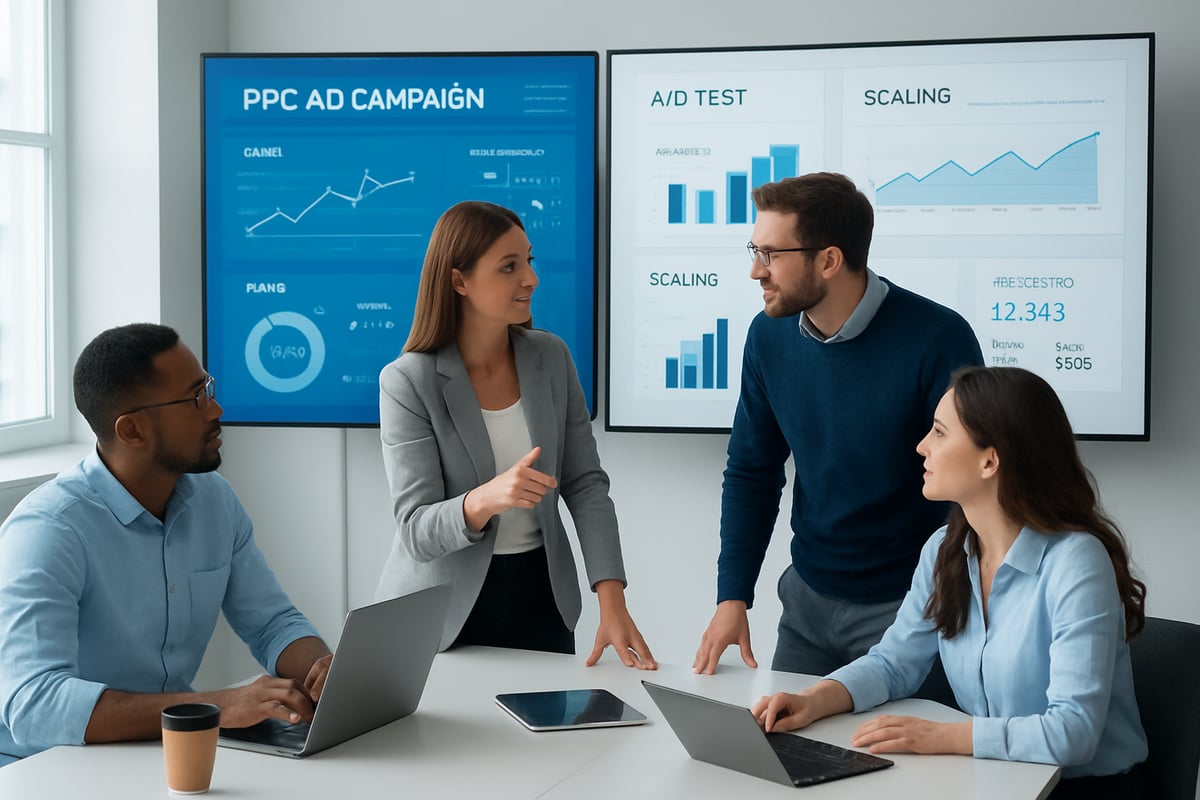
Optimising and scaling ppc ads is essential for maximising return on investment in today's competitive landscape. As campaign complexity increases, businesses must adopt a strategic approach to continuous improvement, data-driven decision making, and efficient expansion.
Continuous Testing & Experimentation
Successful ppc ads rely on relentless testing and experimentation. By regularly running A/B and multivariate tests, marketers can refine ad copy, landing pages, and targeting criteria for improved performance.
Automation has transformed the speed and scale of testing. AI-driven platforms now enable rapid, data-backed experimentation across keywords, audiences, and creative formats. For example, a retailer increased their ROAS by 35% through iterative testing of messaging, images, and offer structures.
To stay ahead, leverage smart automation tools that streamline test implementation and analysis. For more on how AI is accelerating experimentation, see AI’s impact on PPC automation.
Data Analysis & Performance Review
Analysing campaign data is the backbone of optimising ppc ads. Dashboards and automated reports help marketers identify trends, surface anomalies, and uncover new optimisation opportunities.
Key metrics to monitor for sustained growth include:
| Metric | Description |
|---|---|
| CTR | Click-through rate |
| CPA | Cost per acquisition |
| Conversion Rate | Percentage of visitors converting |
| ROAS | Return on ad spend |
| Quality Score | Ad relevance and performance |
By routinely reviewing these metrics, teams can quickly adapt strategies, allocate budgets effectively, and spot emerging patterns before competitors do.
Conversion Rate Optimisation (CRO)
CRO is a pivotal element in driving better results from ppc ads. Start with clear, concise forms, strong calls to action, and prominent trust signals to reduce friction for users.
Consider these best practices:
- Use heatmaps and session recordings to understand user behaviour.
- Incorporate feedback surveys to identify barriers to conversion.
- Test different layouts, headlines, and colour schemes.
A service business, for instance, saw a 50% increase in leads after implementing CRO improvements based on user feedback and data insights.
Scaling Successful Campaigns
Once your ppc ads demonstrate consistent results, scaling becomes the next focus. Identify campaigns with the highest performance, then gradually increase budgets while monitoring ROI.
Expand to new platforms, audiences, and geographic locations for broader reach. Utilise lookalike and similar audience tools to find new customers with high intent. Brands that scale ppc ads across channels typically experience growth twice as fast as those focused on a single channel.
Always ensure that scaling is accompanied by ongoing optimisation to maintain efficiency and strong returns.
Navigating Emerging PPC Trends & Technologies in 2026
The landscape for ppc ads in 2026 is rapidly transforming, driven by technological innovation and shifting consumer expectations. Staying ahead means understanding the trends shaping tomorrow’s campaigns. Let’s explore the most significant developments and how they can impact your strategy.
AI & Machine Learning in PPC
Artificial intelligence is now at the core of ppc ads, powering everything from predictive targeting to automated creative optimisation. In 2026, machine learning algorithms analyse vast datasets in real time, identifying patterns and audience segments with precision no human can match.
Advertisers leverage AI to manage bidding strategies, ensuring budgets are allocated to the highest-converting searches and placements. Automated creative tools produce tailored ad variations, dynamically adjusting messaging based on user intent and context. For example, Google's Performance Max campaigns use AI to unify search, display, and video, outperforming manual setups by up to 30 percent.
Key benefits of AI in ppc ads include:
- Real-time bid adjustments for maximum ROI
- Personalised ad delivery at scale
- Predictive audience modelling for better targeting
With these advancements, marketers can focus on strategy while AI handles the complexities of optimisation.
Privacy, Data & Tracking Changes
The privacy landscape for ppc ads has shifted dramatically. With third-party cookies nearing extinction and regulations like GDPR and CCPA tightening, advertisers must rethink data strategies. Consent-based marketing is now essential, and first-party data collection has become a top priority.
Modern ppc ads rely on robust CRM integrations and privacy-safe tracking methods, such as server-side tagging and enhanced conversion APIs. These technologies help maintain accurate measurement without compromising user trust.
Advertisers must also adapt to limitations in cross-device and multi-touch attribution. Embracing privacy-forward practices ensures compliance and builds consumer confidence, while still enabling effective campaign performance.
Voice & Visual Search Advertising
Voice and visual search are revolutionising how users interact with ppc ads. Smart speakers, virtual assistants, and visual search tools like Google Lens have opened up new advertising opportunities, particularly for retailers and e-commerce brands.
Voice search ads focus on conversational queries, requiring a shift in keyword strategy and ad copy. Visual search enables users to discover products through images, leading to shoppable ad formats that streamline the path to purchase. According to voice and visual search advertising trends, these channels are experiencing rapid growth and changing the competitive landscape.
Marketers who adapt their ppc ads for these emerging formats can connect with users at new touchpoints, driving engagement and conversions.
New PPC Platforms & Ad Formats
In 2026, the range of platforms and ad formats for ppc ads has expanded significantly. TikTok, Amazon, and other social platforms now command substantial market share, while interactive, AR, and video ads are reshaping user expectations.
Video ads, in particular, account for 40 percent of ppc spend, reflecting consumers’ preference for rich, immersive content. Interactive ad formats—such as polls, quizzes, and AR try-ons—invite engagement and enhance brand recall.
Choosing the right mix of platforms and formats is crucial for maximising reach and ROI. By staying informed about these innovations, businesses can ensure their ppc ads remain relevant and competitive in a fast-evolving digital world.
Choosing the Right PPC Platforms for Your Business
Selecting the right platforms for your ppc ads is crucial in 2026. With digital ad spend projected to reach new heights, businesses must make data-driven choices to maximise ROI. According to global digital ad spend projections, the landscape is dominated by a handful of core platforms, each offering unique opportunities for advertisers.
Comparing Major PPC Platforms
To help you choose wisely, here is a snapshot of the leading ppc ads platforms in 2026:
| Platform | Audience Focus | Ad Formats | Strengths | Avg. CPC (£) |
|---|---|---|---|---|
| Google Ads | Universal | Search, Display, Shopping, Video | Reach, intent, automation | 0.70 – 1.20 |
| Microsoft/Bing | B2B, older demos | Search, Display, Shopping | Lower CPC, desktop users | 0.50 – 0.90 |
| Meta (FB/IG) | Broad, social | Image, Video, Carousel, Stories | Targeting, engagement | 0.60 – 1.10 |
| B2B, professionals | Sponsored content, InMail, Video | Precision B2B, job targeting | 2.50 – 5.00 | |
| TikTok | Gen Z, Millennials | Short video, interactive, AR | Virality, creative formats | 0.80 – 1.30 |
| Amazon | Shoppers, e-commerce | Sponsored Products, Display, Video | Purchase intent, product focus | 0.70 – 1.40 |
| YouTube | All, esp. younger | Video, Shorts, Display | Video reach, branding | 0.50 – 1.20 |
Each platform brings distinct advantages for ppc ads, from Google's vast reach to LinkedIn's professional targeting.
Choosing Platforms by Business Type and Goals
Your business goals should drive platform selection. For B2B lead generation, LinkedIn’s professional audience and advanced targeting make it a strong choice. E-commerce brands often see the best results from Google Shopping and Amazon, where purchase intent is highest.
If your aim is brand awareness or reaching younger demographics, Meta, TikTok, and YouTube offer creative, high-engagement formats for ppc ads. Consider your budget as well: LinkedIn typically commands a higher CPC, while Microsoft/Bing may offer lower costs for the right audience.
Platform-specific ad formats can also influence success. For instance, responsive search ads on Google or interactive video ads on TikTok can significantly improve engagement rates.
Insights: Diversify or Focus?
Should you spread your ppc ads budget across multiple platforms or concentrate on one? The answer depends on your audience and objectives. Brands seeking rapid growth often diversify, leveraging lookalike audiences and testing new formats. However, focusing on a core channel can be more efficient for niche markets or smaller budgets.
Regularly benchmark performance against industry leaders. If you need expert support or want to compare your campaigns, consult top pay-per-click companies for insights and potential partnerships.
Ultimately, revisit your platform mix regularly. The ppc ads landscape is evolving fast, and staying flexible will keep your strategy competitive.
Expert Tips, Tools & Resources for PPC Success
Mastering ppc ads in 2026 requires more than just technical know-how. The right tools, resources, and expert guidance can dramatically elevate campaign performance. As the digital landscape evolves, automation and AI have become essential for successful ppc ads management.
A robust toolkit is a must. Consider industry favourites like Google Ads Editor for bulk edits and streamlined campaign management. Platforms such as SEMrush and Optmyzr offer advanced automation, while Supermetrics excels at data integration and reporting. These solutions help marketers save time, reduce manual errors, and unlock deeper insights for ppc ads optimisation.
Staying ahead means embracing ongoing learning. Industry blogs, podcasts, and certification programmes keep you up to date with the latest trends in ppc ads. It is vital to participate in community forums and expert networks for troubleshooting and sharing insights. As privacy regulations and data-driven strategies evolve, staying informed about first-party data in PPC targeting is crucial for precise audience segmentation and campaign success.
Brands leveraging automation tools often report saving up to 20% in management time, allowing more focus on strategy and creative work. Experimentation is key; test new features and approaches to maximise ROI. Below is a quick comparison of popular PPC management tools:
| Tool | Core Function | Standout Feature |
|---|---|---|
| Google Ads Editor | Bulk editing & management | Offline editing, fast uploads |
| SEMrush | Competitive research & automation | Keyword insights, audits |
| Optmyzr | Campaign automation | Rule-based optimisation |
| Supermetrics | Data integration & reporting | Multi-platform dashboards |
Consistency, adaptability, and data-driven decision making remain the pillars of PPC success. With the right mix of expert resources and a commitment to learning, your ppc ads can deliver measurable impact in a fast-moving market.
Now that you have a clear understanding of how to navigate the evolving world of PPC in 2026, from setting strategic objectives to harnessing AI and adapting to new privacy regulations, it’s time to put these insights into action. If you’re ready to elevate your online presence, boost conversions, and create campaigns that truly perform, we at Ruff Idea are here to help. Let’s work together to craft a PPC strategy that fits your business goals and stands out in a competitive digital landscape.
Get in touch
and see how expert support can make all the difference.