In 2026, ecommerce marketing is more dynamic than ever, with over 2 billion digital shoppers worldwide and global marketing spend exceeding $1.87 trillion. The sheer scale and rapid evolution of the digital marketplace mean brands must compete fiercely for attention and loyalty.
To succeed, businesses need more than just an online store. This guide delivers actionable ecommerce marketing strategies tailored for 2026, enabling you to attract, convert, and retain customers in a rapidly changing environment.
Discover how to create a data-driven marketing plan, tap into emerging channels, personalise every customer journey, and harness automation and analytics for sustainable growth. Follow our step-by-step approach to future-proof your ecommerce marketing and drive measurable results.
Understanding Ecommerce Marketing in 2026
The world of ecommerce marketing in 2026 is more dynamic than ever. Brands are not only selling products online, they are crafting immersive experiences at every digital touchpoint. As the competition intensifies and customer expectations rise, understanding what drives effective ecommerce marketing has become essential for businesses aiming to thrive.
Defining Ecommerce Marketing Today
Ecommerce marketing is the strategic process of attracting, engaging, converting, and retaining online shoppers. It goes beyond having a basic website or online shop. Today, ecommerce marketing blends multiple channels, advanced technology, and data-driven insights to create seamless customer journeys.
Over the last decade, the approach to ecommerce marketing has evolved significantly. Brands once focused solely on website traffic, but now must orchestrate campaigns across social media, search engines, email, and even physical locations. The question is no longer just how to get visitors, but how to convert them and inspire loyalty.
Successful ecommerce marketing answers three core questions:
- How do we attract high-quality traffic?
- What strategies increase conversion rates?
- How can we ensure customers return for repeat purchases?
By addressing these questions, businesses lay the groundwork for a robust ecommerce marketing strategy that meets the needs of modern consumers.
Key Trends Shaping 2026
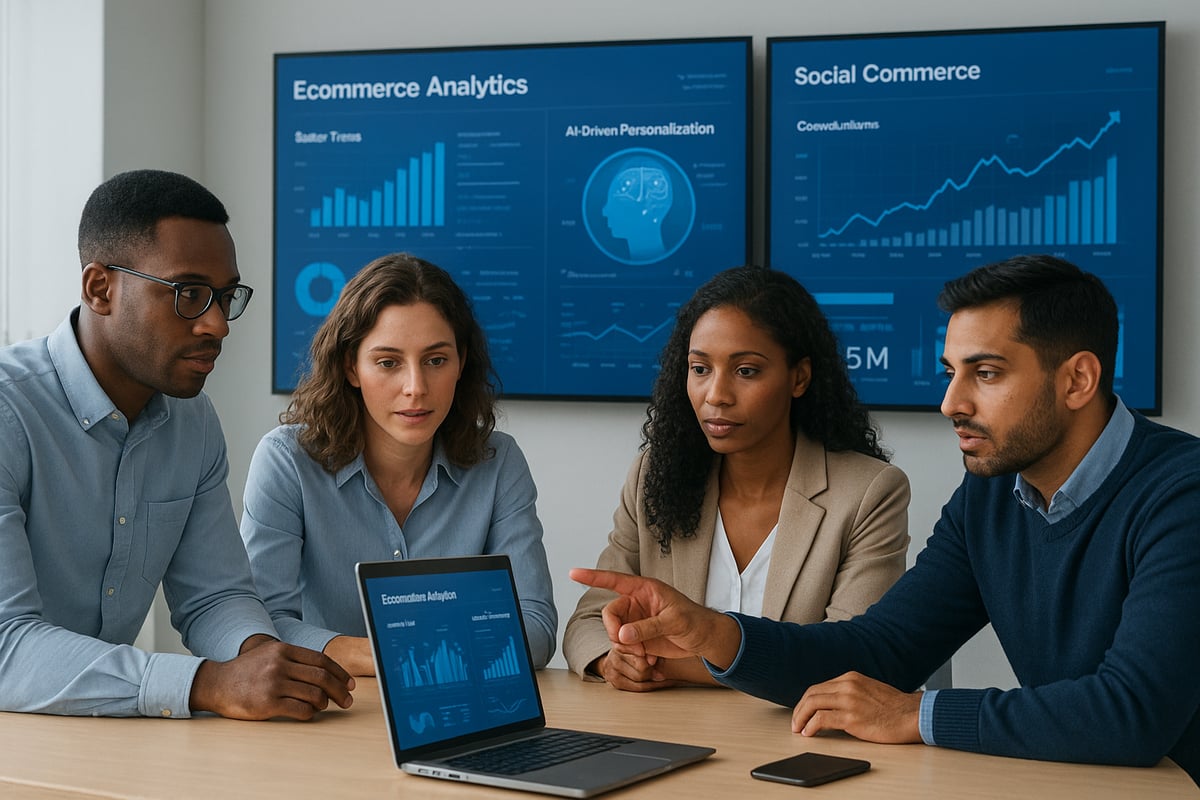
Ecommerce marketing in 2026 is shaped by several transformative trends. Artificial intelligence and predictive analytics are leading the charge, with brands like Salling Group seeing a 25% revenue boost through automated recommendations. The demand for tailored experiences means AI-driven personalisation is no longer optional, with AI-driven personalization boosting conversion rates by 10-15% for forward-thinking retailers.
Omnichannel strategies are now standard, ensuring customers enjoy a unified experience across web, mobile, social platforms, and even offline touchpoints. Social commerce is rapidly gaining ground, as 43% of shoppers research products directly on social platforms. With over 51% of ecommerce purchases now made via smartphones, a mobile-first approach is critical.
Data privacy and the shift to cookieless tracking are also reshaping targeting strategies. Businesses must adapt by collecting first-party data and providing greater transparency.
| Trend | Impact on Ecommerce Marketing |
|---|---|
| AI-driven personalisation | Higher conversion, better retention |
| Omnichannel experiences | Seamless, consistent journeys |
| Social commerce | Increased product discovery, sales |
| Mobile-first shopping | Greater reach, improved UX |
| Data privacy regulations | New targeting and consent approaches |
Staying ahead in ecommerce marketing means embracing these trends and leveraging them for competitive advantage.
The Business Impact of Modern Ecommerce Marketing
Modern ecommerce marketing delivers measurable results that influence every stage of the customer lifecycle. By adopting advanced strategies, businesses can lower acquisition costs, increase average order values, and grow customer lifetime value.
Nike is a prime example, achieving an 11x return on ad spend by using AI-powered omnichannel engagement. Salling Group, meanwhile, recorded a 25% jump in revenue attributed to automated personalised recommendations. These cases highlight the power of combining storytelling with data-driven targeting.
The rapid pace of change in ecommerce marketing demands agility. Tools, channels, and consumer expectations are continually evolving. Brands that prioritise adaptability and innovation are best positioned to capitalise on new opportunities and drive sustained growth.
Building a Future-Proof Ecommerce Marketing Plan
Developing a robust ecommerce marketing plan is essential for long-term growth and adaptability in the 2026 digital landscape. With competition intensifying and consumer expectations rising, businesses must combine strategic vision with agile execution. Let us walk through the five critical steps to ensure your marketing remains future-proof, data-driven, and effective.
Step 1: Set Clear Objectives and KPIs
Every successful ecommerce marketing strategy begins with well-defined objectives. Start by identifying what success looks like for your business. Are you targeting a specific revenue milestone, launching new products, or expanding your audience reach?
Apply the SMART framework to your goals. Ensure each objective is Specific, Measurable, Achievable, Relevant, and Time-bound. For example, aim to increase monthly online sales by 20 percent within six months or raise your average order value by 15 percent by year-end.
Key performance indicators (KPIs) should align with your objectives. Consider metrics such as sales, conversion rate, average order value, and customer retention. For more actionable planning tips that support your ecommerce marketing goals, explore these ways to increase e-commerce sales.
Step 2: Allocate and Optimise Your Budget
A future-proof ecommerce marketing plan requires careful budget allocation. New brands typically invest 12 to 20 percent of revenue into marketing, while established brands may focus more on retention. Divide your budget to cover the entire customer funnel:
| Channel/Stage | Percentage of Budget |
|---|---|
| Awareness | 40 percent |
| Consideration | 30 percent |
| Conversion | 20 percent |
| Testing/Optimisation | 10 percent |
Monitor campaign performance in real time. If a channel like Facebook ads underperforms, reallocate funds to higher ROI platforms such as Google Shopping. This dynamic approach ensures your ecommerce marketing budget works as hard as possible for your business.
Step 3: Identify and Segment Your Target Audience
Understanding your audience is at the heart of effective ecommerce marketing. Analyse existing customer data to discover high-value segments. Which customers buy most frequently or spend the most per transaction?
Leverage AI and predictive analytics for deeper insights. Personalisation engines can deliver tailored recommendations and offers, driving engagement and loyalty. By segmenting audiences based on behaviour and preferences, you can craft messages that truly resonate, increasing the impact of every campaign.
Step 4: Map the Customer Journey
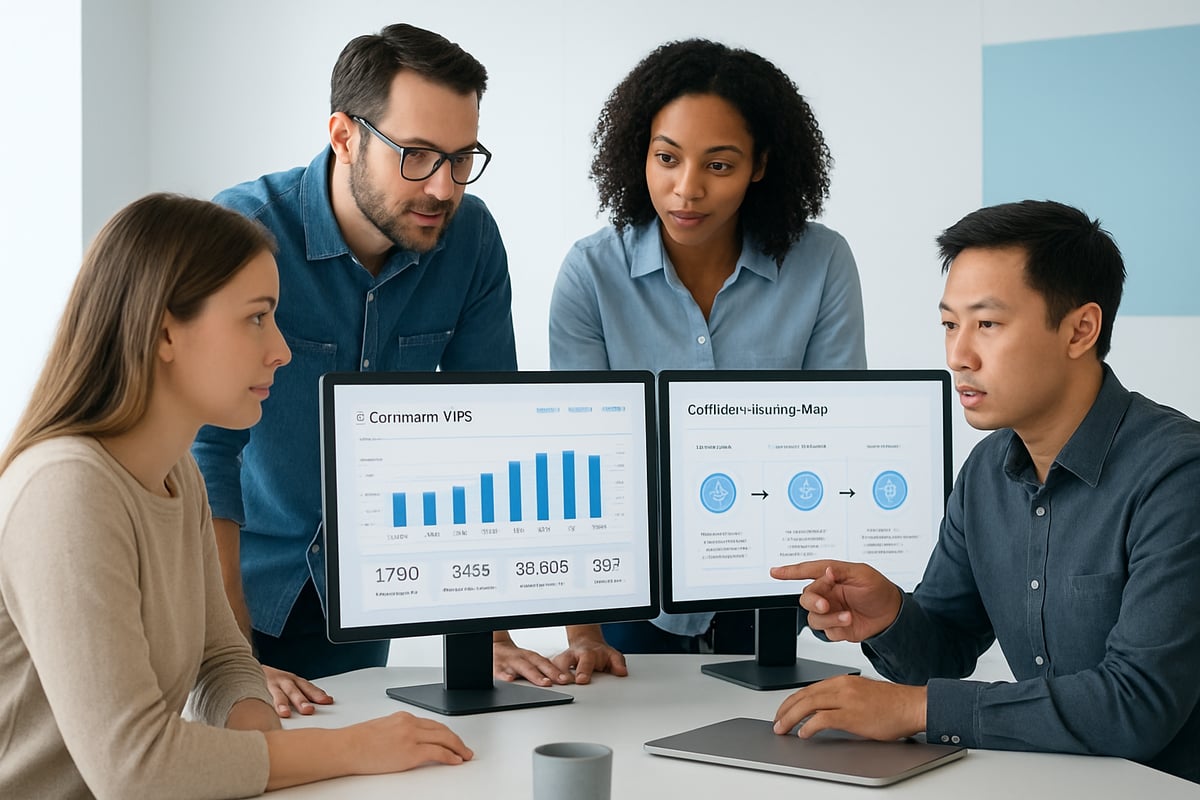
Mapping the customer journey is vital for a seamless ecommerce marketing experience. Visualise every touchpoint, from initial discovery through to repeat purchase and advocacy. Consider how web, mobile, social, and even offline interactions connect in your customer’s path.
Integrate all channels so customers move effortlessly between them. Use automation for actions like abandoned cart reminders, post-purchase follow-ups, and loyalty programme invitations. This approach not only streamlines the journey but also strengthens relationships at each stage.
Step 5: Continuous Testing and Optimisation
The ecommerce marketing landscape is in constant flux. Continuous testing is your safeguard against stagnation. Run A B and multivariate tests on landing pages, ad creatives, and emails to determine what drives the best results.
Utilise analytics to refine your messaging, creative assets, and channel mix. Stay flexible and ready to pivot as market trends and consumer behaviours evolve. Businesses that embrace a culture of experimentation and learning will remain agile and ahead of the competition.
Essential Ecommerce Marketing Channels and Tactics for 2026
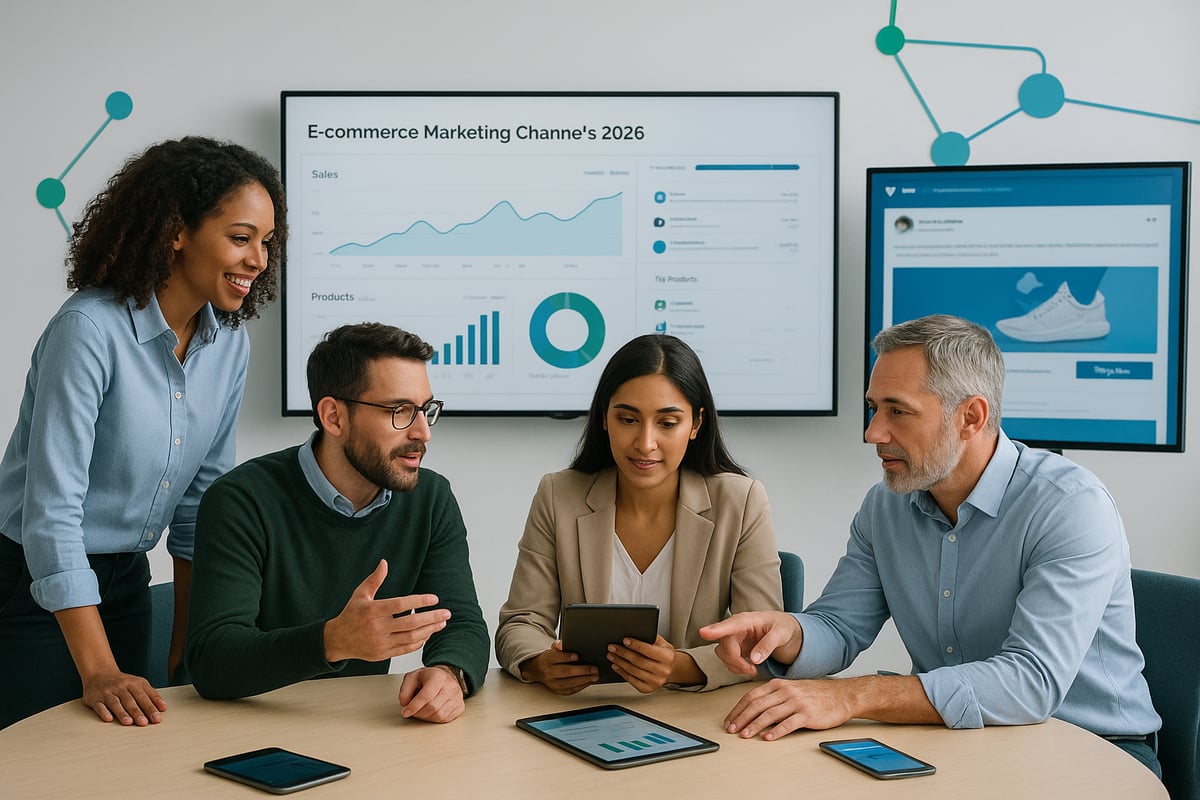
The landscape of ecommerce marketing in 2026 is dynamic, requiring brands to master a spectrum of digital channels and tactics. Success hinges on integrating the right mix of strategies, each designed to attract, convert, and retain customers in a fast-moving online environment. Let us explore the most impactful ecommerce marketing channels and practical tactics for sustainable growth this year.
Content Marketing for Authority and Engagement
Content lies at the core of ecommerce marketing, establishing authority and nurturing engagement. In 2026, brands need to deliver high-value, SEO-optimised blogs, in-depth guides, and engaging videos that address customer needs.
Use personalisation to tailor content. Analyse customer data to understand which topics, formats, and channels resonate. Authenticity is key, so encourage user-generated content (UGC), such as customer reviews and testimonials, to build trust.
- Share educational videos and how-to guides.
- Publish regular blog content optimised for search.
- Feature UGC and customer stories for social proof.
A content-first ecommerce marketing approach not only attracts organic traffic but also builds long-term loyalty.
Social Media and Social Commerce
Social platforms are now central to ecommerce marketing, with brands selling directly on Instagram, Facebook, and TikTok. Social commerce accelerates purchase decisions, as 43% of shoppers research products via social media.
Retailers with an active presence see 32% more sales. Influencer partnerships can amplify reach, but selecting creators who align with your brand is essential. Track performance using codes or affiliate links.
- Host live shopping events on social platforms.
- Launch interactive polls and stories to boost engagement.
- Collaborate with relevant influencers for product launches.
A robust social commerce strategy positions ecommerce marketing efforts where your audience spends their time.
Email and SMS Marketing
Email and SMS remain powerful pillars of ecommerce marketing, but the focus has shifted to advanced personalisation and automation. Segment your audience based on behaviour and preferences to deliver tailored messages.
Automated workflows for abandoned carts, loyalty rewards, and re-engagement drive higher open and conversion rates. Avoid generic campaigns; instead, send relevant offers at the right moment.
- Create welcome series for new subscribers.
- Send personalised product recommendations.
- Automate reminders for abandoned baskets.
Smart email and SMS strategies keep your ecommerce marketing customer-centric and effective.
Mobile Marketing and Optimisation
With over half of ecommerce purchases now on smartphones, mobile optimisation is a non-negotiable aspect of ecommerce marketing. Mobile-first site design, fast load times, and intuitive navigation are essential.
Integrate SMS, push notifications, and branded apps to engage customers in real time. Consistency across channels ensures a seamless experience for mobile shoppers.
- Optimise checkout for mobile devices.
- Use push notifications for limited-time offers.
- Ensure all emails and landing pages are mobile-friendly.
Prioritising mobile marketing ensures your ecommerce marketing strategy meets customers wherever they are.
Search Engine Optimisation (SEO)
SEO is foundational for ecommerce marketing success. Optimise product pages with targeted keywords, compelling meta tags, and rich schema to help search engines understand and rank your content.
Mobile optimisation now plays a critical role in SEO rankings. Regularly update content, add new landing pages, and pursue ethical link-building strategies for sustained visibility.
| SEO Element | Benefit |
|---|---|
| Keyword Optimisation | Increases organic reach |
| Schema Markup | Enhances search snippets |
| Mobile Performance | Boosts rankings and conversions |
An ongoing SEO focus ensures your ecommerce marketing draws high-intent traffic that converts.
Pay-Per-Click (PPC) and Paid Media
Paid media is vital in ecommerce marketing for reaching new audiences and driving targeted traffic. Effective PPC campaigns rely on thorough keyword research, structured ad groups, and continuous bid optimisation.
Monitor performance closely and reallocate budget to top-performing channels. For a deep dive into best practices, explore expert pay-per-click advertising for ecommerce strategies, including campaign setup and advanced targeting.
- Launch Google Shopping ads for product visibility.
- Test retargeting ads to re-engage visitors.
- Use dynamic creative for personalised ad experiences.
Strategic paid media investment maximises the ROI of your ecommerce marketing spend.
Omnichannel and Cross-Channel Marketing
The future of ecommerce marketing is omnichannel, blending web, mobile, email, and even in-store experiences. Campaigns using three or more channels achieve up to 287% higher purchase rates, thanks to unified messaging and seamless transitions.
Leverage customer data to deliver consistent offers and experiences across every touchpoint. Automation tools help synchronise communications, from email follow-ups to app notifications.
- Integrate loyalty rewards across online and offline platforms.
- Use unified messaging for sales and promotions.
- Track customer journeys to refine channel mix.
By adopting a true omnichannel approach, your ecommerce marketing can deliver the cohesive experiences customers now expect.
Data, Automation, and Personalisation: The New Growth Engines
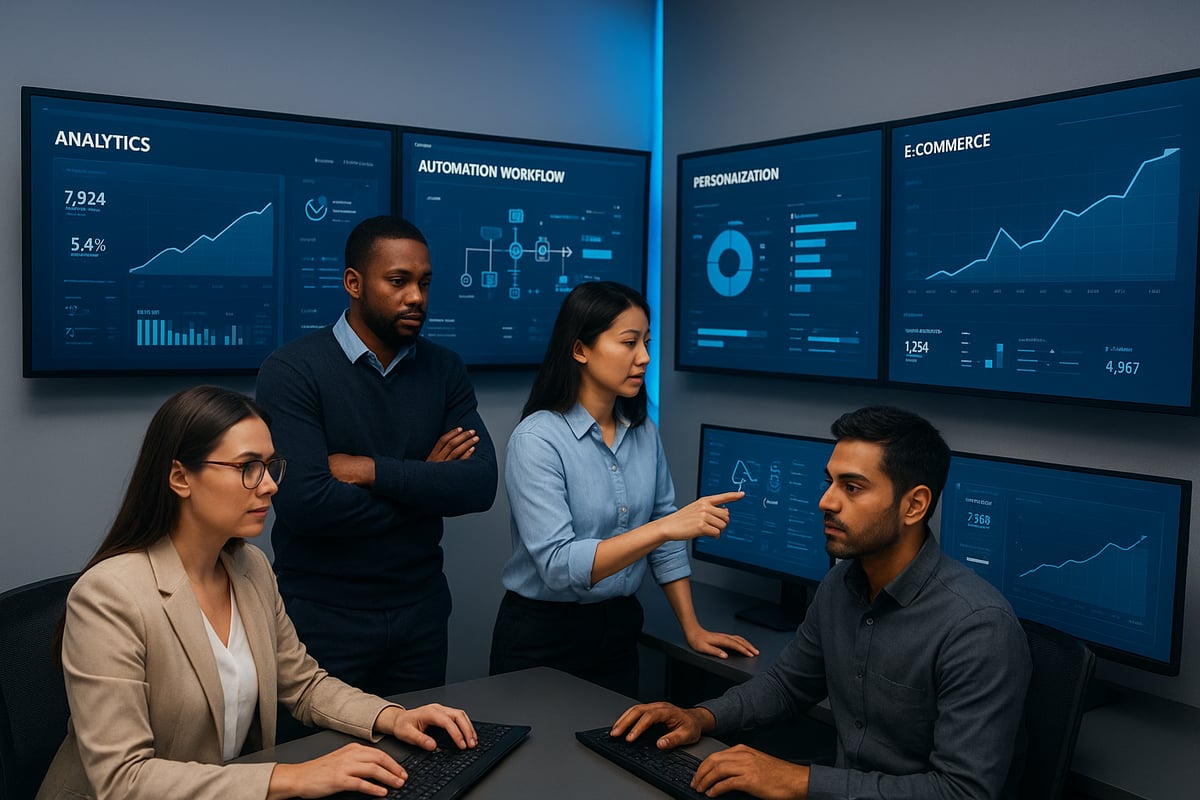
Ecommerce marketing in 2026 relies on a powerful engine of data, automation, and personalisation. Brands that master these elements will see significant advantages in customer acquisition, conversion, and retention. By leveraging the right data, automating key processes, and delivering tailored experiences, businesses can future-proof their ecommerce marketing strategy and drive sustainable growth.
Leveraging Data-Driven Marketing
Data is the foundation of effective ecommerce marketing in today's landscape. Businesses must collect both first-party and zero-party data to truly understand their audiences. First-party data comes directly from customer interactions, while zero-party data is shared intentionally by users, such as preferences or survey responses.
Analytics platforms now integrate seamlessly with ecommerce systems, providing insights into customer behaviour, product performance, and campaign effectiveness. This allows marketers to identify high-value segments, refine targeting, and optimise spend across channels.
Benchmarking against industry standards is essential. Comparing your ecommerce marketing metrics, such as conversion rate and customer lifetime value, with top performers reveals opportunities for improvement. Ultimately, a data-driven approach ensures every marketing pound is invested with maximum impact.
Marketing Automation for Scale
Automation has transformed ecommerce marketing by enabling brands to deliver timely, relevant communications at scale. Automated triggers for cart recovery, post-purchase follow-ups, and win-back campaigns ensure customers receive the right message at the right moment.
AI-powered workflows analyse customer behaviour in real time, adjusting offers and content dynamically. For example, if a shopper abandons their basket, an automated sequence can send a personalised reminder, followed by a time-limited offer to encourage conversion.
Salling Group's rapid revenue growth showcases what is possible when automation and data are combined. By streamlining repetitive tasks, ecommerce marketing teams can focus on strategy, creativity, and testing new ideas to stay ahead of the competition.
Advanced Personalisation Tactics
Personalisation is no longer limited to using a customer's name in an email. In 2026, advanced tactics include dynamic website content, product recommendations based on predictive analytics, and send-time optimisation for communications.
AI-powered personalisation can anticipate customer needs, suggest next-best offers, and even predict churn risks. This level of sophistication boosts engagement and loyalty. A recent case study demonstrates that AI-powered personalization leads to 45% revenue increase, highlighting the direct business impact of these strategies.
To stay competitive, ecommerce marketing teams must continually refine personalisation efforts, using customer data to create meaningful, individualised journeys that delight and convert.
Measuring and Improving Customer Lifetime Value
Maximising customer lifetime value is a critical goal for ecommerce marketing. Segmenting customers by value and engagement enables brands to tailor loyalty programmes and retention strategies for different audiences.
Personalised loyalty schemes, targeted offers, and exclusive experiences encourage repeat purchases and deepen relationships. RFM analysis—assessing recency, frequency, and monetary value—provides actionable insights for prioritising high-potential customers.
By focusing on lifetime value, brands shift from transactional thinking to building long-term loyalty. This approach ensures ecommerce marketing investments yield sustainable growth and a competitive edge.
Overcoming Ecommerce Marketing Challenges in 2026
Navigating the evolving landscape of ecommerce marketing in 2026 requires agility, creativity, and a keen understanding of market shifts. Businesses face new challenges, from regulatory changes to increased competition and rising costs. Here’s how leading brands are overcoming obstacles to drive sustainable ecommerce marketing success.
Navigating Data Privacy and Regulation
Data privacy is at the core of ecommerce marketing in 2026. With stricter GDPR enforcement and the rise of cookieless tracking, brands must rethink how they collect and use customer information. Transparent data practices are essential for building trust and ensuring compliance.
To adapt, focus on collecting first-party data through loyalty programmes, preference centres, and direct customer feedback. Clearly communicate privacy policies and offer customers control over their data preferences. By prioritising data protection, ecommerce marketing teams can foster loyalty while staying ahead of regulatory shifts.
Standing Out in a Crowded Marketplace
The ecommerce marketing arena is saturated, making it vital to differentiate your brand. Storytelling, authentic brand voice, and unique value propositions are key. One effective tactic is leveraging user-generated content and genuine customer reviews for social proof.
Design also plays a pivotal role in creating memorable experiences. For practical guidance, explore e-commerce web designing best practices to ensure your site is both visually appealing and conversion-focused. Combining design excellence with compelling content helps your ecommerce marketing stand out from the crowd.
Managing Rising Acquisition Costs
Rising customer acquisition costs are a reality for ecommerce marketing teams in 2026. To maximise ROI, shift your emphasis from pure acquisition to retention and lifetime value. Automation and personalisation are powerful tools for nurturing relationships and reducing churn.
Consider segmenting audiences for targeted campaigns, using AI-driven recommendations, and automating follow-ups for abandoned carts. These tactics increase efficiency and make every ecommerce marketing pound work harder, driving sustainable growth.
Keeping Up with Technology and Consumer Trends
Technology and consumer expectations evolve rapidly, impacting every facet of ecommerce marketing. Brands must stay agile, monitoring shifts in platforms, algorithms, and emerging channels. Voice-enabled shopping is one trend gaining traction, with Voice commerce projected to reach $186.28 billion by 2030.
Adopt a mindset of continuous learning. Invest in training, experiment with new tools, and regularly assess your tech stack. Staying ahead of trends ensures your ecommerce marketing remains relevant and effective.
Example: Brands that Adapted and Thrived
Success in ecommerce marketing comes from adaptation and innovation. For example, Nike and the Salling Group have embraced data-driven strategies, AI-powered personalisation, and seamless omnichannel experiences. Their willingness to evolve has delivered measurable results and set new standards for the industry.
By learning from these leaders, any business can overcome challenges and unlock the full potential of ecommerce marketing in 2026.
Measuring Success: Analytics, KPIs, and Continuous Improvement
Robust measurement is the cornerstone of effective ecommerce marketing. With the sheer volume of data generated in 2026, businesses must harness analytics to guide every decision, from campaign planning to ongoing optimisation.
Setting Up a Robust Analytics Framework
Start by building a comprehensive analytics foundation. Integrate Google Analytics, GA4, and ecommerce tracking tools to capture every interaction in your sales funnel. This ensures you track essential metrics such as traffic sources, conversion rates, average order value (AOV), customer lifetime value (CLV), and return on ad spend (ROAS).
Regularly review dashboards to identify emerging trends and spot anomalies early. By structuring your analytics to align with ecommerce marketing objectives, you lay the groundwork for actionable insight and agile decision-making.
Attribution and Channel Performance
Understanding which channels drive the most value is crucial for ecommerce marketing success. Multi-touch attribution models allow you to assess how each touchpoint contributes to conversions, not just the last click.
Here’s a quick comparison of attribution models:
| Model | Focus | Use Case |
|---|---|---|
| Last Click | Final interaction | Simple journeys |
| First Click | Initial interaction | Awareness campaigns |
| Linear | All touchpoints | Complex sales cycles |
| Data-Driven | Weighted by impact | Advanced optimisation |
Leverage analytics tools to compare performance across platforms and, where relevant, explore social media management strategies for additional insights into channel optimisation.
Continuous Testing and Optimisation
Continuous improvement is at the heart of ecommerce marketing. Implement A/B and multivariate testing across landing pages, product descriptions, and email campaigns. Use analytics to refine messaging, creative assets, and channel mix.
- Test new headlines, calls to action, and layouts.
- Analyse results and iterate quickly for maximum impact.
- Document learnings to inform future campaigns.
This disciplined approach to testing ensures your strategies remain effective in a rapidly evolving market.
Benchmarking Against Industry Leaders
Benchmarking is vital to measure progress and maintain a competitive edge in ecommerce marketing. Regularly compare your KPIs against top-performing brands and industry standards.
Create a benchmarking table to track:
| Metric | Your Brand | Industry Leader |
|---|---|---|
| Conversion Rate | 2.5% | 3.8% |
| AOV | £55 | £70 |
| CLV | £320 | £450 |
By identifying performance gaps, you can set realistic targets and prioritise improvement efforts.
Building a Culture of Data-Driven Growth
Success in ecommerce marketing depends on a culture of data-driven growth. Empower your teams to act on analytics insights and encourage experimentation at every level.
- Provide training on analytics tools and interpretation.
- Set clear goals tied to measurable outcomes.
- Celebrate wins and share learnings across departments.
Fostering this mindset ensures your organisation adapts quickly, innovates consistently, and maintains a trajectory of sustainable growth.
As you look to put these strategies into action and navigate the fast-changing world of ecommerce in 2026, remember that you do not have to do it alone. At Ruff Idea, we combine expert web design, SEO, and ongoing support to help your business build a truly outstanding online presence—one that not only attracts customers but encourages loyalty and repeat sales. If you are ready to explore how a tailored approach can elevate your ecommerce success, I invite you to Get in touch and start shaping your digital future today.