Digital advertising is evolving faster than ever, and pay per click advertising is set to become even more vital in 2026. According to industry forecasts, global PPC spend is projected to surpass £170 billion this year, underscoring its growing influence.
In a crowded online marketplace, pay per click advertising gives businesses a real competitive advantage by delivering immediate, targeted results. This guide will reveal advanced strategies, platform innovations, and step-by-step actions to help you maximise ROI.
Ready to unlock proven tactics and future-proof your campaigns? Apply these insights to stay ahead in digital advertising.
Understanding Pay Per Click Advertising
Pay per click advertising is a cornerstone of digital marketing in 2026, offering businesses a powerful way to connect with targeted audiences. As competition grows and technology advances, understanding the fundamentals of pay per click advertising is essential for brands seeking measurable growth and sustained visibility.
What Is Pay Per Click (PPC)?
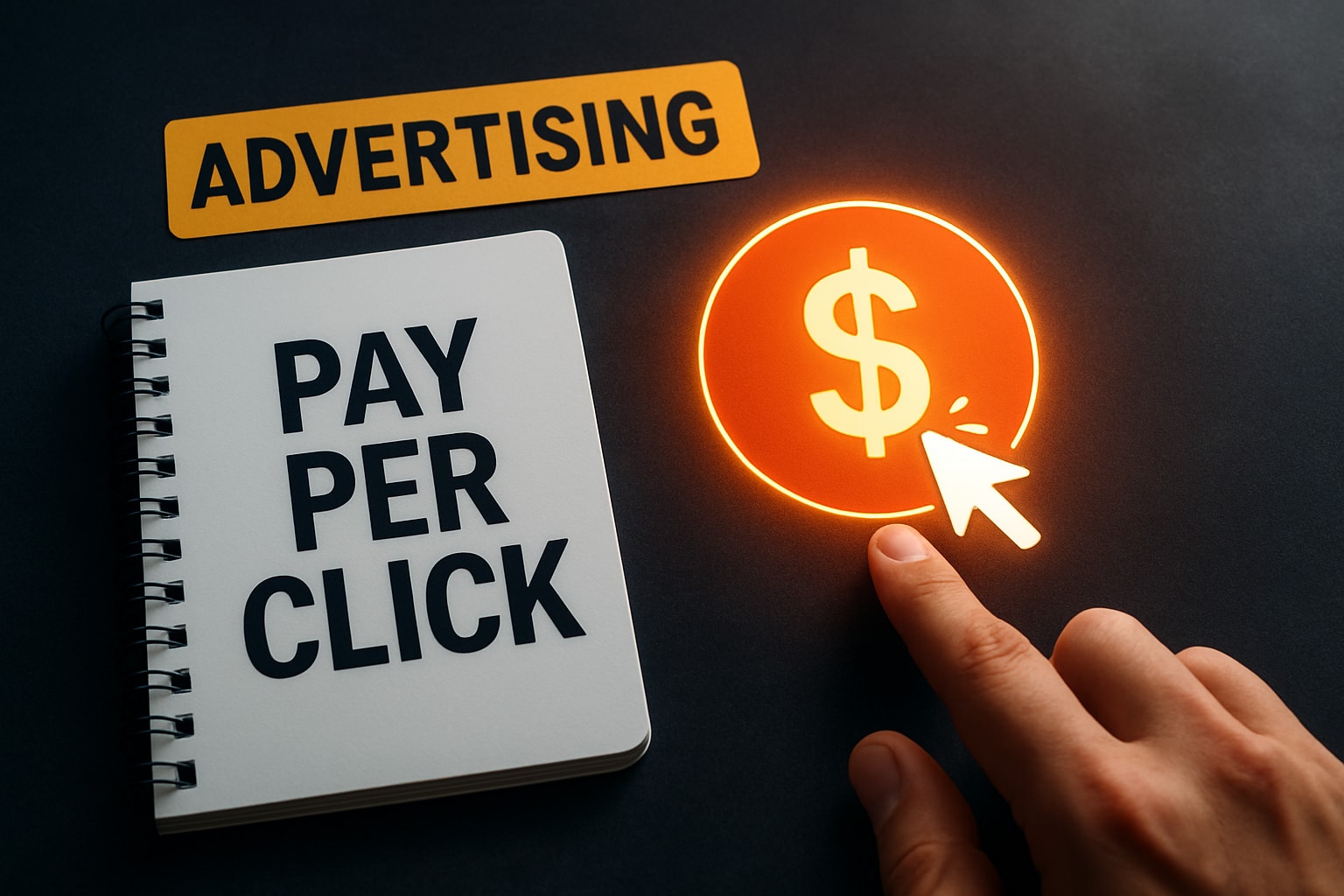
Pay per click advertising is a digital marketing model where advertisers pay a fee each time their ad is clicked. Unlike traditional advertising, where payment is based on impressions or reach, pay per click advertising guarantees that the cost is incurred only when a user interacts directly with the ad.
The most common platforms for pay per click advertising include Google Ads, Bing Ads, Facebook Ads, and Instagram Ads. Google Ads remains the leading choice, thanks to its vast search network and robust targeting options.
In this model, cost-per-click (CPC) is a central concept, representing the amount paid for each click. This approach allows businesses to drive highly targeted traffic to their websites, increasing the likelihood of conversions. For a more in-depth overview of how pay per click ads work, see pay per click ads explained.
How Does PPC Work?
The mechanics of pay per click advertising revolve around a keyword bidding process. Advertisers select keywords relevant to their products or services and bid against competitors for ad placement.
When a user searches for a term, an ad auction determines which ads appear, factoring in bid amount, ad quality, and relevance. The landing page experience also influences placement, as platforms prioritise user satisfaction.
For example, if a Leicester web design agency bids on “bespoke web design Leicester,” their ad may appear at the top of search results if their bid and quality score are competitive. Aligning keywords with business objectives is crucial to ensure campaign effectiveness and budget efficiency.
Types of PPC Models
Pay per click advertising encompasses several models, each suited to different business needs. The two primary approaches are flat-rate and bid-based PPC.
- Flat-rate: Advertisers pay a fixed amount per click, often seen in niche directories.
- Bid-based: Advertisers compete in real time auctions, common on major platforms.
PPC ad formats include:
| Model | Description | Example Use Case |
|---|---|---|
| Search Ads | Text ads on SERPs | Local service providers |
| Display Ads | Visual banners on sites | Brand awareness |
| Shopping Ads | Product listings | E-commerce brands |
| Remarketing | Target past visitors | Cart abandonment |
2026 sees a surge in automated and smart bidding strategies, driven by AI. Programmatic and AI-powered campaigns are expanding rapidly, offering greater efficiency and scale.
Key Players: Advertisers, Publishers, and Users
Pay per click advertising involves three main participants: advertisers, publishers, and users.
- Advertisers (businesses) create campaigns to promote products or services.
- Publishers (platforms like Google, Facebook) display ads and monetise free services through PPC revenue.
- Users (consumers) interact with ads during their online journey.
For instance, Facebook’s PPC ad revenue in 2025 highlighted the effectiveness of this model for social platforms. The user journey typically starts with an ad impression, followed by a click, and ideally ends with a conversion, such as a purchase or enquiry.
PPC vs. SEO: Key Differences and Synergies
Pay per click advertising and SEO are both vital components of digital marketing, but they serve distinct purposes. PPC delivers immediate results by placing ads directly in front of target audiences, while SEO focuses on organic visibility and long-term growth.
Businesses often combine both strategies for maximum impact. For example, a company may use pay per click advertising to generate quick leads while investing in SEO to build sustained authority.
| Factor | PPC | SEO |
|---|---|---|
| Speed | Immediate | Gradual |
| Cost Model | Pay per click | No direct cost per click |
| ROI | Measurable, short term | Compounding, long term |
On average, PPC campaigns can provide a swift return on investment, whereas SEO gains momentum over time. Integrating both approaches ensures a balanced, future-proof digital strategy.
Benefits and Challenges of PPC in 2026
The landscape of pay per click advertising in 2026 brings both exciting opportunities and significant challenges for businesses. As digital competition intensifies, understanding the strengths and weaknesses of this channel is crucial for any marketer aiming to maximise ROI.
Advantages of PPC Advertising
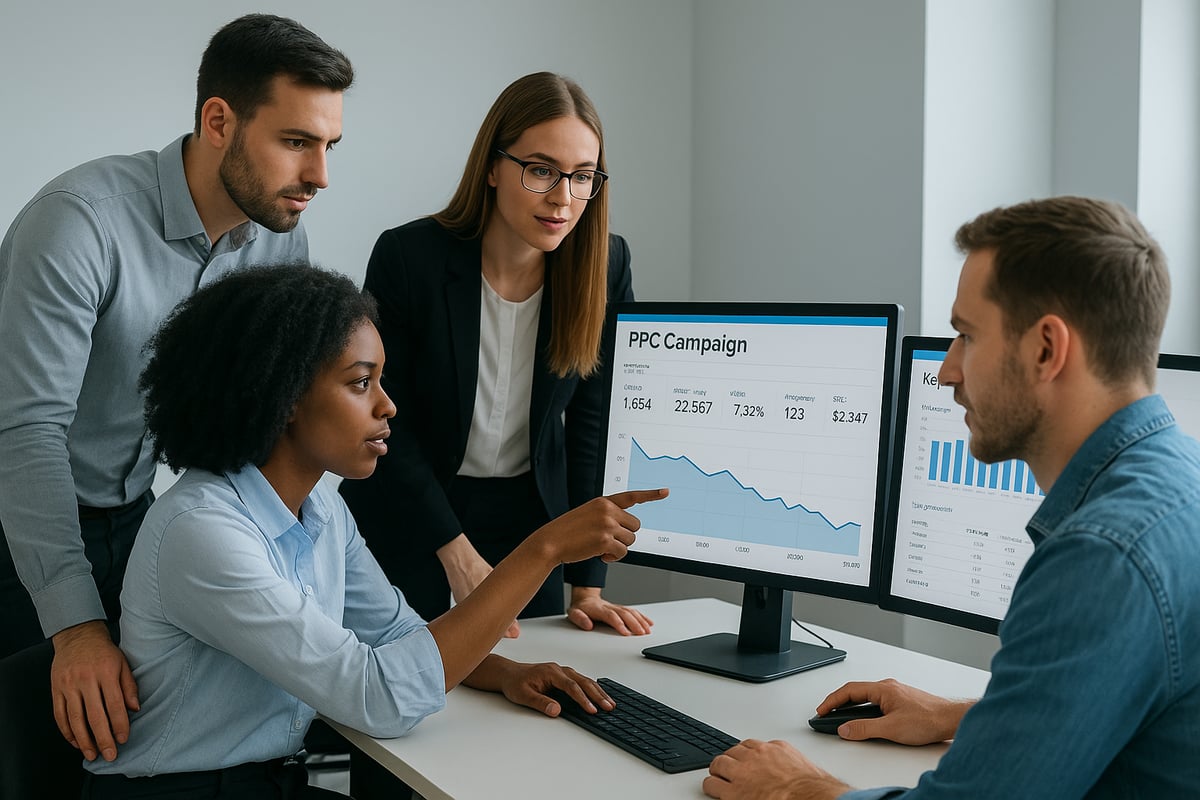
Pay per click advertising offers immediate visibility, making it a powerful tool for businesses seeking fast results. Campaigns can be launched quickly, and ads appear in front of highly targeted audiences almost instantly.
Key benefits include:
- Precise audience segmentation by demographics, location, and interests
- Transparent and measurable performance with clear ROI tracking
- Flexible budgets and scalable campaigns for businesses of all sizes
- The ability to reach potential customers at key decision-making moments
For example, a local business can use pay per click advertising to target nearby users searching for their services, driving foot traffic and online conversions.
Disadvantages and Common Pitfalls
Despite its strengths, pay per click advertising comes with notable challenges. Increased competition in 2026 is driving up costs, making budget management more complex.
Common pitfalls include:
- Rising cost per click due to advertiser competition and inflation
- Risks of click fraud and invalid traffic draining budgets
- Steep learning curve for new advertisers unfamiliar with platform nuances
- Ad fatigue as users become desensitised, leading to lower click-through rates
Overspending on poorly optimised campaigns is a frequent issue, highlighting the importance of ongoing monitoring and expertise.
Evolving Trends and Statistics for 2026
The future of pay per click advertising is shaped by automation, artificial intelligence, and changing consumer habits. Automated bidding and AI-driven campaign management are now mainstream, driving efficiency and results.
Voice search and visual PPC ads are gaining traction, while privacy regulations require smarter audience targeting. According to recent data, AI-driven PPC optimization tools improve campaign performance by 30%, underscoring the value of embracing new technologies.
Omnichannel strategies are also on the rise, allowing brands to meet users across devices and platforms seamlessly.
When PPC Is (and Isn’t) Right for Your Business
Not every business will benefit equally from pay per click advertising. It is ideal for companies seeking rapid lead generation, product launches, or targeted promotions.
E-commerce brands, local retailers, and service providers often see strong returns, while B2B firms may use PPC for event sign-ups or lead capture. However, businesses with limited budgets or longer sales cycles might prioritise organic channels.
Evaluating your business model, goals, and customer journey is key to determining if pay per click advertising aligns with your growth strategy.
PPC Platforms and Ad Formats to Watch in 2026
The landscape of pay per click advertising is evolving rapidly as we approach 2026. Businesses must stay informed about platform updates, new ad formats, and emerging channels to remain competitive. This section explores the PPC platforms and ad formats shaping the future, providing insights to guide your strategy.
Search Engine Advertising (Google Ads, Bing Ads)
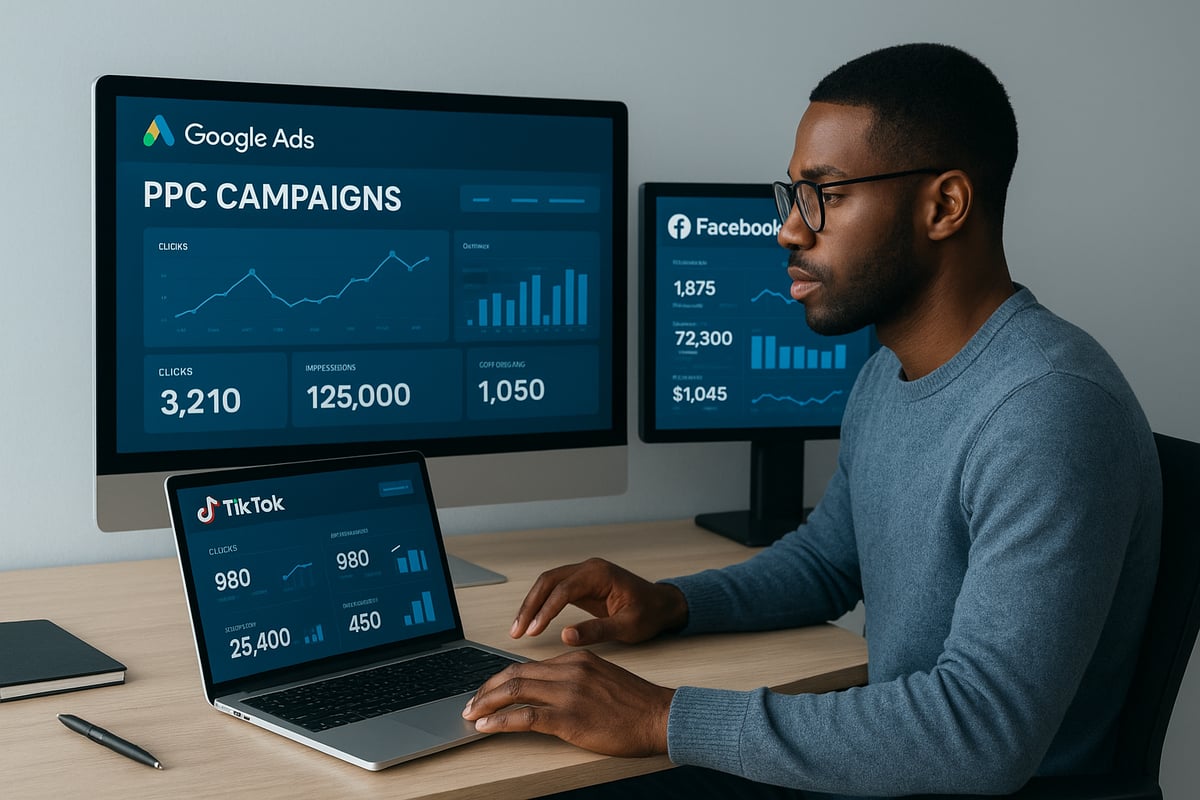
Search engines remain the backbone of pay per click advertising, with Google Ads leading the market in 2025 and 2026. Businesses can leverage search ad formats, including text ads, responsive search ads, and dynamic search ads, to target users actively searching for solutions.
Google Ads continues to innovate, introducing Performance Max campaigns and AI-powered recommendations to improve campaign efficiency. Bing Ads offers unique targeting features, such as LinkedIn profile integration, making it attractive for B2B advertisers. Local service businesses often achieve strong results using location extensions and call ads.
According to recent figures, Google Ads holds a dominant market share, accounting for the majority of global search ad spend. Choosing the right search engine platform is crucial for any pay per click advertising strategy.
Social Media PPC (Facebook, Instagram, LinkedIn, TikTok)
Social media platforms have transformed pay per click advertising by enabling brands to reach highly segmented audiences. Unlike search PPC, which targets intent-based queries, social PPC focuses on user interests, behaviours, and demographics.
Targeting options include lookalike audiences, interest-based segmentation, and advanced retargeting. Platforms like Facebook and Instagram now offer interactive formats such as Reels, Stories, and in-feed video ads. Instagram Shopping ads have become essential for e-commerce, while TikTok’s rapid growth in ad spend highlights its rising influence.
LinkedIn stands out for B2B campaigns, offering precise targeting for job titles and industries. By selecting the right social platform, advertisers can maximise the impact of their pay per click advertising.
Display, Shopping, and Remarketing Ads
Display advertising extends the reach of pay per click advertising beyond search and social, offering powerful visual branding opportunities. The Google Display Network connects businesses with millions of websites and apps, ideal for building awareness.
Google Shopping ads are a game-changer for product-based businesses, allowing users to see images, prices, and reviews directly in search results. Remarketing campaigns target users who have previously visited your site, increasing the likelihood of conversion.
For example, cart abandonment remarketing is highly effective for recovering lost sales. Data shows that remarketing can deliver a significant conversion uplift, making it an essential component of any pay per click advertising campaign.
Emerging PPC Channels and Innovations
The next wave of pay per click advertising is driven by innovation across voice search, programmatic, and video channels. Voice search PPC is gaining traction as smart speakers become more common, requiring new keyword strategies.
Programmatic and AI-driven ad placements automate bidding and targeting, delivering ads to the right users at the right time. Video PPC, including YouTube bumper ads and in-stream formats, captures audience attention and boosts brand awareness.
To stay ahead, advertisers are adopting latest AI tools for PPC to automate and optimise campaigns. Video PPC is projected to represent a growing share of total ad spend in 2026, making it a key area for future investment.
Choosing the Right Platform and Format for Your Goals
Selecting the optimal platform and ad format is fundamental to pay per click advertising success. Start by assessing your business objectives and understanding your target audience’s behaviour.
- For lead generation, LinkedIn excels in B2B sectors.
- Instagram and TikTok are ideal for B2C brands focused on visual storytelling.
- Search ads deliver high intent traffic for both local and national campaigns.
Matching ad formats to your KPIs, such as leads, sales, or brand awareness, ensures measurable results. Multi-channel strategies often yield the best outcomes by engaging users across platforms. A well-structured pay per click advertising approach leverages platform strengths to achieve your unique business goals.
Step-by-Step Guide to Setting Up a PPC Campaign in 2026
Setting up a successful pay per click advertising campaign in 2026 requires a methodical approach. Each step is crucial in ensuring your investment delivers measurable results. Follow this guide to lay a strong foundation and adapt to the evolving digital landscape.
Step 1: Define Goals and KPIs
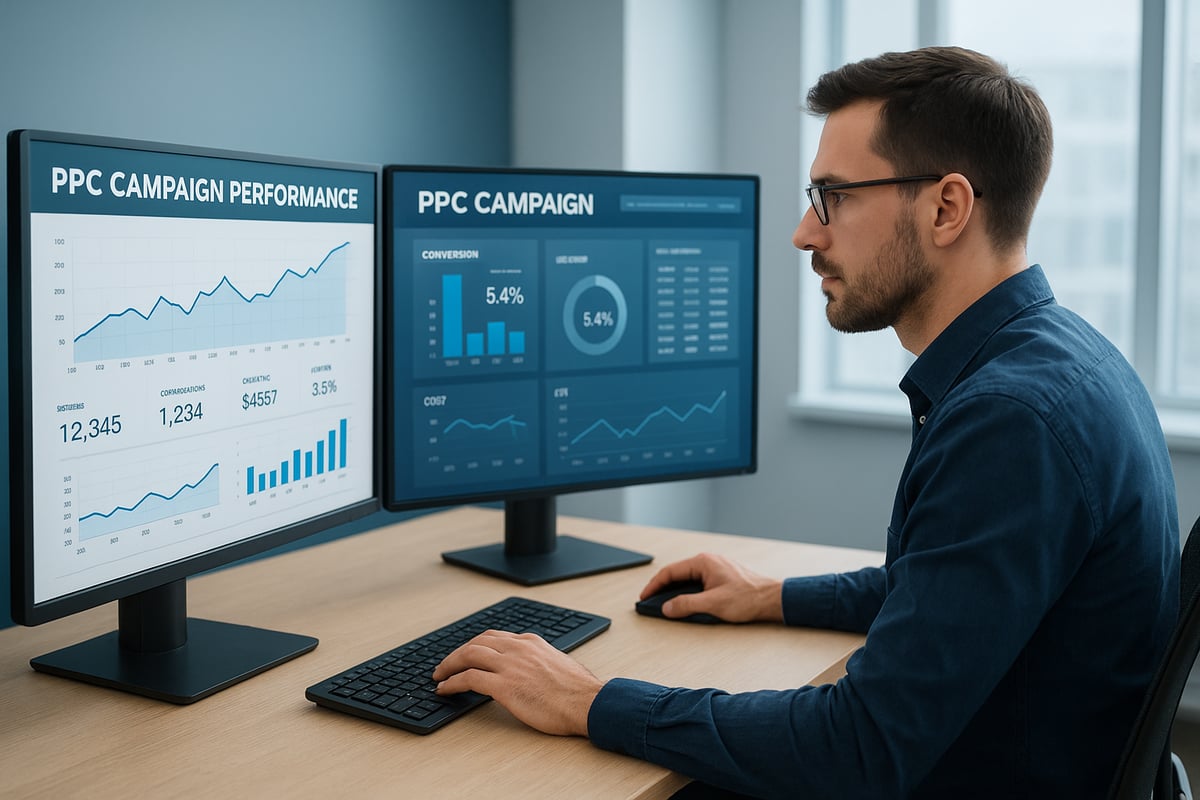
Begin your pay per click advertising journey by setting clear goals. Use the SMART framework to establish objectives that are Specific, Measurable, Achievable, Relevant, and Time-bound. Common goals include increasing website traffic, generating leads, or driving sales.
Align these objectives with your broader marketing strategy. For example, if you are launching a new product, you might set a target cost per acquisition (CPA) and desired number of conversions within a specified timeframe.
Conversion tracking is essential to measure progress. Implement tracking pixels or tags to monitor actions such as form submissions, purchases, or downloads. In 2025, the most common PPC goals were lead generation, brand awareness, and direct sales, all of which remain relevant for your campaigns.
Step 2: Conduct Keyword and Audience Research
Effective pay per click advertising starts with comprehensive keyword and audience research. Utilise AI-powered keyword tools to discover high-intent search terms and identify gaps in your competitors' campaigns.
Create a list of negative keywords to prevent your ads from appearing for irrelevant searches. This step helps reduce wasted spend and improves campaign efficiency.
Segment your audience based on demographics, interests, and online behaviours. Use remarketing lists to target users who have previously interacted with your site. For instance, Google Keyword Planner is invaluable for uncovering local service keywords relevant to your business.
Step 3: Craft Compelling Ad Copy and Creative
The success of pay per click advertising relies on crafting engaging ad copy and visuals. Write headlines that grab attention and clearly communicate your value proposition. Support your message with strong calls-to-action that prompt users to take the next step.
Optimise ad extensions, such as callouts, sitelinks, and structured snippets, to provide additional information and increase ad visibility. Test different creative elements regularly through A/B testing.
For display and social campaigns, use bold visuals and concise messaging. A web design agency, for example, can highlight special offers or unique selling points in their ads to boost click-through rates.
Step 4: Design High-Converting Landing Pages
A seamless user experience is critical in pay per click advertising. Your landing page must match the message of your ad to avoid confusing potential customers. Ensure the design is mobile-first, loads quickly, and features a clear call-to-action.
Build trust by including testimonials, certifications, and guarantees. Employ conversion rate optimisation (CRO) techniques, such as simplified forms and prominent buttons, to maximise results.
For e-commerce, showcase product images, reviews, and easy checkout options. For lead generation, use concise forms and highlight benefits. Structure your landing page to guide users naturally toward conversion.
Step 5: Set Budgets, Bids, and Campaign Structure
Allocate your budget wisely to get the best results from your pay per click advertising efforts. Decide on daily or monthly budgets based on your goals and available resources. Choose between manual and automated bidding strategies, considering which aligns best with your campaign objectives.
Organise your campaigns into tightly themed ad groups to improve relevance and Quality Score. Distribute your budget across platforms and devices for optimal reach.
Smart bidding strategies in Google Ads, such as Target CPA or ROAS, can help automate bid adjustments. In 2025, industries saw varying average CPCs, so monitor your spend and adjust as needed.
Step 6: Launch, Monitor, and Optimise Campaigns
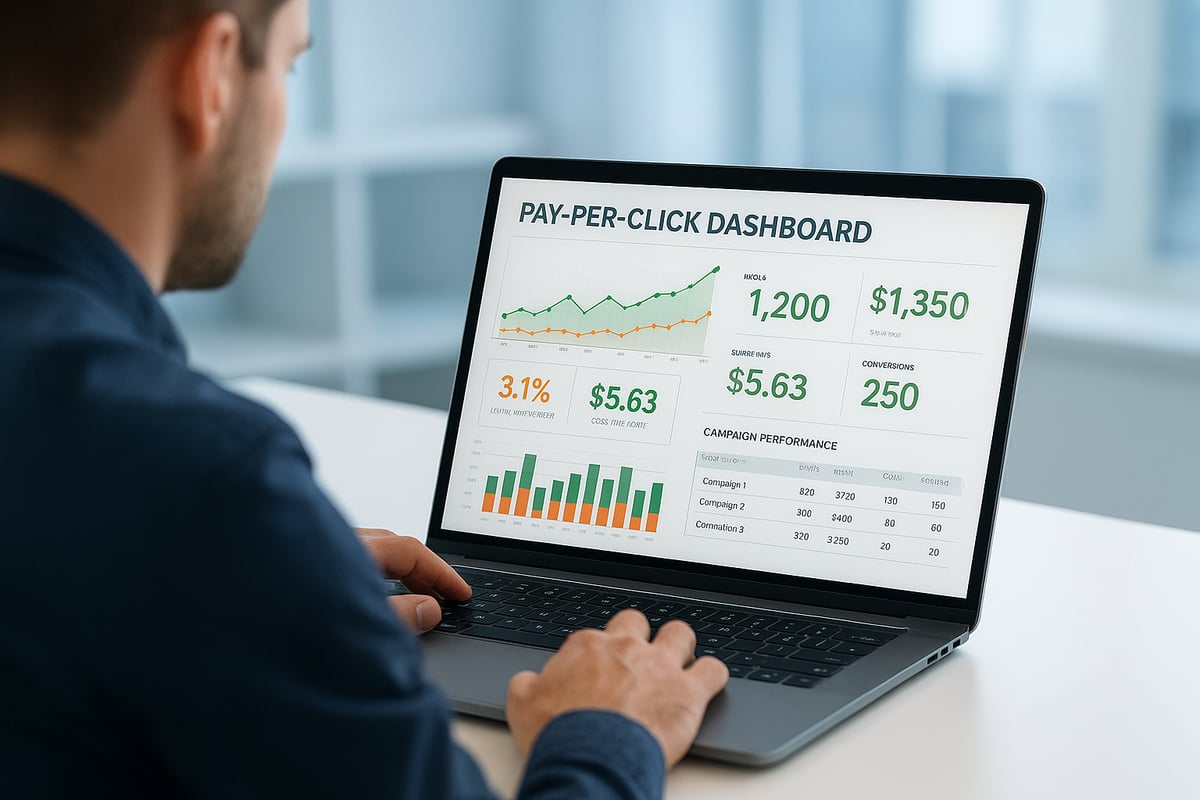
With your pay per click advertising campaign set up, launch and closely monitor performance using analytics dashboards. Track key metrics like click-through rate (CTR), cost per click (CPC), CPA, and conversion rate.
Regularly review your data to identify areas for improvement. Pause underperforming ads and reallocate budget to those delivering strong results. Use A/B testing insights to refine keywords, ad copy, and landing pages.
Reporting should be frequent and actionable. By consistently optimising, you ensure your campaigns remain effective and aligned with your business objectives.
Step 7: Advanced Tactics for 2026
To stay ahead in pay per click advertising, leverage advanced tactics such as AI and machine learning for bid management and audience targeting. Dynamic keyword insertion and responsive ad formats allow for greater personalisation.
Integrate your campaigns with CRM and marketing automation tools for deeper insights. Automated rules can adjust bids based on factors like weather or inventory changes, maximising ROI.
For a comprehensive overview of how AI-powered campaign management is shaping the industry in 2026, read about how AI-powered campaign management becomes the default. Embracing automation can lead to measurable performance improvements and help future-proof your strategy.
Optimising and Scaling PPC Campaigns for Maximum ROI
Maximising return on investment from pay per click advertising requires a blend of data analysis, ongoing testing, strategic budget management, and advanced targeting. The landscape in 2026 is more competitive and data-driven than ever, so mastering each optimisation lever is essential for campaign success.
Analysing Performance Data and Attribution
Effective optimisation of pay per click advertising begins with thorough performance analysis. Using analytics tools such as Google Analytics 4 enables marketers to track every step of the user journey.
Understanding attribution is crucial. Models like first-click, last-click, and data-driven attribution help identify which touchpoints drive conversions. For example, a multi-channel campaign might show that social ads initiate interest, while search ads close the sale.
Regularly reviewing conversion paths and key metrics, including cost per acquisition and return on ad spend, ensures you are investing in the channels that deliver results. Businesses that master attribution can confidently scale what works and refine what does not.
A/B Testing and Continuous Improvement
Continuous improvement is at the core of successful pay per click advertising. Running A/B tests on ad copy, creatives, and landing pages can reveal what resonates best with your audience.
Split testing headlines or visuals often leads to measurable gains in click-through rates and conversions. For instance, a simple tweak to a call to action can boost engagement significantly.
Set up an ongoing testing calendar to ensure fresh experiments and avoid creative fatigue. Use test results to refine campaigns and inform future ad strategies, keeping your approach agile and data-driven.
Budget Allocation and Scaling Strategies
Allocating your budget wisely is fundamental to pay per click advertising success. Start by identifying high-performing campaigns using analytics, then shift more resources towards those ad groups or keywords.
Scaling can involve increasing bids for proven segments or expanding reach during peak periods. Automated rules can help adjust budgets dynamically based on performance or seasonality.
Monitor cost per acquisition to ensure scaling does not erode profitability. If you notice diminishing returns, pause underperforming ads and double down on what drives the best outcomes for your business.
Advanced Targeting and Personalisation
Advanced targeting is transforming pay per click advertising in 2026. Leveraging audience insights, dynamic remarketing, and geotargeting allows you to deliver highly personalised ads.
Integration of product feeds and behavioural data means you can serve the right offer to the right user at the right time. For example, dynamic ads can showcase products users previously viewed, increasing conversion rates.
Emerging AI frameworks, like those explored in Agentic Multimodal AI for Hyperpersonalized B2B and B2C Advertising in Competitive Markets, are enabling even deeper personalisation and automation, setting new standards for targeting in competitive markets.
Avoiding Common Mistakes and Staying Compliant
Avoiding pitfalls is essential for sustainable pay per click advertising growth. Monitor for click fraud and invalid traffic, which can inflate costs and skew results.
Stay up to date with data privacy regulations such as GDPR and ensure your campaigns respect user consent and platform policies. Regularly refreshing your ad creatives helps prevent ad fatigue and maintains audience interest.
If managing compliance, optimisation, and scaling feels overwhelming, consider working with top pay per click companies to leverage expert insight and avoid costly mistakes. Sustainable growth comes from a proactive, informed approach.
The Future of PPC: Predictions and Strategies for 2026 and Beyond
The landscape of pay per click advertising is on the cusp of dramatic transformation as we approach 2026. With rapid advances in technology, changing consumer habits, and a tightening regulatory environment, businesses must adapt to stay competitive. The following predictions and strategies will help you future-proof your approach and maximise your ROI in this evolving digital world.
AI, Automation, and the Next Wave of PPC Innovation
Artificial intelligence is set to become the backbone of pay per click advertising. Platforms are rolling out sophisticated algorithms for automated bidding, predictive targeting, and real-time campaign adjustments. In 2026, more than 80 percent of PPC campaigns may be managed by AI, driving efficiency and improved performance. According to recent projections, global search ad spend is expected to reach $351.55 billion in 2025, highlighting the scale of investment in automation. Businesses leveraging AI will benefit from faster data analysis, better budget allocation, and the ability to react instantly to market shifts. Embracing these innovations will be crucial for those looking to maintain a competitive edge.
Evolving User Behaviour and Search Trends
User behaviour continues to shift, and pay per click advertising must evolve in tandem. Voice and visual search are becoming mainstream, influencing how people interact with ads. Conversational ads, interactive formats, and chatbots are rising in popularity, reflecting a move towards more personalised and engaging experiences. PPC specialists are now targeting long-tail voice queries and adapting creative assets for visual platforms. By staying ahead of these trends, businesses can reach customers where they are most active and ensure their campaigns resonate in a crowded marketplace.
Data Privacy, Regulation, and Ethical Advertising
The future of pay per click advertising will be shaped by data privacy and regulatory changes. As third-party cookies are phased out and new laws emerge, marketers must prioritise compliance and ethical practices. Strategies built on first-party data collection are gaining traction, offering a privacy-first approach to targeting. Adapting to GDPR, CCPA, and similar regulations is essential to avoid penalties and maintain consumer trust. Ethical advertising also means being transparent about data use and respecting user choices, which will become a defining factor for sustainable PPC success.
Building a Future-Proof PPC Strategy
To thrive in 2026 and beyond, businesses must adopt an agile approach to pay per click advertising. This involves continuous learning, integrating PPC with broader digital strategies such as SEO and content marketing, and investing in team upskilling. Case studies show that organisations which adapt quickly to changes in platforms and regulations consistently outperform those that do not. By focusing on holistic growth, leveraging new technologies, and fostering a culture of innovation, your PPC strategy will remain resilient and effective in a fast-changing digital landscape.
As you navigate the evolving world of pay per click advertising, it’s clear that staying ahead means adapting to new strategies, understanding platform innovations, and making data driven decisions. If you’re ready to put these insights into action and want a partner who specialises in building visually engaging, high performing websites integrated with the latest in PPC, SEO, and social media, we’re here to help. Whether you’re a boutique, an e commerce brand or a local service business, let’s work together to maximise your online potential.
Get in touch
to discuss how we can elevate your digital marketing for 2026 and beyond.