The world of digital marketing is changing fast. To stay ahead in 2026, businesses must master google ppc ads as competition and technology evolve at breakneck speed.
This comprehensive guide is designed for marketers, business owners, and digital advertisers who want to unlock the full potential of paid campaigns. You will discover modern strategies, essential tools, and actionable insights to help you build, manage, and optimise campaigns for the best possible return on investment.
We will cover everything from the basics of PPC, campaign setup, and keyword research to advanced ad copywriting, bidding tactics, measurement, optimisation, and the latest trends. Ready to transform your paid advertising and drive real business growth? Read on and take your campaigns to the next level.
Understanding Google PPC Ads: Core Concepts for 2026
Google PPC ads remain a cornerstone of digital marketing in 2026, helping businesses connect with target audiences fast. With the landscape evolving rapidly, understanding the fundamentals is crucial for driving results and staying ahead of competition.
What is PPC and How Does Google Ads Work?
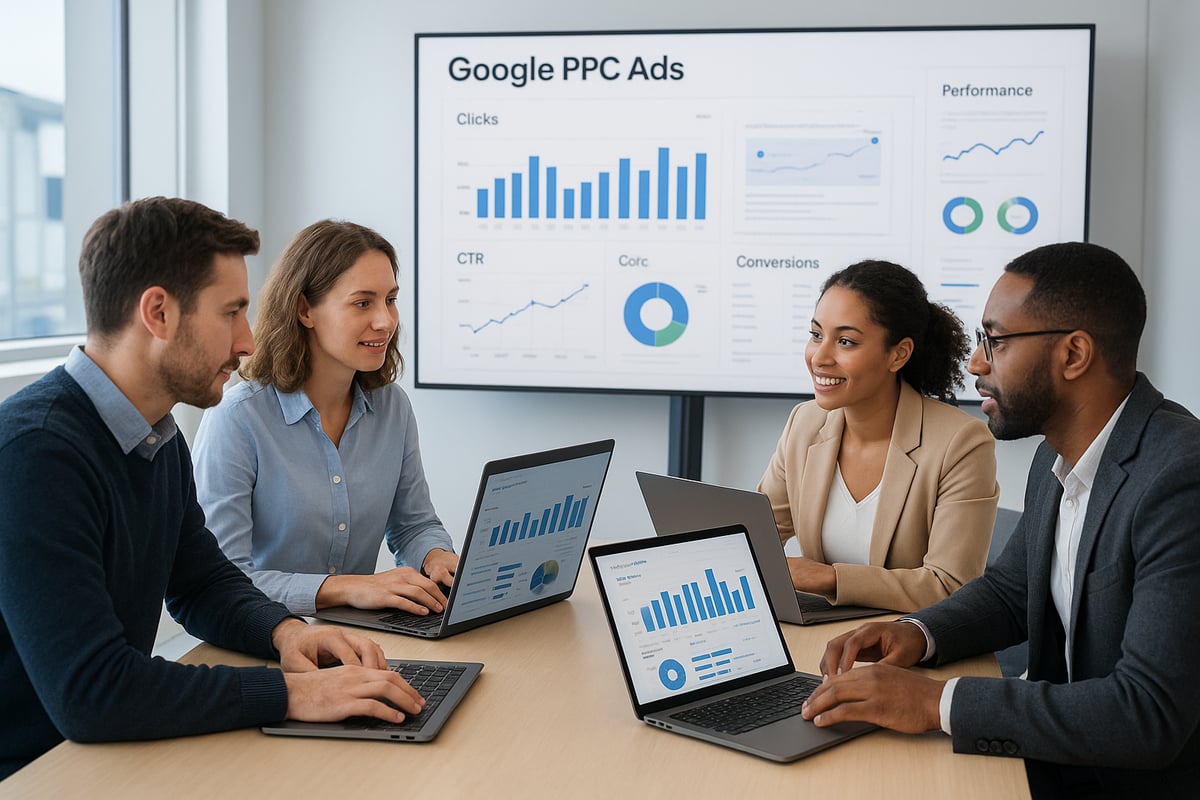
Pay-Per-Click (PPC) advertising allows advertisers to pay only when users click their ads. Google PPC ads are central to this, as Google Ads is the world’s largest platform for paid search. Unlike organic search, where results are earned through SEO, paid search ensures immediate visibility at the top of results pages.
Google uses an auction system to decide which ads appear and in what order. Factors include keyword bids, ad relevance, and Quality Score. The intent behind a user’s search is vital, as google ppc ads target people actively seeking products or services. For instance, a search for “best running shoes” triggers tailored ads from relevant retailers.
According to Google, its ads reach over 90% of internet users globally. Automation and AI are now deeply integrated, making campaign management smarter and more efficient. For a deeper dive into these core concepts, see the Google AdWords and PPC Guide.
Types of Google PPC Campaigns in 2026
The range of google ppc ads has expanded in 2026, giving businesses more ways to meet their goals. Campaign types include Search Ads, Display Ads, Shopping Ads, Video (YouTube) Ads, App Ads, and Local Services Ads. Each serves a unique purpose, from driving sales to boosting brand awareness.
New features this year focus on cross-platform integration, allowing campaigns to run across Google’s ecosystem seamlessly. Performance Max campaigns, for example, help e-commerce brands reach customers through multiple channels at once. Shopping ads continue to dominate retail, accounting for 76% of retail search ad spend.
Choosing the right campaign type depends on your business objectives. Video ads excel for engagement, while Shopping Ads drive direct conversions. This flexibility enables marketers to tailor their google ppc ads strategy for maximum impact.
Key Components of a Google PPC Campaign
A successful google ppc ads campaign consists of several key elements. These include keywords, ad groups, compelling ads, optimised landing pages, bidding strategies, and budget management. Quality Score remains crucial, measuring the relevance and effectiveness of your ads, keywords, and landing pages.
Ad extensions and assets, like sitelinks and callout extensions, can significantly improve click-through rates and ad visibility. For example, adding sitelinks gives users more options to visit specific pages, increasing engagement. Mobile-first design is now essential, as most searches happen on smartphones.
Privacy and consent management are also growing priorities. Advertisers must ensure their tracking and data collection methods comply with current regulations, keeping user trust at the forefront.
The Benefits and Challenges of Google PPC in 2026
Google ppc ads offer immediate visibility and measurable traffic, unlike SEO’s long-term approach. Advertisers have control over targeting, budgets, and can quickly see results through real-time analytics. This agility is key for responding to market changes or promotions.
However, challenges are increasing. Growing competition means higher costs per click, and automation adds complexity to campaign management. New privacy regulations require brands to rethink tracking, relying more on first-party data. For example, companies are adapting to cookieless tracking to maintain performance.
Staying current is essential, as average CPCs rise each year and regulatory changes reshape the landscape. Continuous learning and adaptation ensure your google ppc ads remain competitive and compliant.
Step-by-Step: Setting Up Your Google PPC Campaign for Success
Embarking on a successful google ppc ads journey in 2026 requires a strategic, methodical approach. Whether you are new or experienced, understanding each campaign step is essential for maximising results. For a deeper dive into campaign setup and PPC fundamentals, see Pay-Per-Click Advertising Explained.
Defining Campaign Objectives and KPIs
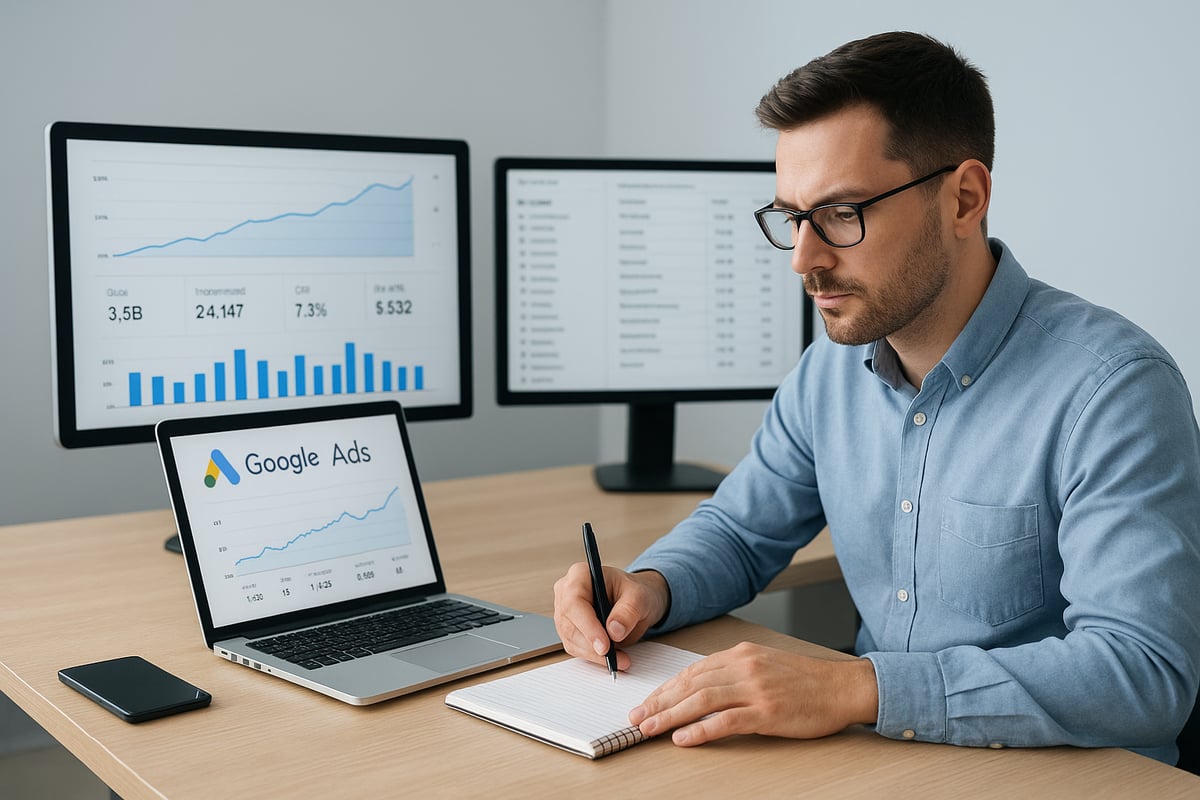
Setting clear objectives is the cornerstone of every google ppc ads campaign. Start by aligning your PPC goals with your broader business targets. Are you aiming for increased sales, more leads, or stronger brand awareness? Choose a campaign type that fits your goal, such as Search Ads for lead generation or Shopping Ads for e-commerce sales.
Define your key performance indicators (KPIs) early. Common KPIs include click-through rate (CTR), cost-per-click (CPC), cost-per-acquisition (CPA), and return on ad spend (ROAS). For example, a service business might set a SMART goal to generate 50 qualified leads per month through google ppc ads. Leverage Google’s built-in goal-setting tools to track progress and enable ongoing optimisation.
Audience Targeting and Segmentation in 2026
Effective audience targeting is vital for google ppc ads success. Utilise demographic, geographic, device, and interest-based options to refine your reach. First-party data and Customer Match empower you to reconnect with past customers, while in-market and affinity audiences help you find new prospects.
For example, a local trades-business can target homeowners in Leicestershire using precise location and interest filters. According to Google, audience targeting can boost conversion rates by up to 30 percent. With privacy regulations evolving, ensure your google ppc ads targeting remains compliant by using consented data and privacy-first tools.
Keyword Research and Match Types
Thorough keyword research is fundamental to google ppc ads performance. Use Google’s Keyword Planner and third-party tools to uncover high-intent terms relevant to your business. Understand the differences between broad, phrase, exact, and negative keyword match types to control who sees your ads.
Identify long-tail keywords for better ROI, such as “handmade jewellery Leicester” for a boutique store. Remember, 15 percent of daily Google searches are unique, so regularly review and expand your keyword lists. Negative keywords are equally important, helping to filter out irrelevant traffic and optimise spend.
Crafting High-Converting Ad Copy and Creative
The success of your google ppc ads hinges on compelling ad copy and creative assets. Write headlines and descriptions that grab attention, clearly state your offer, and include a strong call-to-action. Responsive search ads and dynamic creative adapt your message to user intent, improving relevance.
Incorporate target keywords and unique value propositions. For example, an e-commerce ad might highlight “Free Next-Day Delivery – Shop Now.” A/B test different ad variations to see which resonate best. Utilise ad assets like sitelinks and callouts to provide extra information and boost click-through rates.
Landing Page Optimisation for PPC
A seamless connection between your google ppc ads and landing pages is crucial for conversions. Ensure each landing page is directly relevant to the ad, loads quickly, and is mobile-friendly. Use clear headlines, concise content, and strong calls-to-action to guide users.
Trust signals such as testimonials and certifications increase credibility. For instance, a trades-business might feature a contact form, customer reviews, and service guarantees. Remember, even a one-second delay in load time can reduce conversions by 7 percent, so optimise for speed. Set up conversion tracking to measure success accurately.
Budgeting, Bidding, and Scheduling
Budget management is a key pillar of google ppc ads strategy. Set realistic daily and monthly budgets based on your goals and available resources. Choose a bidding strategy that suits your objectives, whether manual CPC, automated bidding, or targeting CPA/ROAS.
Schedule ads to run during peak performance times, such as increasing bids during seasonal sales for an e-commerce store. Take advantage of shared budgets and portfolio strategies to maximise efficiency across multiple campaigns. Monitor your spend regularly to avoid overspending and ensure optimal allocation.
Advanced Strategies for Google PPC Campaigns in 2026
Staying ahead in the world of google ppc ads in 2026 requires an advanced toolkit and a sharp strategic mindset. As the platform evolves, marketers must embrace new technologies, formats, and compliance standards to maximise campaign performance.
Leveraging Automation and AI in Google Ads
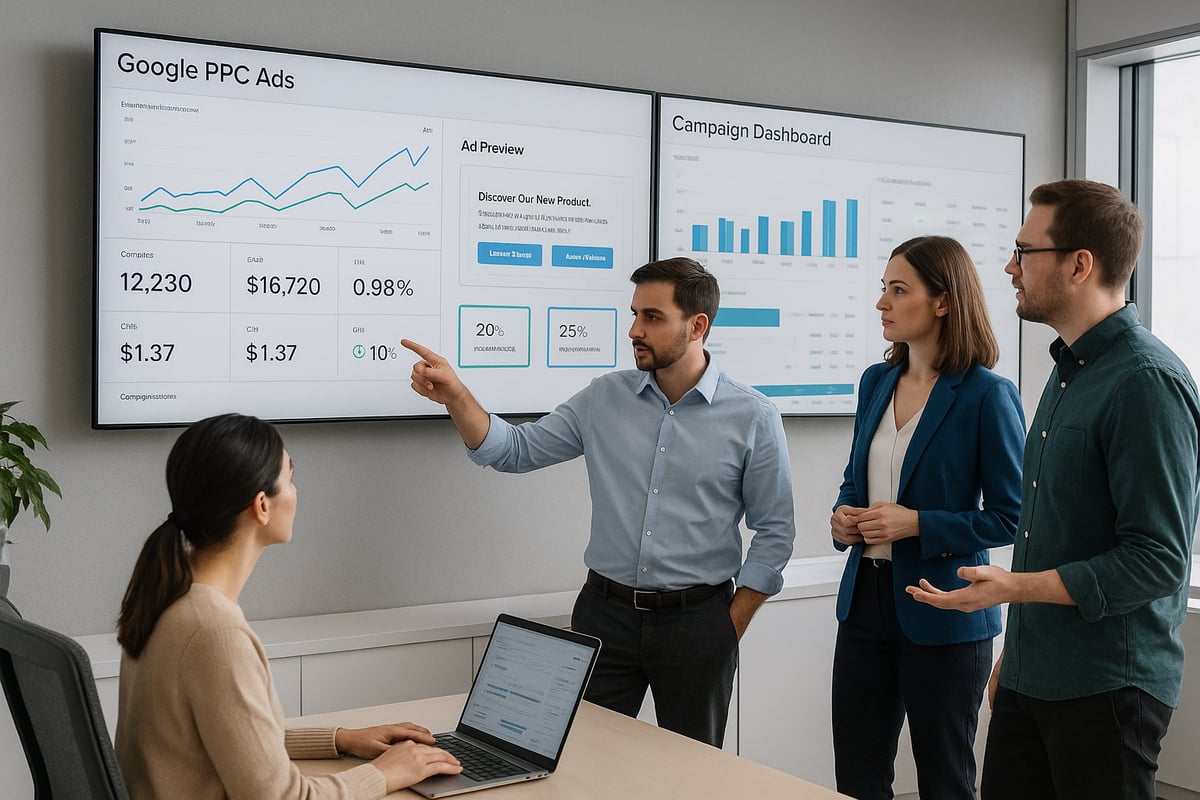
Automation is transforming google ppc ads, making campaigns smarter and more efficient. Google’s tools like Smart Bidding and Performance Max use AI to optimise bids, targeting, and creative in real time. This reduces manual workload and helps advertisers capture more conversions.
When should you rely on automation? It works best for large, data-rich campaigns, while manual controls suit niche or experimental strategies. For example, retailers can use Performance Max to seamlessly run omnichannel campaigns, letting AI allocate budgets and placements for the best results.
According to Google, automated bidding can increase conversions by 20%. For marketers seeking to refine their approach, reviewing Pay-Per-Click Ads Best Practices is essential for staying ahead of the curve.
Ad Extensions and Assets: Maximising Ad Visibility
Ad extensions are crucial for boosting the visibility and effectiveness of google ppc ads. Sitelinks, callouts, structured snippets, images, and lead forms can all be added to your ads, expanding their footprint and increasing click-through rates.
Extensions not only make your ads more informative but also improve Quality Score, helping you achieve better placements at lower costs. For instance, a service business using call extensions can drive direct phone enquiries straight from the search results.
Data shows that ad extensions can lift CTR by up to 15%. To get the most from these assets, regularly test different extensions, keep them updated, and tailor them to your campaign objectives.
Remarketing and Audience Expansion Tactics
Remarketing is a powerful way to re-engage users who have previously interacted with your website or app. With google ppc ads, you can create remarketing lists for search and display, or use dynamic remarketing for e-commerce to show tailored product ads.
Expanding your audience is also easier now, thanks to similar audiences and audience expansion features. For example, retargeting cart abandoners with personalised offers can significantly increase conversions.
Remarketing ads are proven to convert up to 70% better than first-touch ads. As privacy standards evolve, focus on privacy-first remarketing, relying on first-party data and consent-based targeting.
Optimising for Mobile and Voice Search
Over 60% of Google searches are now on mobile, making mobile optimisation critical for google ppc ads. Use mobile-optimised ad formats and adjust bids for mobile devices to reach users where they are most active.
Voice search is on the rise, so incorporate conversational keywords and target “near me” queries to attract local customers. For example, a local business optimising for voice search can capture users looking for immediate solutions.
Adopt AMP landing pages and prioritise mobile UX for faster load times. Regularly review your mobile and voice search data to identify new opportunities and maximise campaign effectiveness.
Conversion Rate Optimisation (CRO) for PPC
CRO is essential for getting the most value from your google ppc ads spend. Analysing user behaviour through Google Analytics reveals where users drop off, guiding improvements on landing pages.
A/B and multivariate testing help refine forms, CTAs, and layouts. For example, simplifying a lead form can boost completion rates. Tools like heatmaps and session recordings offer deeper insights into user journeys.
CRO can double your PPC ROI. Integrate conversion tracking and make CRO a continuous part of your PPC management for sustained results.
Staying Compliant: Privacy, Consent, and Google Ads Policies
Keeping google ppc ads compliant is more challenging than ever. Key regulations like GDPR and ePrivacy affect how you collect and use data. Google’s consent mode and tracking changes require advertisers to update their practices.
Ensure all ad content and landing pages meet Google’s policy standards. For example, an e-commerce site should display clear cookie consent banners and privacy notices.
Non-compliance can result in ad disapproval or account suspension. Stay informed about policy updates and prioritise privacy-first strategies to keep your campaigns running smoothly.
Measuring, Analysing, and Optimising Your Campaigns
Optimising your google ppc ads requires a precise approach to measurement, analysis, and ongoing improvement. By harnessing robust tracking, interpreting metrics effectively, and following best practices, you can unlock greater ROI and avoid wasted budget.
Setting Up Conversion Tracking and Analytics
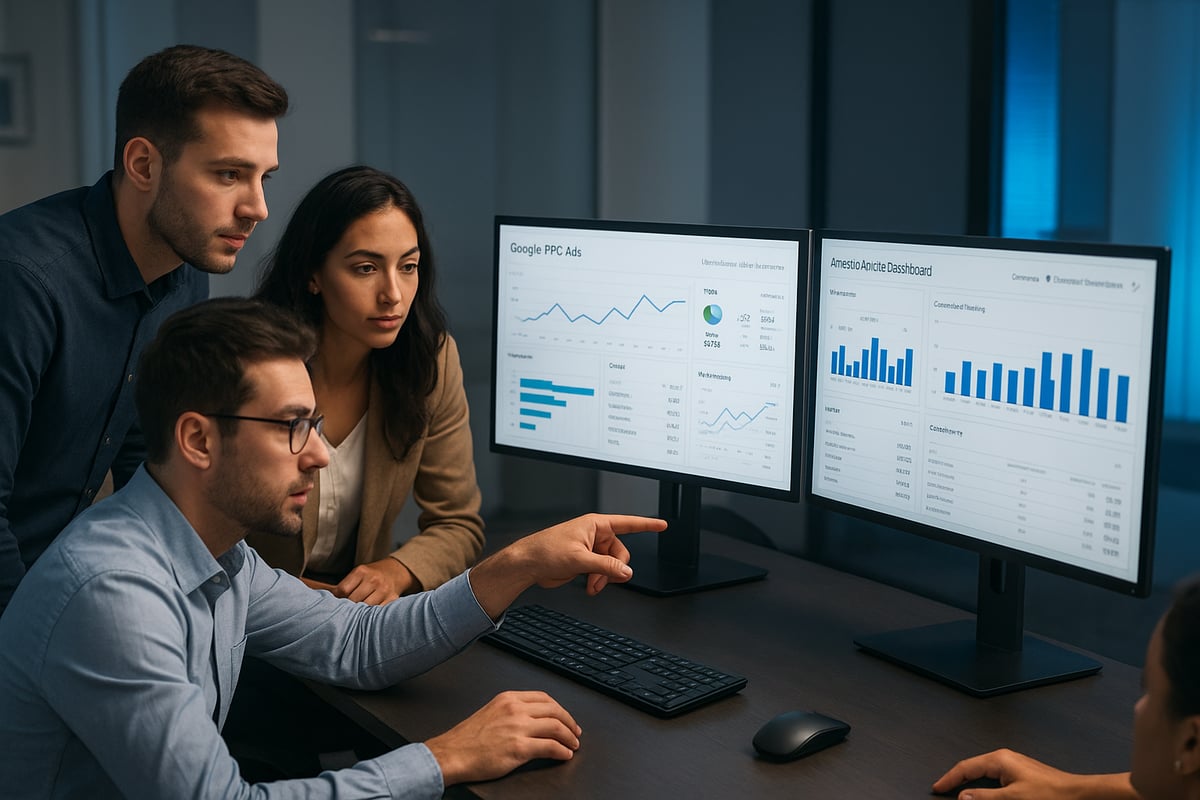
For effective google ppc ads management, tracking conversions is essential. Begin by setting up Google Ads conversion tracking to monitor key actions such as purchases, form submissions, or inbound phone calls.
Integrate Google Analytics 4 for deeper insights into user behaviour and multi-channel performance. This allows you to track both online and offline conversions, providing a holistic view of campaign impact.
For example, a local trades-business can track inbound calls as conversions, ensuring every lead is counted. Advertisers using conversion tracking typically achieve 30 percent higher ROI. If you encounter issues, check tag implementation and test using Google Tag Assistant for accurate data capture.
Interpreting Key PPC Metrics and Reports
Understanding the right metrics is vital to maximising google ppc ads performance. Focus on impressions, clicks, click-through rate (CTR), cost per click (CPC), cost per acquisition (CPA), Quality Score, and return on ad spend (ROAS).
Customise reports to highlight actionable insights by product, audience, or campaign type. For benchmarking, industry data such as the PPC Benchmarks 2026 guide helps you compare your CPCs and conversion rates against the latest standards.
Use Google Ads’ Recommendations tab for quick optimisations. Schedule regular reporting to keep stakeholders informed and ensure you are always on track.
Ongoing Optimisation: What to Test and Tweak
Continuous improvement is the key to getting the most from google ppc ads. Regularly review keywords, ads, and audience segments for underperformance.
Implement split-testing for ad copy, bidding strategies, and landing pages to identify what drives better results. For instance, rotate new creatives based on seasonal trends and monitor uplift.
Ongoing testing can improve campaign performance by 10 to 30 percent. Automate routine optimisations using scripts or rules, and always document changes and outcomes for future reference and learning.
Scaling Your Google PPC Campaigns
When your google ppc ads are delivering results, consider scaling up. Increase budgets, expand keyword lists, and explore new geographic markets or product launches.
Leverage campaign experiments and drafts to test larger changes without risk. For example, a local business might expand to nearby regions after success in its initial area. According to Google Ads Statistics 2026, the platform’s reach continues to grow, making it ideal for ambitious brands.
Use Manager Accounts to oversee multiple campaigns efficiently and drive faster market share growth.
Common Pitfalls and How to Avoid Them
Even experienced advertisers can make mistakes with google ppc ads. Common pitfalls include overspending on broad keywords, neglecting negative keywords, and ignoring Quality Score or landing page experience.
For example, an e-commerce brand might waste budget on irrelevant clicks if negative keywords are not maintained. Research shows that neglecting optimisation can waste up to 25 percent of ad spend.
Stay ahead by conducting regular audits, keeping up with industry changes, and fostering a culture of ongoing learning and peer review within your team.
The Future of Google PPC: Trends and Innovations to Watch in 2026
The landscape of google ppc ads is evolving rapidly, with new technologies, formats, and regulations shaping the way marketers approach paid search. Staying ahead requires understanding emerging trends and adapting strategies for lasting success.
AI-Driven Campaigns and Predictive Analytics
Artificial intelligence is at the heart of the next generation of google ppc ads. In 2026, machine learning algorithms shape everything from targeting and bidding to creative selection. Predictive analytics help marketers allocate budgets more efficiently, forecasting seasonal demand and consumer trends.
For example, retailers can anticipate spikes in product interest and adjust campaigns proactively. According to Google, AI-driven campaigns outperform manual efforts by 15 to 20 percent on average. As automation becomes more sophisticated, marketers must balance hands-off campaign management with ongoing oversight. For deeper insights on this shift, see Google Ads Trends 2025.
The Rise of Visual and Interactive Ad Formats
Visual storytelling is transforming google ppc ads, with image, video, and interactive formats gaining prominence. Shoppable video ads and immersive experiences are now common, especially for e-commerce brands seeking to boost engagement. YouTube Shorts, for instance, allow businesses to demonstrate products in action, driving higher intent to purchase.
Data shows that video ads deliver 48 percent higher engagement rates compared to static formats. Marketers are integrating creative assets across platforms to maintain brand consistency and capture attention. Testing new ad types is essential to stay competitive in this visually driven landscape.
Privacy-First Marketing and First-Party Data Strategies
With growing privacy regulations and the decline of third-party cookies, google ppc ads are shifting towards privacy-first marketing. Advertisers are focusing on building robust first-party data through loyalty programmes and direct interactions. This approach not only ensures compliance but also creates more relevant and personalised ad experiences.
Industry surveys reveal that 79 percent of marketers consider first-party data essential for future PPC success. Adapting to cookieless tracking and new consent standards is now a priority. For more on industry-specific impacts, read Healthcare PPC Trends 2026.
The Evolving Role of Human Expertise in PPC
As automation in google ppc ads accelerates, the role of human expertise is changing. While AI handles much of the optimisation, strategic oversight remains crucial. PPC specialists now focus on data analysis, creative strategy, and adapting to new technologies.
Agencies increasingly offer holistic digital solutions, blending technical skill with creative thinking. Demand for professionals with analytics expertise is rising, making continuous learning vital for long-term success. Navigating these changes requires both adaptability and a commitment to mastering new tools.
As you’ve seen, mastering Google PPC Ads in 2026 means staying ahead with smart strategies, clear goals, and a seamless online presence. Whether you’re looking to boost leads, drive e-commerce sales, or enhance your brand visibility, having a partner who understands both the technical and creative sides of digital marketing makes all the difference. If you’re ready to put these insights into action and want support tailored to your business—be it a boutique shop, growing online brand, or local service—let’s talk about how we can help you grow. Get in touch