In 2026, performance marketing stands at the forefront of business growth, redefining how brands achieve measurable results in a digital-first era.
As the marketing landscape evolves rapidly, businesses must embrace data-driven, accountable models to stay ahead. Performance marketing empowers organisations to track every pound spent, ensuring every action leads to tangible value.
This guide delivers the latest strategies, advanced channels, and expert insights tailored for 2026. Discover how to harness emerging trends, optimise campaigns, and implement actionable tactics designed to future-proof your success. Ready to maximise ROI and outpace your competitors? Let’s dive in.
Understanding Performance Marketing in 2026
Performance marketing in 2026 has become the cornerstone of digital growth strategies. Unlike traditional advertising, which often relies on broad reach and brand awareness, performance marketing is laser-focused on driving measurable actions. Brands only pay when a user completes a specific action, such as clicking an ad, submitting a lead form, or making a purchase.
This results-driven approach has transformed the marketing landscape, offering businesses greater accountability and control over their advertising budgets. The shift from paying for impressions to paying for outcomes allows organisations to optimise spend and maximise return on investment. Transparency and trackability are now essential, with every campaign scrutinised against clear metrics.
A key difference between performance marketing and legacy advertising lies in the risk transfer. In classic models, advertisers risked budget on impressions or exposure. In performance marketing, the risk shifts to publishers and partners, who are rewarded only when real results are delivered. This pay-for-performance model has driven innovation in campaign design and targeting.
The most important metrics in performance marketing include Cost Per Click (CPC), Cost Per Lead (CPL), Cost Per Acquisition (CPA), and Cost Per Install (CPI). These metrics serve both as key performance indicators and as payment models, enabling precise measurement and budget alignment. For example, a B2B software company may focus on CPL to fill its sales pipeline, while a mobile app developer may optimise for CPI.
To further clarify, performance marketing is a broad discipline encompassing various tactics and channels. Performance advertising typically refers to paid campaigns on digital platforms with direct response goals. Affiliate marketing, meanwhile, is a specialised subset where external partners promote offers in exchange for commission. While all affiliate marketing is performance-based, not all performance marketing is affiliate-driven.
Consider the difference between a micro-influencer affiliate campaign for a small business and a full-funnel omnichannel strategy for an enterprise. The former might use a handful of content creators to generate leads on a CPL basis, while the latter leverages multiple channels, integrated data, and advanced attribution to drive conversions across the customer journey.
Recent industry data highlights the influence of performance marketing, with channels like affiliate, native, and programmatic now accounting for a significant share of digital ad spend. According to recent reports, the creator economy alone has seen ad spend surpass traditional media, reflecting this shift in marketing budgets.
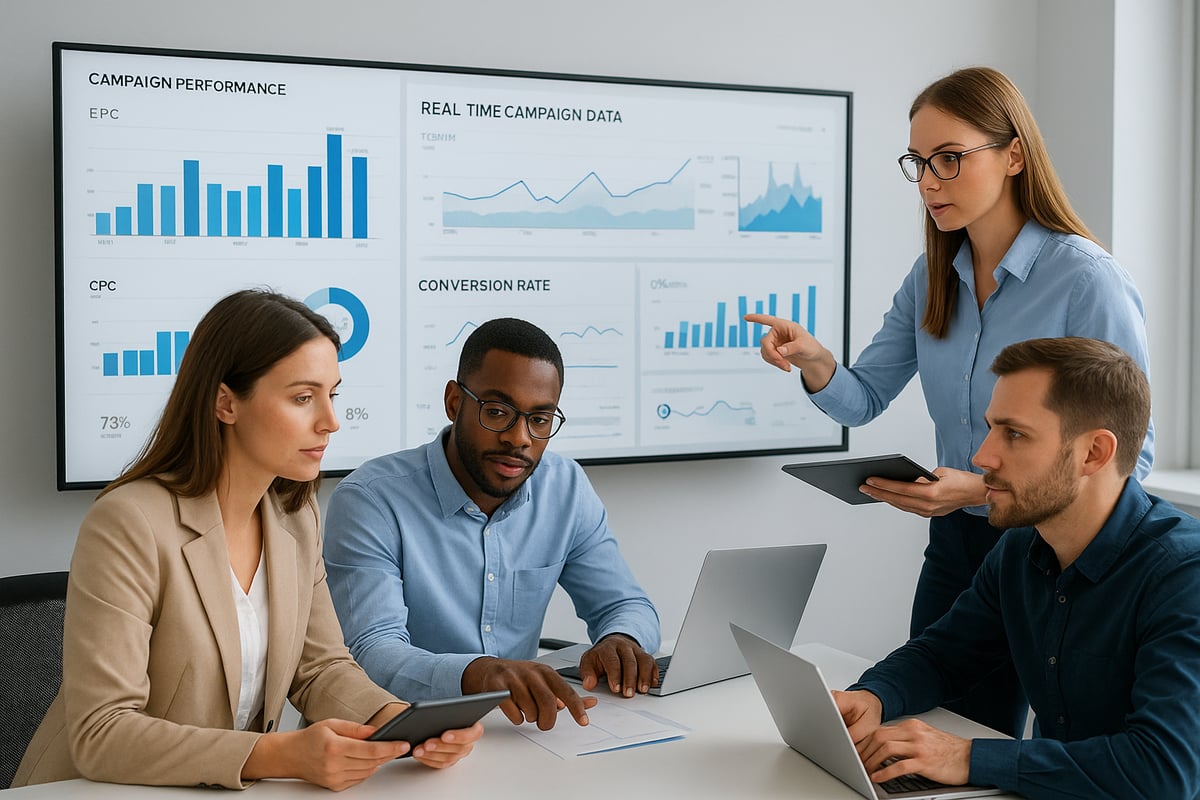
Transparency, optimisation, and data-driven decision-making have become the pillars of successful performance marketing. Marketers now rely on advanced analytics, real-time reporting, and agile strategies to stay ahead. To explore how leading brands adapt their digital network marketing strategies to this evolving landscape, visit Digital network marketing strategies for in-depth insights.
Performance Marketing vs. Affiliate Marketing
Affiliate marketing is a subset of performance marketing that relies on a network of affiliates or publishers to drive specific actions, such as sales or leads, on behalf of brands. Affiliates earn a commission only when their promotional efforts result in a defined outcome, making this model highly accountable and scalable.
The unique role of affiliates is to extend a brand’s reach through content, reviews, social media, or niche websites. For small and medium-sized businesses, micro-influencer campaigns enable targeted exposure with minimal upfront cost. In contrast, large enterprises often run expansive affiliate programmes, partnering with hundreds of publishers for broader impact.
Commission structures in affiliate marketing are flexible, ranging from cost-per-sale to cost-per-lead or even cost-per-click models. This adaptability allows businesses to scale their efforts efficiently, tailoring programmes to their growth objectives and available resources.
Both performance marketing and affiliate marketing empower brands to pay only for measurable results, but affiliate marketing’s network-driven approach offers unmatched flexibility and reach.
Core Performance Marketing Channels and Innovations
Performance marketing channels have evolved rapidly by 2026, blending established platforms with emerging innovations to drive measurable results. As businesses strive for greater accountability, the performance marketing landscape now encompasses a diverse mix of tactics, from affiliate partnerships to programmatic video and social commerce.
This diversification is driven by the need for precision targeting, real-time optimisation, and closed-loop attribution. Brands are leveraging the convergence of content and commerce, capitalising on impulse purchases through shoppable video and in-app experiences. Meanwhile, the adoption of first-party data strategies ensures campaigns are highly personalised and privacy-compliant.
According to recent industry reports, performance marketing channels now account for a significant proportion of digital ad spend, with tools like AI and automation enhancing campaign efficiency and scalability. For deeper insights into these innovations, see Performance Marketing Trends 2026: AI, Creatives & Data-Driven Growth.
The following sections break down the most impactful channels and innovations shaping performance marketing success in 2026.
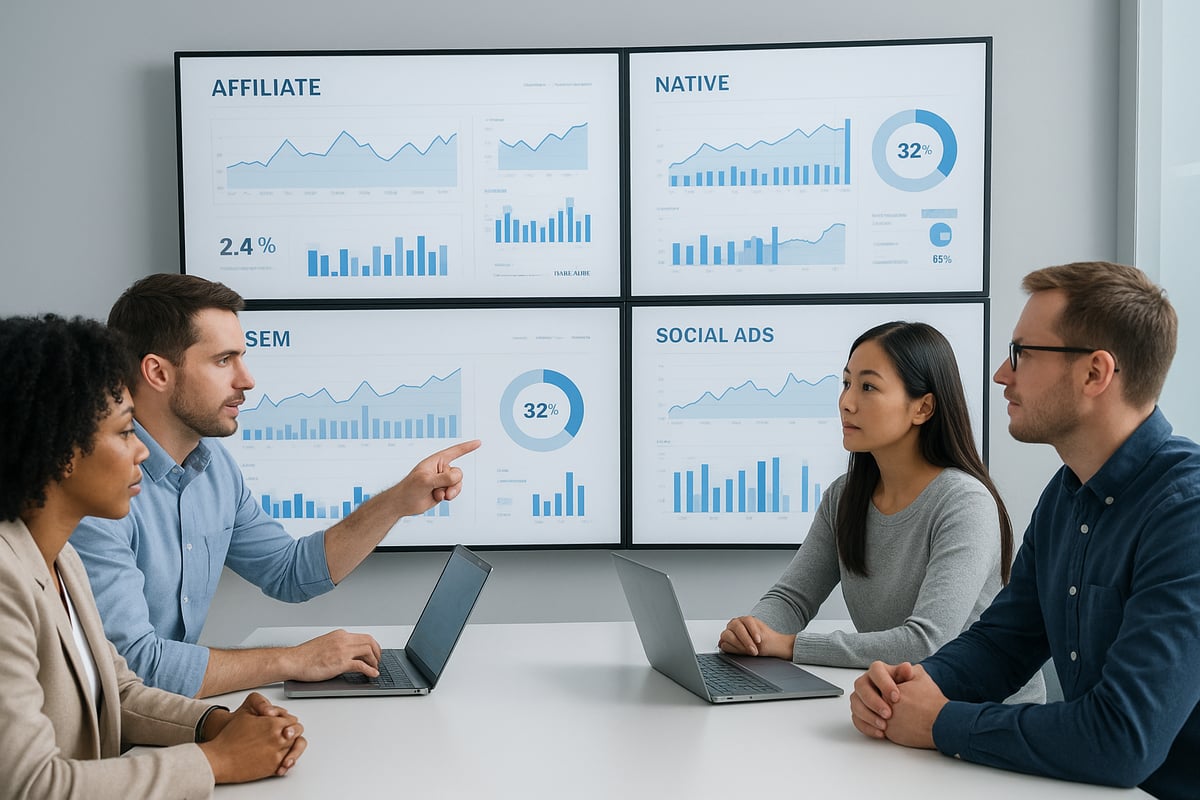
Affiliate Marketing
Affiliate marketing remains a cornerstone of performance marketing, providing brands with scalable, results-driven reach. By partnering with affiliates and publishers, businesses pay commissions only when predefined actions—such as sales or leads—are delivered.
Transparency is critical. Disclosure requirements and clear communication of commission structures help build trust across the affiliate ecosystem. Brands increasingly leverage micro-influencers for niche targeting, enabling both SMBs and enterprises to engage specific audiences with tailored offers.
Popular pricing models include cost per conversion and cost per like, offering flexibility and control. This approach ensures every marketing pound drives tangible results, making affiliate marketing a versatile tool for businesses of all sizes.
Native Advertising
Native advertising integrates brand messaging seamlessly within the content environment, creating a less intrusive and more engaging experience. These ads mimic the format and style of the platform, appearing as sponsored articles, story filters, or in-feed content.
For example, Instagram Story filters and sponsored content on news sites illustrate how native ads capture user attention while maintaining relevance. The performance marketing value lies in higher engagement rates and precise tracking of clicks and conversions.
Brands favour native advertising for its ability to drive authentic interactions and reinforce brand credibility. With advanced analytics, marketers can continually optimise campaigns, ensuring ongoing performance improvements.
Search Engine Marketing (SEM)
Search engine marketing is a vital channel in the performance marketing mix, targeting high-intent users through paid search ads. Unlike SEO, which focuses on organic rankings, SEM delivers immediate visibility on search engine results pages for targeted keywords.
This channel excels at capturing users at the bottom of the funnel, converting intent into action. Google Ads campaigns, for instance, allow brands to bid on relevant terms and drive sales or leads almost instantly.
The cost per conversion pricing model keeps campaigns accountable, ensuring budgets are spent efficiently. SEM’s data-driven nature supports continuous optimisation, making it indispensable for brands seeking rapid, measurable growth.
Social Media Marketing
Paid social advertising has become central to performance marketing strategies, thanks to the reach and targeting capabilities of platforms like Facebook, Instagram, TikTok, LinkedIn, YouTube, and Pinterest.
Marketers use demographic and psychographic data to deliver highly personalised ads. For example, brands can target specific age groups or interests, refining their approach for maximum impact. Performance metrics such as cost per conversion, cost per view, and cost per like help quantify success.
Social commerce integrations are gaining prominence, enabling users to purchase directly within social platforms and reducing friction in the buying journey. This channel’s adaptability and detailed analytics make it a key driver of performance marketing ROI.
Connected TV (CTV) and Retail Media Networks (RMNs)
Connected TV enables brands to reach audiences via smart TVs and streaming devices, offering programmatic buying, real-time measurement, and precise household-level targeting. CTV ads stand out for their ability to combine mass reach with actionable insights, supporting closed-loop attribution that links ad exposure to purchases.
Retail media networks, operated by major retailers, leverage first-party shopper data to power both on-site and off-site advertising. This shift allows brands to engage consumers at multiple touchpoints, from product discovery to purchase.
The integration of CTV and RMNs in performance marketing strategies creates opportunities for granular targeting and robust measurement, maximising the value of every advertising investment.
Shoppable Video and Social Commerce
Shoppable video and social commerce are revolutionising performance marketing by merging content and commerce. These channels enable users to purchase products directly within video streams or social feeds, reducing conversion friction and capturing impulse buys.
Examples include in-app purchases via TikTok, Instagram Reels, or YouTube live streams. Data shows that shoppable video consistently achieves higher conversion rates compared to traditional e-commerce funnels.
The seamless integration of shopping and content not only boosts sales but also enhances the customer experience. As performance marketing continues to evolve, these channels will play a pivotal role in driving growth and innovation.
Measuring Performance Marketing Success
Measuring performance marketing success is critical for any business aiming to maximise ROI in 2026. With budgets under scrutiny and marketing strategies becoming more sophisticated, clear measurement frameworks help teams focus on what truly drives growth. Setting the right key performance indicators (KPIs) and understanding which metrics matter most enables brands to optimise campaigns, allocate resources efficiently, and stay ahead of the competition.
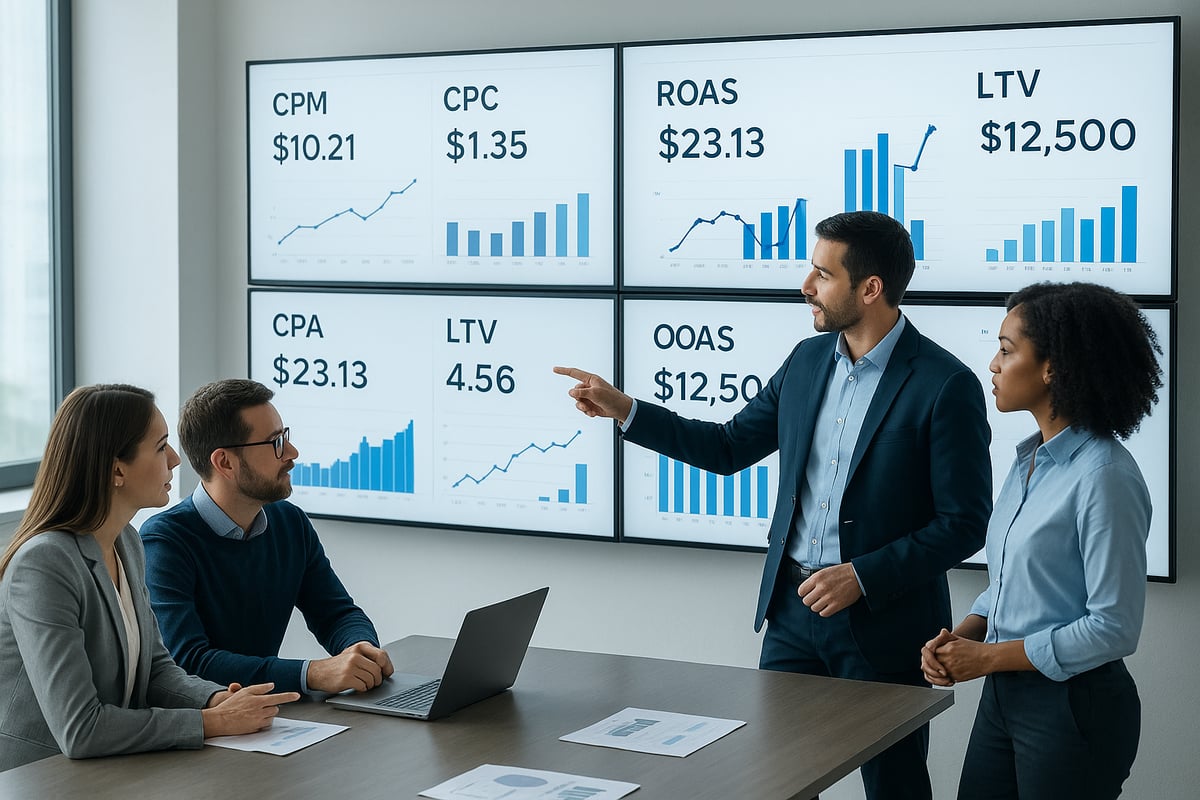
Top-of-Funnel Metrics
At the top of the funnel, performance marketing relies on metrics that measure reach, visibility, and initial engagement. Two of the most important are Cost Per Mille (CPM) and Cost Per Click (CPC).
- CPM (Cost Per Mille): This metric calculates the cost for every 1,000 ad impressions. It is a standard for measuring brand awareness and the potential scale of a campaign.
- CPC (Cost Per Click): CPC tracks the price paid for each click on an advert, revealing how effectively ads drive users to your website or landing page.
For example, programmatic display campaigns often focus on maximising impressions (CPM) for new product launches, while optimising for CPC can help generate high-quality traffic. By monitoring these metrics, businesses can refine their top-of-funnel tactics and ensure their performance marketing spend is bringing in the right audience.
Bottom-of-Funnel & Conversion Metrics
Conversion metrics are at the heart of performance marketing, as they directly reflect the business outcomes that matter most. Two primary indicators here are Cost Per Lead (CPL) and Cost Per Acquisition (CPA).
- CPL (Cost Per Lead): This metric shows how much is spent to capture a qualified lead, making it vital for B2B and high-value B2C campaigns.
- CPA (Cost Per Acquisition): CPA measures the cost to secure a paying customer or complete a defined action, such as a purchase or app install.
For instance, a B2B company might optimise for CPL by running targeted LinkedIn campaigns, while an e-commerce retailer focuses on lowering CPA through retargeting ads. Industry benchmarks in 2026 point to increasingly competitive CPA targets as brands seek efficiency. For more on optimising lead generation, see these lead generation techniques for 2026.
Strategic Metrics: ROAS & LTV
While conversion metrics track immediate actions, strategic performance marketing success is measured by Return on Ad Spend (ROAS) and Customer Lifetime Value (LTV).
- ROAS: This metric calculates how much revenue is generated for every pound invested in advertising. A ROAS above 4:1 is often considered strong, though benchmarks vary by industry and channel.
- LTV: Customer Lifetime Value forecasts the total revenue a business can expect from a single customer over time. Linking LTV to acquisition costs allows for more aggressive CPA targets and smarter budget allocation.
For example, a subscription-based business may use LTV to justify higher upfront spending, confident that long-term value offsets initial costs. As performance marketing matures in 2026, brands increasingly shift from short-term wins to strategies that maximise lifetime value.
Unified Measurement & Attribution
One of the biggest challenges in performance marketing is connecting data across multiple channels. Siloed reporting can obscure the true impact of campaigns, making unified measurement essential.
- Unified frameworks: These integrate data from all channels, enabling marketers to view performance holistically.
- Attribution models: Multi-touch attribution assigns value to each customer interaction, offering a clearer picture of which touchpoints drive conversions.
Advanced analytics platforms now provide real-time insights and cross-channel attribution, empowering performance marketing teams to optimise strategies with precision. By embracing unified measurement, brands can confidently scale what works and eliminate wasted spend.
Emerging Trends and Future Insights for 2026
The landscape of performance marketing is evolving rapidly as we approach 2026. Marketers face a wave of innovation, with generative AI, omnichannel strategies, and data privacy reshaping the industry. To remain competitive, businesses must understand and embrace these emerging trends, integrating them into their performance marketing strategies for measurable growth.

Generative AI in Performance Marketing
Generative AI is revolutionising performance marketing by enabling personalisation at unprecedented scale. Marketers can now automate creative production, generate campaign variations, and tailor messaging to individual users in real time. This technology analyses vast datasets, identifying patterns and predicting consumer behaviour, which allows brands to deliver highly relevant ads and offers.
With generative AI, performance marketing campaigns can dynamically adapt website content, product recommendations, and email messaging based on user intent. For example, a retailer might use AI to automatically update homepage banners according to trending products or user browsing history. Autonomous campaign management is also becoming mainstream, as AI handles bidding, budget allocation, and audience segmentation with minimal human input.
This shift frees marketers from routine tasks, letting them focus on strategy and creative direction. As highlighted in 10 marketing trends to watch out for in 2026, AI-driven performance marketing not only boosts efficiency but also helps brands stay agile in a fast-changing market. Embracing generative AI is essential for brands seeking to future-proof their performance marketing efforts and respond swiftly to consumer trends.
Omnichannel and Unified Customer Experience
Consumers now expect seamless interactions with brands across multiple channels and devices. In performance marketing, omnichannel strategies have become essential for creating a unified customer journey from first touch to conversion. Campaigns that connect digital ads, email, social, connected TV, and even in-store experiences deliver higher engagement and improved ROI.
A common scenario involves a user seeing a connected TV ad, researching products on mobile, and completing a purchase in-store. This fragmented path requires marketers to integrate data and measurement across all touchpoints. Multi-touch attribution models provide insights into how each channel contributes to conversions, helping optimise spend and creative assets.
Unified performance marketing relies on advanced analytics platforms that aggregate data, track user interactions, and enable real-time adjustments. Integrating channels like SEO, paid media, and social is critical for delivering consistent messaging and maximising results. For more on effective integration, see SEO and marketing integration. Businesses that master omnichannel performance marketing are positioned to build lasting customer relationships and outperform competitors in 2026.
Data Privacy and First-Party Data Strategies
Data privacy is now central to performance marketing success. With regulations such as GDPR and the phasing out of third-party cookies, brands are shifting towards first-party data strategies. Collecting and leveraging data directly from customers, through loyalty programmes, subscriptions, and direct interactions, enables marketers to maintain personalisation while respecting privacy.
Retail media networks are a leading example, using shoppers’ loyalty data to deliver targeted ads with precision and transparency. This approach not only complies with new privacy standards but also enhances trust between brands and consumers. Marketers must prioritise clear consent processes, transparent data policies, and security to maintain credibility.
Performance marketing strategies in 2026 will depend on robust first-party data infrastructures and privacy-compliant practices. As AI and automation become more embedded, the ability to use high-quality, permissioned data will be a key differentiator. Brands that invest in privacy-centric performance marketing will be better equipped to navigate future regulatory changes and sustain long-term growth.
Actionable Strategies for Performance Marketing Success in 2026
Success in performance marketing in 2026 requires more than just running campaigns. It demands a strategic, data-driven approach, blending creativity with technology and constant optimisation. Here is a step-by-step guide to building a future-proof strategy that delivers measurable results and maximises ROI in today’s dynamic landscape.
1. Define Clear, Measurable Objectives
Every effective performance marketing plan starts with clear objectives. Set specific, quantifiable goals aligned with your business strategy, such as increasing qualified leads by 30 percent or reducing cost per acquisition.
Break down objectives for each channel and campaign. Define your key performance indicators (KPIs) early, ensuring everyone in your team understands what success looks like.
2. Select the Right Channel Mix
Choosing the optimal mix of channels is crucial to reach and engage your target audience. Assess where your prospects spend their time and which platforms offer the best performance marketing opportunities for your industry.
Blend established channels like search engine marketing and affiliate programmes with emerging platforms such as connected TV and retail media networks. For social campaigns, consult social media management best practices to ensure your strategy aligns with the latest trends and algorithms.
3. Develop Compelling, Personalised Creative Assets
Strong creative is the engine of high-performing campaigns. Build assets tailored for each channel, using audience insights to drive personalisation and relevance.
Leverage dynamic content, interactive ads, and shoppable formats to enhance engagement and conversion rates. Test multiple creative variations to identify what resonates with your audience in each stage of the funnel.
4. Implement Robust Tracking and Analytics
Accurate data is the foundation of performance marketing. Implement robust tracking solutions across all channels, using UTM parameters, pixels, and advanced analytics platforms.
Monitor real-time performance against your KPIs. Use attribution models to understand which touchpoints drive the highest value, and integrate analytics to unify data from all sources.
5. Optimise Campaigns Continuously with AI and Automation
Continuous optimisation is key to maximising performance marketing results. Adopt AI-powered tools for automated bidding, creative testing, and audience segmentation.
Analyse performance data frequently, making incremental adjustments to budgets, targeting, and messaging. Embrace rapid experimentation, learning quickly from both successes and failures.
6. Integrate First-Party Data and Prioritise Privacy-Compliant Practices
First-party data is becoming the backbone of performance marketing due to privacy regulations and the decline of third-party cookies. Collect and activate data from your CRM, website, and loyalty programmes to improve targeting and personalisation.
Prioritise consumer trust by ensuring transparent data usage and compliance with regulations like GDPR. Collaborate with IT and legal teams to maintain privacy standards.
7. Foster Collaboration and Agility Across Teams
Performance marketing success depends on seamless collaboration between marketing, sales, and IT. Share insights and coordinate actions to create a unified customer experience.
Stay agile, ready to pivot strategies based on market shifts and new opportunities. Encourage a culture of rapid testing and scaling of successful tactics.
Best Practices and Tools Table
| Best Practice | Description | Example Tool |
|---|---|---|
| Budget Allocation | Allocate spend based on channel performance | Google Analytics, HubSpot |
| Creative Testing | A/B test messaging and visuals | Optimizely, Google Ads |
| Audience Segmentation | Refine targeting using first-party data | Segment, Salesforce |
| Cross-Channel Integration | Unify campaigns and reporting | Meta Business Suite, Tableau |
| Automation | Streamline bidding, reporting, optimisation | AdRoll, Smartly.io |
Case Study: Omnichannel and AI-Driven Campaigns
Consider a retail brand launching a new product using a mix of performance marketing channels. The team sets clear objectives and leverages paid search, social, and connected TV for broad reach.
They use dynamic creative, AI-driven audience segmentation, and real-time analytics. By rapidly testing and optimising campaigns, the brand sees a 25 percent lift in conversion rates and a 30 percent increase in ROI. Industry data from 2025 shows businesses using automation in performance marketing report efficiency gains of up to 40 percent.
To stay ahead, marketers must balance creativity with analytical thinking, embrace new technologies, and adopt best practices from industry leaders. For further insights into the evolving landscape, explore The 8 Trends I’m Betting My Entire Marketing Strategy On in 2026.
As you look to put these 2026 performance marketing strategies into practice, remember that a great website and a unified digital approach are the foundation of real results. At Ruff Idea, we combine bespoke design, SEO expertise, and seamless digital integration to help your business stand out and succeed online. Whether you’re aiming to boost conversions, grow your audience, or future proof your brand, we’re here to support your next step. If you’re ready to elevate your performance marketing and unlock measurable growth, Get in touch—let’s achieve your goals together.