In 2026, small businesses face a digital marketplace that is more competitive than ever. A strong online presence is not just a benefit, it is essential for standing out and reaching new customers. The right website design for small business can build trust, drive engagement, and fuel growth, giving you a crucial edge.
This guide provides straightforward, practical strategies tailored for small businesses ready to launch or refresh their website. By following each step, you will learn how to plan, design, and maintain a high-performing site that delivers real results.
Explore key areas including planning, design principles, technical essentials, SEO, user experience, and ongoing support to ensure your business thrives online.
Understanding Small Business Website Needs in 2026
The landscape of website design for small business is rapidly evolving. In 2026, meeting customer expectations and standing out online is more challenging than ever. Businesses must carefully consider user experience, security, branding, and ongoing support to thrive in a competitive market.
Evolving Digital Expectations for Small Businesses
Consumer expectations for website design for small business have soared. Today’s customers demand seamless, mobile-first experiences that look and perform flawlessly on any device. According to Harris Digital, every site must be fully responsive to compete.
Trust signals are now non-negotiable. Features such as SSL certificates, professional email addresses, and secure payment gateways help build credibility and convert browsers into buyers. With the rise of DIY website builders, it is easier to launch a site, but many businesses risk ending up with generic, “cloned” designs. Toast Design warns that these templates often lack the unique branding needed to stand out.
Integrated marketing tools are also essential. Newsletters, social media feeds, and review widgets help businesses engage customers and drive repeat visits. Bespoke solutions, such as those highlighted in web design for small businesses, are increasingly vital for brand differentiation.
Real-world results back this up. Over 80% of UK consumers now research small businesses online before making a purchase, making a strong digital presence critical.
Key Website Goals for Small Businesses
Defining clear objectives is fundamental to website design for small business. Common goals include lead generation, boosting brand awareness, enhancing customer engagement, and driving online sales.
Aligning features with these goals ensures the site delivers real value. For example, trades businesses benefit from booking forms and galleries, while retailers need robust e-commerce features. Harris Digital showcases how including maps, portfolios, and testimonials supports diverse business needs.
Clear calls-to-action (CTAs) are crucial for conversions. Rather than prioritising aesthetics, successful businesses focus on a results-driven approach, using their website to move users towards specific actions. By setting measurable goals, small businesses can track progress and refine strategies over time.
Common Challenges and Pitfalls
Many companies encounter pitfalls when tackling website design for small business. Relying on off-the-shelf themes leads to sites that look and feel generic. Neglecting SEO or failing to optimise for mobile devices often results in poor search rankings and high bounce rates.
Cheap website solutions may seem appealing but frequently hide extra costs. Toast Design warns that generic sites can even harm Google rankings, making it harder for new customers to find you. Maintenance and security are often overlooked, putting sites at risk of vulnerabilities and data loss.
Consider the business that lost customers after its website was flagged as not secure. Outdated content or technical issues can quickly erode trust and credibility, showing the importance of proactive management.
The Importance of Professional Support and Ongoing Maintenance
Ongoing maintenance is a cornerstone of effective website design for small business. Regular updates, security patches, and content management keep your site running smoothly and securely.
Both Harris Digital and Toast Design include support as part of their packages, demonstrating the value of having experts on hand. Businesses with a dedicated support team can respond swiftly to issues, reducing downtime and ensuring data protection.
Industry data reveals that 60% of small business websites are vulnerable to cyber threats without regular maintenance. Investing in professional support is not just about peace of mind—it saves time and money over the long term, allowing you to focus on growing your business with confidence.
Planning Your Small Business Website: Step-by-Step
Embarking on a website design for small business starts with a strategic plan. Careful preparation ensures your site meets your goals and stands out in a crowded digital landscape. By following a structured process, you can avoid costly mistakes and maximise your investment.

Setting Clear Business Objectives and Target Audience
Every successful website design for small business begins with clear objectives. Define what you hope to achieve, whether it is lead generation, boosting sales, or providing information. Understanding your audience guides both design and content, ensuring your site appeals to their preferences and needs.
Consider the approach of agencies like Toast Design, which prioritise business goals and audience analysis before any design work begins. For instance, a local bakery may want to enable online orders and showcase daily specials to attract neighbourhood customers. For more on essential features to include from the outset, see the 10 qualities of a great website.
Competitor and Keyword Research
Analysing competitors is a crucial step in website design for small business. Start by reviewing top local competitors’ websites to identify strengths, weaknesses, and industry benchmarks. Look for features that attract customers and gaps you can fill with your own offering.
Conduct keyword research to discover the terms your audience uses when searching for your services. This not only informs your content but also lays the foundation for effective SEO. Agencies like Toast Design include initial competitor and keyword research in their packages, ensuring you target the right audience from the start.
Content Strategy and Information Architecture
A thoughtful content strategy is fundamental to website design for small business. Plan your content before any design work begins to ensure a logical, user-friendly experience. Create a sitemap outlining your main pages, such as services, about, testimonials, and contact.
Use wireframes to visualise the layout and flow of information. Toast Design recommends letting content lead design. For example, mapping out a clear services page can help users find what they need quickly, building trust and encouraging engagement.
Choosing the Right Platform and Technology
Selecting the right platform is another key decision in website design for small business. Consider options like WordPress, Shopify, custom builds, or DIY website builders. Each has unique advantages and limitations.
| Platform | Flexibility | Cost | Scalability | Ease of Use |
|---|---|---|---|---|
| WordPress | High | Moderate | High | User-friendly |
| Shopify | Medium | Higher | High | Very easy |
| Custom | Very high | Highest | Very high | Varies |
| DIY Builder | Low | Low | Low | Easiest |
For example, a trades business might choose WordPress for its flexibility and integration with booking plugins. Evaluate your specific needs before committing.
Budgeting and Cost Considerations
Budgeting is critical in website design for small business. Typical costs include:
- Design and development
- Hosting and domain registration
- Ongoing maintenance
Competitor pricing varies: Harris Digital starts at £299, while Toast Design begins at £1500. Investing in quality over the cheapest option can save money long-term. Beware of hidden expenses with generic or DIY solutions, such as limited support or costly upgrades.
Timeline and Project Management
Understanding timelines is vital for successful website design for small business. Project duration ranges from several days to a few weeks, depending on complexity and content readiness. Clear communication and setting milestones help keep the project on track.
Use project management tools or schedule regular check-ins with your web agency to monitor progress. For example, agreeing on weekly updates can ensure everyone remains aligned and potential issues are addressed early.
Designing for Success: Modern Principles and Best Practices
Achieving a standout website design for small business in 2026 requires more than good looks. It demands a holistic approach that blends branding, usability, and compliance. Let us break down the key principles every small business should follow to create a site that builds trust, converts visitors, and supports growth.

Bespoke Branding and Visual Identity
Your brand is your business’s fingerprint online. For effective website design for small business, bespoke branding is essential. Generic, off-the-shelf themes may save time, but they often result in a forgettable web presence. Google can even flag “cloned” sites, making it harder to rank.
Consider these branding elements:
- Unique logo and colour palette
- Consistent use of fonts and imagery
- Tailored layouts that reflect your story
For example, a local salon that rebranded with a custom colour scheme and new logo saw a significant increase in online bookings. Investing in bespoke design ensures your business stands out and resonates with your target audience.
Mobile-First and Responsive Design
With over 60% of UK website traffic now coming from mobile devices, mobile-first thinking is non-negotiable for website design for small business. Google prioritises mobile-friendly sites in its search results, so your website must adapt seamlessly to screens of all sizes.
Responsive design delivers:
- Consistent experience across mobiles, tablets, and desktops
- Faster load times and improved usability
- Better SEO performance
A local retailer who switched to a responsive site reported higher online sales and more positive customer feedback. Prioritising mobile usability keeps your business competitive and accessible to all users.
User Experience (UX) and Conversion Rate Optimisation (CRO)
A successful website design for small business must focus on user experience. Visitors expect sites to be easy to navigate, visually appealing, and quick to load. Clear calls-to-action (CTAs) guide users towards making enquiries or purchases.
Effective UX and CRO tactics include:
- Intuitive menus and logical site structure
- Fast-loading pages with optimised images
- Prominent forms, reviews, and testimonials
For instance, after adding a simple contact form and streamlining navigation, a service business saw a 30% increase in leads. Prioritising UX and CRO turns browsers into loyal customers.
Essential Features for Small Business Websites
Every website design for small business should include a core set of features that build trust and drive engagement. These essentials ensure your site is secure, professional, and ready to convert visitors.
Key features to include:
- SSL certificate for secure browsing
- Professional email addresses
- Contact forms and interactive maps
- Galleries, testimonials, FAQs, and social media feeds
A tradesperson with a detailed portfolio page and integrated reviews attracts more enquiries and stands out from the competition. Make these features a priority from the start.
Accessibility and Legal Compliance
Accessibility is no longer optional for website design for small business. An inclusive website opens your services to the widest possible audience and protects your business from legal pitfalls. Compliance with WCAG standards, cookie policies, privacy regulations, and GDPR is essential.
Best practices include:
- Clear, readable fonts and proper colour contrast
- Alt text for images and keyboard navigation
- Transparent privacy and cookie notices
For further insights, see Accessibility as a Standard Practice, which explains why accessible design is now a must for small businesses. One local shop improved accessibility and saw new customers from previously underserved groups.
Showcasing Work and Building Trust
Building trust is the foundation of website design for small business. Showcasing your work, sharing client testimonials, and displaying real results help potential customers feel confident in choosing you.
Ways to build trust online:
- Curated portfolios and case studies
- Verified customer reviews
- Photo galleries of completed projects
A wedding planner’s website featuring galleries and heartfelt testimonials helped secure more bookings. Highlighting your expertise and positive feedback can set you apart in a crowded market.
Technical Foundations: Hosting, Security, and Performance
A robust technical setup is the backbone of successful website design for small business. The right choices in hosting, security, speed, and content management not only protect your investment but also ensure customers have a seamless, trustworthy experience. Let us explore each essential element for a high-performing site.
Choosing Reliable Hosting and Domain Services
Selecting the right hosting is a critical first step in website design for small business. Options range from managed hosting, where experts handle technical tasks, to self-hosted solutions that offer more control but require hands-on management. Local providers, such as Harris Digital’s cloud hosting or Toast Design’s use of Google Datacenters in London, offer fast speeds and local support.
Key features to compare:
- Uptime guarantees (aim for 99.9% or higher)
- Customer support availability
- Scalability for future growth
Switching to managed hosting can significantly improve reliability and free up time for business growth. If you are revamping your site, reviewing website redesigns and improvements can help you identify technical upgrades that boost performance.
Implementing SSL and Website Security
Security is non-negotiable for website design for small business. An SSL certificate, visible as the padlock icon and HTTPS in the browser, is now a baseline requirement. Not only does it protect customer data, but it also improves your site’s search ranking and credibility.
Competitors like Harris Digital and Toast Design include free SSL as standard. Additional measures such as automated backups, regular updates, and 24/7 monitoring are essential to guard against threats. With 60% of small business sites vulnerable to cyber attacks without routine maintenance, proactive security is vital. Preventing data breaches builds customer trust and keeps your business safe.
Website Speed, Performance, and Scalability
Fast load times are a cornerstone of effective website design for small business. Slow websites frustrate users and harm your Google rankings. Toast Design focuses on performance optimisation and Google PageSpeed standards to deliver quick, responsive sites.
To ensure top speed:
- Optimise images and compress files
- Use caching plugins or CDN services
- Regularly test speed with tools like Google PageSpeed Insights
A local shop that improved its image optimisation and code structure saw a dramatic drop in bounce rates and higher sales. Scalability is also important — choose hosting and technology that can grow with your business needs.
Content Management and Flexibility
An easy-to-use content management system (CMS) is at the heart of modern website design for small business. Platforms like WordPress empower business owners to update blogs, services, or promotions without developer intervention. Toast Design enables clients to manage their sites independently, saving both time and money.
Benefits of a flexible CMS include:
- Reusable content blocks for quick updates
- User tutorials for self-sufficiency
- No ongoing developer fees for basic changes
For example, a business owner can swiftly add seasonal offers or new testimonials, keeping their website fresh, relevant, and engaging for visitors.
SEO and Content Strategies for 2026
A strong SEO and content strategy is the backbone of effective website design for small business. With digital competition increasing, it is essential to master both technical and creative approaches to reach your audience and achieve measurable results.
On-Page SEO Essentials
On-page SEO forms the foundation of website design for small business. Start by researching relevant keywords and integrating them naturally into your content, meta titles, descriptions, and headings. Optimise image alt text and ensure your URLs are clean and descriptive.
Internal linking between pages helps both users and search engines navigate your site. For UK small businesses, a strong on-page SEO setup can mean the difference between being found or overlooked online. According to Website Statistics Every Marketer Should Know, over 80% of consumers research businesses online before making a decision, so your site must be optimised from launch.
Local SEO Tactics for Small Businesses
Local search is vital for website design for small business, especially when serving a specific community. Claim and optimise your Google My Business profile, ensuring your business name, address, and phone number are accurate everywhere online.
Encourage happy customers to leave reviews, as positive ratings can improve your local rankings. List your business in reputable UK directories and use location-based keywords throughout your content. Appearing in “near me” searches can drive real foot traffic and local leads.
Content Creation and Blogging for Authority
High quality content is a powerful driver of authority and trust in website design for small business. Regular blogging allows you to target new keywords, answer common customer questions, and establish your expertise.
Plan a content calendar that addresses seasonal trends and industry topics relevant to your audience. Use storytelling and real-life examples from your business to connect with readers. Fresh content also signals to search engines that your site is active, which can boost your rankings over time.
Social Media Integration and Online Reputation
Integrating social media into your website design for small business makes it easy for visitors to connect, share, and engage with your brand. Embed Instagram, Facebook, or Twitter feeds directly onto your site to display your latest updates.
Include social sharing buttons on blog posts and key pages. Feature customer testimonials and reviews to build trust and demonstrate credibility. A strong online reputation can differentiate your business from competitors and drive conversions.
Measuring Success: Analytics and Continuous Improvement
Tracking performance is critical in website design for small business. Set up Google Analytics and Search Console to monitor user behaviour, traffic sources, and conversions.
Review this data regularly to identify what is working and where improvements are needed. Consider A/B testing headlines or calls-to-action to maximise results. Continuous refinement, based on real insights, ensures your website evolves with your business and market trends.
Ruff Idea: Your Local Partner for Bespoke Small Business Websites
For small businesses in Leicestershire and beyond, Ruff Idea stands out as the trusted local expert in website design for small business. With over a decade of experience, Ruff Idea crafts every website to reflect the unique goals, audience, and brand identity of each client.
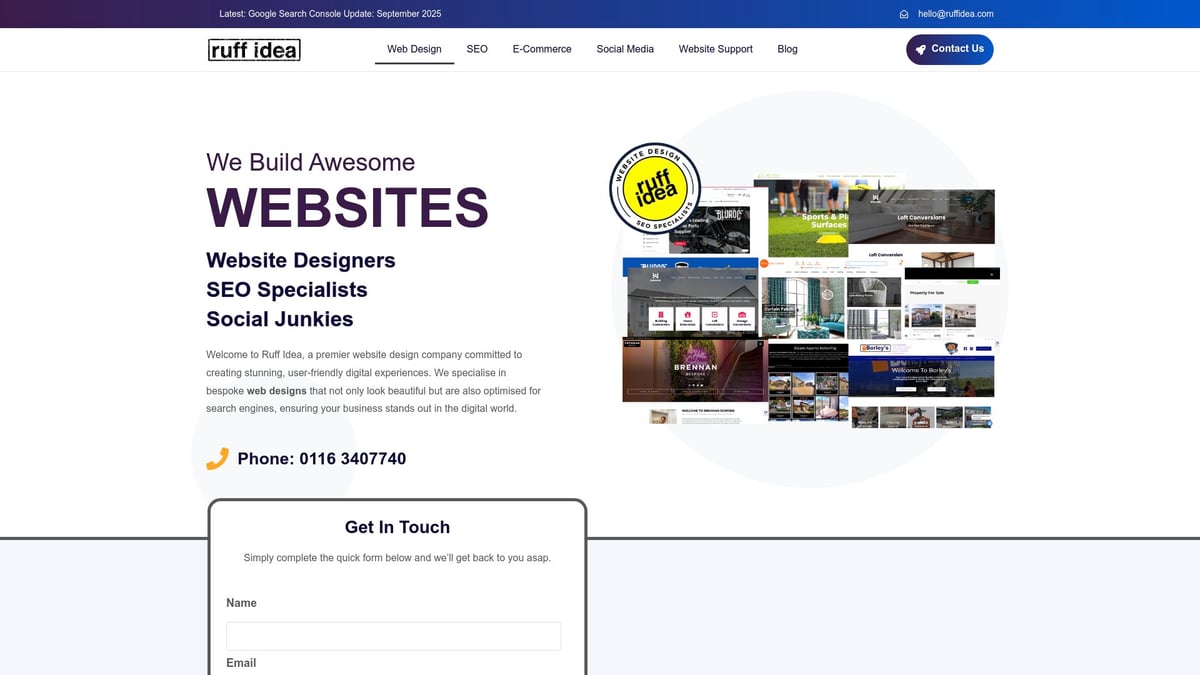
The agency’s approach is never one-size-fits-all. Instead, every project begins with a thorough understanding of your business objectives. Whether you need a website to generate leads, drive online sales, or simply raise your profile, Ruff Idea ensures your site is tailored to deliver measurable results.
What sets Ruff Idea apart?
- Bespoke website design for small business, with a focus on brand, not templates.
- SEO-optimised builds that help you rank higher and attract local customers.
- User-friendly WordPress CMS, empowering you to update content with ease.
- Mobile-first design for seamless experiences on any device.
- Integrated features: e-commerce, booking forms, social media, and lead generation tools.
- Ongoing support: 12 months of maintenance, plus emergency restoration and proactive security updates.
Ruff Idea’s deep local knowledge covers Leicester, Oakham, Melton Mowbray, and surrounding areas. This expertise means your website will not just look great, but also resonate with your community and target market.
Clients benefit from comprehensive training and easy-to-follow tutorials, making it simple to manage and grow your own site. This client empowerment is central to Ruff Idea’s philosophy, ensuring you always feel in control of your digital presence.
Ruff Idea’s track record includes successful projects for trades, retail, and professional service businesses. For actionable advice specific to service-based businesses, explore the ultimate web design guide for tradespeople.
Ready to elevate your website design for small business in 2026? Contact Ruff Idea today for a friendly consultation or a tailored quote. Let your business shine online with a bespoke website that delivers results.
Maintaining and Growing Your Website Post-Launch
Launching your website is only the beginning. To unlock the full value of website design for small business, you must commit to ongoing improvement. A well-maintained site not only protects your investment but also ensures your business continues to grow and adapt online.
Ongoing Support and Maintenance
Reliable ongoing support is essential for any website design for small business. Regular updates, security patches, and daily backups protect your site from cyber threats and data loss. Both Harris Digital and Toast Design include maintenance in their packages, recognising its importance for small businesses.
A dedicated support team gives you peace of mind. Proactive agencies monitor uptime, apply patches promptly, and help you avoid costly downtime. Imagine a business losing a week of sales due to a simple plugin failure—this risk is greatly reduced with professional support.
Here is a quick summary of core maintenance tasks:
| Task | Frequency | Benefit |
|---|---|---|
| Security updates | Weekly/Monthly | Protects from threats |
| Backups | Daily | Enables quick recovery |
| Content review | Monthly | Keeps site relevant |
Professional support ensures your website design for small business remains secure, reliable, and high-performing.
Content Updates and User Empowerment
Keeping your website design for small business fresh is vital. Customers expect up-to-date information, new testimonials, and regular blog posts. An easy-to-use CMS, like those provided by Toast Design, empowers you to update your website without technical help.
Training and tutorials are invaluable. They allow business owners to add seasonal promotions, update services, or share news quickly. This self-management saves time and helps build customer trust with accurate, current content.
For example, a local shop owner can instantly promote a weekend sale or publish new customer reviews, keeping their website design for small business ahead of the competition.
Performance Monitoring and Iterative Improvements
Monitoring performance is critical for ongoing success. Integrating analytics tools helps you track user behaviour, conversion rates, and SEO results. This data-driven approach is key to refining your website design for small business over time.
Ongoing SEO and conversion rate optimisation support, as offered by many agencies, helps address changing trends. A/B testing landing pages or trying different calls-to-action can lead to measurable improvements. Listening to user feedback ensures your site evolves in line with customer needs.
For example, using analytics, a business might discover a popular service page loads slowly. Improving speed and layout could boost conversions, directly impacting your bottom line.
Scaling Features and Integrations as Your Business Grows
As your business develops, your website design for small business should scale with it. Planning for future needs—like e-commerce, booking systems, or advanced integrations—prevents costly rebuilds down the line.
A phased approach lets you add features as your audience grows. This might include newsletter signup forms, CRM integration, or even AI-powered personalisation. For more on emerging trends, see AI-Powered Personalization in Web Design.
For instance, a service provider may start with a simple contact form, then expand to online booking and automated reminders as demand increases. This flexibility ensures your website design for small business always matches your evolving goals.
Now that you’ve seen how a bespoke, user-friendly website can help your small business stand out in 2026, you might be wondering what the next step looks like for you. At Ruff Idea, we understand that every business has unique goals, challenges, and audiences, and we’re committed to helping you achieve real results—from stronger online visibility to more leads and sales. If you’re ready to talk about transforming your online presence with expert guidance, SEO optimisation, and ongoing support, I’d love to hear from you.
Get in touch
Let’s build something remarkable together.