Web design services are evolving at an unprecedented pace, shaping the future of digital success in 2026. Businesses now rely on innovative, user-focused websites to remain competitive and relevant in a crowded online landscape.
Understanding the latest trends, technologies, and service models is essential for making informed decisions. This guide provides a clear, actionable overview of what to expect from web design services in 2026.
We will demystify new service offerings, share expert advice on selecting the right partner, and explain the steps involved in a top-tier web design process. You’ll also find insights into emerging trends, service types, pricing models, and strategies for future-proofing your website.
The State of Web Design Services in 2026
Staying competitive in 2026 means understanding the evolving landscape of web design services. Businesses now face a fast-changing environment, where digital presence is a vital factor in growth and customer trust.
Evolving User Expectations and Accessibility
User expectations have reached new heights. Fast load times, seamless navigation, and flawless experiences across all devices are now the norm. Accessibility is non-negotiable, with WCAG 3.0 compliance forming the baseline for all professional sites. Recent Web Design Statistics 2026 highlight that 73% of UK users abandon sites with poor mobile experiences, making accessibility a business imperative.
Voice navigation and AI-driven personalisation are standard features, ensuring that every visitor feels valued and included. Web design services now prioritise inclusive design principles, helping businesses reach wider audiences and improve engagement.
Technology Advancements Shaping Web Design
The rapid adoption of AI-powered design tools is transforming web design services. These technologies streamline workflows and enable hyper-personalisation, making it easier to deliver tailored digital experiences. No-code and low-code platforms allow for quicker prototyping, reducing time to market for new projects.
Progressive Web Apps (PWAs) and headless CMS architectures have become mainstream. In fact, 60% of new business sites in 2026 utilise headless CMS solutions, giving brands greater flexibility and control over their content.
Security and Privacy as Core Design Elements
With evolving privacy regulations like GDPR, privacy-first design is now a core requirement for web design services. SSL certificates, secure hosting, and regular updates are standard practices. Advanced security features, such as biometric authentication, are increasingly integrated to safeguard user data.
Businesses can no longer afford to treat security as an afterthought. Instead, it is woven into every stage of the web design process, protecting both the brand and its customers.
The Role of Sustainability and Green Hosting
Sustainability is now a key consideration for web design services. Eco-friendly hosting and energy-efficient design practices are in high demand. A 2025 market survey revealed that 40% of UK businesses request green hosting solutions, signalling a shift towards more responsible digital operations.
Lightweight websites, optimised for minimal energy consumption, are becoming the standard. Agencies are also exploring carbon offset initiatives to further reduce environmental impact.
| Trend | Percentage of UK Businesses (2025) |
|---|---|
| Green Hosting Requests | 40% |
| Headless CMS Adoption | 60% |
| Mobile Experience Abandonment | 73% |
The Rise of Integrated Digital Marketing Services
Web design services are increasingly intertwined with digital marketing. Agencies now offer bundled solutions, combining SEO, content strategy, PPC, and social media management alongside design. This integrated approach ensures that websites are not only visually compelling but also primed for discoverability and conversion.
As a result, businesses benefit from cohesive digital strategies that maximise their return on investment and streamline project management.
Increased Demand for Customisation and Flexibility
No two businesses are the same, and web design services reflect this reality. There is a growing demand for bespoke solutions tailored to unique brand identities and customer needs. Modular design systems and scalable frameworks are preferred, enabling sites to adapt as businesses evolve.
This flexibility supports long-term growth and ensures that each website remains relevant in a rapidly changing digital world.
Key Takeaways for Businesses in 2026
Adapting to these trends is essential for any business seeking to remain competitive online. By choosing web design services that align with modern standards—such as accessibility, sustainability, and integrated marketing—organisations can secure a strong digital presence and achieve lasting ROI.
Staying informed and proactive in selecting the right service partner will help future-proof your website and support ongoing business success.
Types of Web Design Services Available in 2026
In 2026, web design services have evolved to offer more flexibility, speed, and customisation than ever before. Businesses now have access to a range of solutions, each tailored to specific goals, budgets, and technical needs. Understanding the types of web design services available is essential for choosing the right approach to support long-term growth and digital success.
Bespoke Website Design and Development
Bespoke web design services focus on building fully customised websites from the ground up. These solutions are ideal for brands seeking a unique digital presence that reflects their identity and values.
With bespoke development, every element is tailored, from user experience to complex integrations. This ensures scalability and a standout design. For example, boutique retail brands often choose immersive, interactive websites to engage their audience.
While bespoke web design services deliver high value, they typically require a larger investment and longer timelines compared to template solutions.
Template-Based and No-Code Solutions
Template-based and no-code web design services have surged in popularity among startups and small businesses. These platforms enable rapid website deployment without the need for deep technical expertise.
Advanced no-code builders provide a cost-effective way to launch a professional site quickly. In 2026, around 45 percent of new small business websites use no-code solutions.
However, these web design services may be less flexible when it comes to complex custom features or unique branding requirements. They are best suited for straightforward projects with limited budgets.
E-Commerce Web Design Services
E-commerce web design services are tailored to the unique needs of online retailers. These services include robust product management, secure payment integration, and user-friendly shopping experiences.
Modern e-commerce sites often integrate with platforms like Shopify, WooCommerce, or Magento. There is also growing demand for AR and VR product previews to enhance online shopping.
For an in-depth look at best practices, see E-commerce web design best practices, which explores current trends shaping successful online stores.
UX/UI Design and Optimisation Services
High-performing websites depend on expert UX/UI design and optimisation services. These services focus on mapping the user journey, improving accessibility, and increasing conversion rates.
Specialists use data-driven techniques like heatmaps and A/B testing to refine design decisions. For example, businesses investing in UX/UI optimisation can achieve up to a 30 percent boost in conversions.
Web design services in this category ensure your website is intuitive, engaging, and aligned with user expectations.
Website Redesign and Revamp Services
Website redesign and revamp services help businesses modernise outdated websites, ensuring compliance with 2026 standards. These services address mobile optimisation, speed improvements, and content refreshes.
Many organisations choose a redesign after rebranding or shifting business strategies post-pandemic. A modern website enhances credibility and user engagement.
If you are unsure whether your site needs an update, look for declining traffic or poor mobile performance as signs it is time to consider web design services for a revamp.
Ongoing Website Maintenance and Support
Ongoing website maintenance and support are crucial for the long-term health and security of any site. These web design services cover regular updates, security patches, backups, and content changes.
Most agencies now offer monthly maintenance packages to ensure peak performance and protection against cyber threats. Regular support also makes it easier to adapt your site as your business evolves.
Investing in these web design services can prevent costly downtime and maintain user trust.
Integrated Digital Marketing and SEO Services
Integrated digital marketing and SEO services combine web design expertise with on-page optimisation, analytics, and marketing automation. Agencies increasingly bundle these services to provide a holistic solution.
This approach ensures your new website is built with search visibility and lead generation in mind from day one. Typical packages may include SEO setup, PPC management, and content strategy alongside website design.
Choosing integrated web design services helps maximise ROI and positions your business for digital growth.
The Web Design Process: Step-by-Step in 2026
Modern web design services in 2026 follow a highly structured, collaborative, and technology-driven process. Businesses expect more than a visually appealing website; they want a solution that is strategic, data-driven, and future-proof. Each stage is designed to deliver clarity, efficiency, and measurable results.

Discovery and Strategy
Every successful project begins with discovery. This stage focuses on understanding business goals, target audiences, and key competitors. Agencies conduct in-depth consultations, using AI-powered analytics to uncover opportunities and challenges.
Stakeholder workshops are common, providing insight into brand values and user expectations. These sessions help shape the strategy for web design services, ensuring alignment with business objectives. Teams use gathered data to set measurable goals and define project success criteria.
By the end of discovery, both client and agency share a clear vision, setting the foundation for a tailored, high-impact website.
Planning and Information Architecture
Planning translates strategy into a concrete structure. Teams develop detailed sitemaps, outlining every page and feature. Wireframes are created to map out navigation, content hierarchy, and user flows.
Accessibility is woven into the architecture from the start. Compliance with WCAG 3.0 standards is now a baseline expectation for web design services. SEO requirements are mapped alongside content, ensuring the site is discoverable and user-friendly.
This stage results in a blueprint that guides design and development, reducing the risk of costly changes later on.
Design and Prototyping
Designers turn wireframes into high-fidelity mockups using collaborative tools like Figma and Adobe XD. Real-time editing, cloud platforms, and instant feedback cycles streamline the process for web design services.
Interactive elements, animations, and brand guidelines are incorporated to create engaging, on-brand prototypes. AI-driven design tools enable hyper-personalisation and efficient workflows. For a deeper dive into how AI is transforming this stage, see the AI in Generative Design Review.
Clients are involved throughout, with each iteration bringing the vision closer to reality.
Development and Integration
Once designs are approved, development begins. Modern web design services leverage frameworks such as React and Vue, paired with headless CMS for flexibility.
Developers integrate essential features, including e-commerce, booking systems, or third-party APIs. Rigorous testing ensures compatibility across browsers and devices. Security and performance are prioritised, with all code tailored to meet industry standards.
The result is a robust, scalable website ready for real-world use.
Content Creation and SEO Optimisation
Content is a cornerstone of effective web design services. Professional copywriters craft compelling text, while designers select images and videos that enhance storytelling.
SEO is integrated from the outset. AI-powered tools suggest keywords and optimise on-page elements. Structured data and schema markup are implemented, improving search visibility and enabling rich results.
This stage ensures your website communicates clearly and performs well in search rankings.
Quality Assurance and Launch
Before launch, comprehensive quality assurance (QA) is performed. Teams conduct speed, security, compliance, and accessibility checks to ensure web design services meet the highest standards.
User acceptance testing (UAT) involves real users, uncovering any last-minute issues. A soft launch may precede full deployment, allowing for minor tweaks based on feedback.
With all checks passed, the site goes live, ready to support business growth.
Ongoing Support and Performance Monitoring
The launch is not the end. Leading web design services include ongoing support, regular maintenance, and proactive updates.
Analytics dashboards are set up to track user behaviour and conversions. Monthly performance reviews provide actionable insights, enabling continuous improvement. Security patches and backups ensure long-term reliability.
This approach ensures your website remains competitive and aligned with evolving business needs.
Choosing the Right Web Design Partner
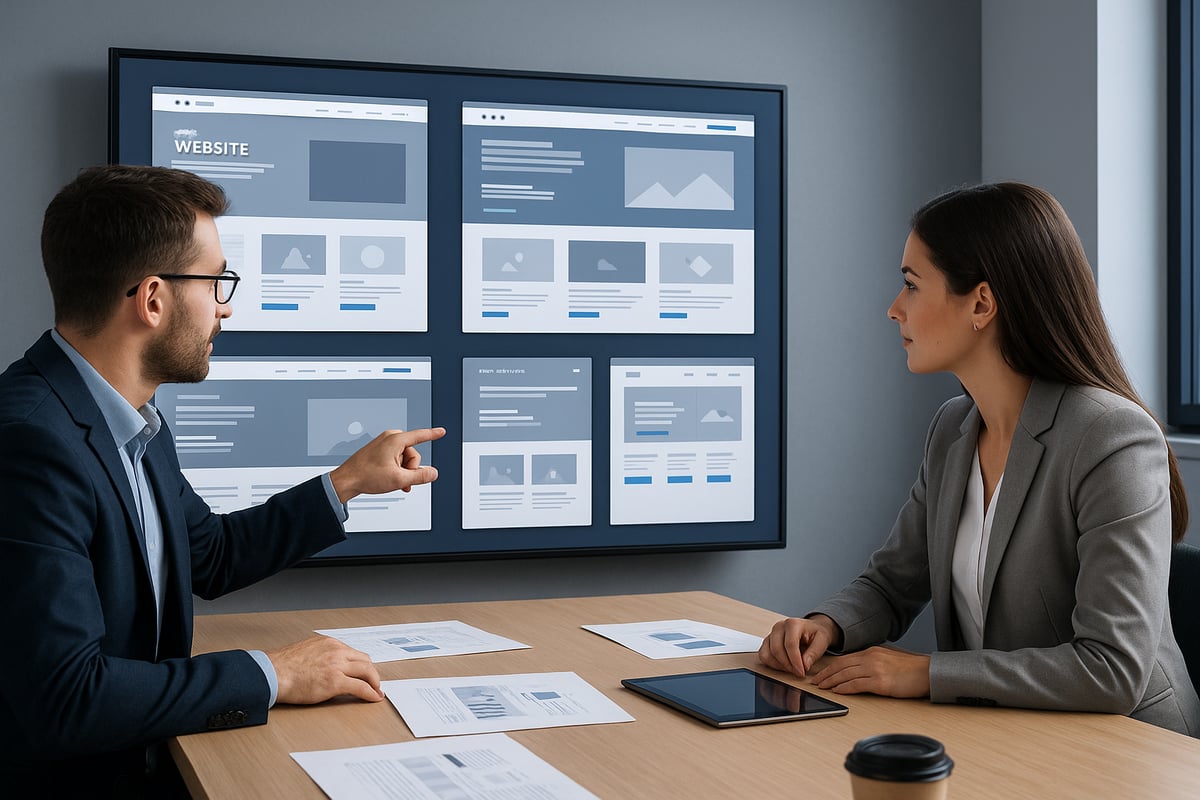
Selecting the ideal partner for web design services is a pivotal decision for any business in 2026. The right collaboration can set the foundation for digital growth, brand authority, and lasting online success. To simplify your search, break down the process into clear, actionable steps that help you align your project with the best possible agency.
Defining Your Goals and Budget
Begin by clarifying your objectives for web design services. Are you launching a new product, rebranding, or aiming to boost conversions? Pinpointing your must-have features, such as e-commerce capability or advanced integrations, will guide your agency search.
Outline your expected return on investment and set a realistic budget. Remember, the cost of web design services can vary greatly depending on complexity, features, and ongoing needs. Being transparent with both your goals and financial boundaries from the outset ensures better alignment with potential partners and prevents misunderstandings later.
Evaluating Agency Expertise and Track Record
Carefully assess each agency’s portfolio and reputation. Seek evidence of successful web design services within your industry or similar project scopes. Portfolios should showcase visually engaging, functional sites, while testimonials and case studies reveal client satisfaction.
Use this table as a reference:
| What to Check | Why It Matters |
|---|---|
| Portfolio diversity | Demonstrates creative range |
| Client testimonials | Indicates reliability |
| Relevant case studies | Proves results in your sector |
For those seeking local expertise, consider exploring Web design services in Leicester to find agencies with proven experience in your area.
Assessing Service Range and Technical Capabilities
A comprehensive suite of web design services should extend beyond aesthetics. Look for agencies offering everything from strategy and UX to ongoing support and digital marketing. Confirm their familiarity with leading-edge technologies like AI-powered tools, headless CMS, and PWAs.
Ask potential partners about their process for integrating new features and maintaining flexibility. This ensures your website can adapt as your business evolves, and that your investment in web design services remains robust and future-ready.
Collaboration, Communication, and Support
Effective communication is essential throughout your web design services project. Choose an agency that offers transparent processes, regular updates, and accessible support. Project management tools, such as Trello or Asana, can streamline collaboration and keep everyone aligned.
Open dialogue during every project phase minimises delays and ensures your vision is realised. Prioritise agencies that value your feedback and provide responsive, ongoing support, so your website remains high-performing long after launch.
Understanding Project Timelines and Deliverables
Set clear expectations for project milestones, timelines, and deliverables. Ask for a detailed roadmap, including design phases, development cycles, and launch plans. A typical bespoke website might take six to twelve weeks, depending on complexity.
Ensure your agreement covers post-launch support, updates, and any training your team may require. Knowing what’s included helps prevent scope creep and keeps your web design services engagement on track and within budget.
Legal, Security, and Compliance Considerations
Legal and regulatory compliance is non-negotiable in 2026. Confirm that your web design services provider is well-versed in GDPR, secure hosting, and robust data handling practices. Request documentation, such as Service Level Agreements and privacy policies, to protect your business interests.
A partner who prioritises security and compliance not only mitigates risk but also builds trust with your audience. This attention to detail is a hallmark of a top-tier web design services agency.
Pricing Models and What to Expect in 2026
Navigating the landscape of web design services pricing in 2026 can be challenging for businesses of all sizes. The market has matured, offering a range of flexible options to cater to diverse project needs and budgets. Understanding these pricing models is crucial to ensure you get maximum value and align your investment with your business goals.
Whether you are a start-up seeking rapid deployment or an established brand looking for a bespoke solution, web design services in 2026 offer clear, transparent pricing structures. This section will break down the most common models, factors influencing costs, inclusions, value-added options, and practical tips for achieving the best return on investment.
Fixed-Price vs. Hourly vs. Retainer Models
Web design services in 2026 predominantly use three core pricing models: fixed-price, hourly, and retainer agreements. Each model has its strengths and is suited to different project types.
Fixed-price models are ideal for well-defined projects with clear deliverables, such as standard business websites. Clients know the total cost upfront, which aids budgeting and planning.
Hourly billing suits projects with evolving requirements or ad-hoc updates, providing flexibility but potential unpredictability in total spend.
Retainer agreements are increasingly popular for ongoing support, maintenance, and continuous optimisation. Businesses benefit from predictable monthly costs and prioritised service.
| Model | Best For | Predictability | Flexibility |
|---|---|---|---|
| Fixed-Price | Standard builds, set scope | High | Low |
| Hourly | Evolving, ad-hoc work | Low | High |
| Retainer | Ongoing support, optimisation | Medium | Medium |
Choosing the right pricing model for your web design services depends on your project’s complexity and long-term needs.
Factors Influencing Web Design Costs
Several variables impact the cost of web design services in 2026. Complexity is a primary driver; bespoke sites with custom features, advanced integrations, or e-commerce functionality command higher fees. The number of unique pages, required content types, and level of interactivity also play significant roles.
Integrations with third-party systems, such as CRM, booking engines, or payment gateways, can increase both the timeline and cost. Ongoing services, such as content updates or security monitoring, add to overall investment.
According to recent UK market data, the average cost for a bespoke website ranges from £3,000 to £15,000 or more, depending on these factors. Understanding what influences web design services pricing ensures you set realistic expectations before engaging an agency.
Typical Inclusions and Exclusions
When you invest in web design services, it is essential to clarify what is included in your package. Most agencies cover the core essentials:
- Bespoke or template-based design
- Front-end and back-end development
- Basic on-page SEO
- Initial content population (copy, images)
- Mobile optimisation
- Standard compliance (GDPR, accessibility)
However, certain aspects are often excluded or billed separately, such as:
- Ongoing content creation and blog management
- Advanced digital marketing (PPC, social campaigns)
- Premium integrations or custom app development
- Extended post-launch support beyond standard packages
Knowing the inclusions and exclusions helps you compare web design services quotes accurately and avoid unexpected costs.
Value-Added Services and Bundles
To maximise value, many agencies now offer bundled web design services packages. These often combine design, SEO, hosting, and digital marketing for a more comprehensive solution at a competitive rate.
For example, new site builds may come with discounted maintenance contracts or integrated analytics and reporting dashboards. Choosing bundled services streamlines vendor management and can significantly improve your site’s performance and ROI.
Some providers go further by offering conversion rate optimisation or content strategy as part of their web design services, delivering end-to-end support for your digital presence.
Payment Schedules and Milestone Billing
Transparent payment structures are standard in web design services contracts. The most common approach includes an initial deposit to secure the project, followed by staged payments tied to key milestones—such as design approval, development completion, and site launch.
Final balances are typically due upon successful deployment and sign-off. This milestone billing approach ensures mutual accountability and aligns payments with deliverables.
Clients should always request clear invoicing and documentation detailing what each payment covers. This clarity is vital for maintaining trust and managing cash flow throughout the web design services process.
Tips for Maximising ROI
To get the best return on your investment in web design services, prioritise scalability and future-proofing. Opt for solutions that allow your site to evolve as your business grows, and ensure your provider includes regular updates and optimisation.
Focus on user experience, speed, and accessibility, as these factors directly influence engagement and conversion. Investing in ongoing support and analytics can help you adapt quickly to market changes.
For a deeper understanding of what makes a website effective and how to ensure your investment delivers results, see the guide on the qualities of a great website.
Future-Proofing Your Website: Trends and Best Practices
Staying ahead in digital means not just building a site for today, but ensuring it thrives tomorrow. As web design services evolve in 2026, future-proofing is vital for long-term success. Let us explore the strategies and innovations shaping the next generation of websites.
Designing for Flexibility and Scalability
Modern web design services prioritise flexibility from the ground up. Modular design systems and headless architectures enable sites to adapt as your business grows or pivots. This approach allows seamless integration of new features, channels, or branding updates without a full rebuild.
By investing in scalable frameworks, businesses can ensure their website remains robust and efficient. This is essential for organisations expecting growth or frequent change. Choosing web design services that champion flexibility helps future-proof your digital presence.
Embracing AI and Automation
Artificial intelligence and automation are redefining web design services in 2026. AI-driven personalisation, smart chatbots, and predictive content recommendations are now standard. These technologies streamline user journeys and boost engagement.
Advanced automation tools also support continuous testing and performance monitoring. For those interested in the next leap, the Agentic Web Framework introduces AI agents capable of dynamic, real-time web interactions. Staying updated with AI trends ensures your web design services remain at the cutting edge.
Commitment to Accessibility and Inclusion
Accessibility is no longer optional in quality web design services. Adhering to WCAG 3.0 and inclusive design principles ensures sites are usable by everyone, including users with disabilities. Tools for visually impaired and neurodiverse individuals must be integrated from the start.
Regular accessibility audits and user feedback are crucial. By embedding accessibility as a core value, you not only comply with regulations but also expand your reach. Web design services that prioritise inclusion help build a more equitable digital landscape.
Security, Privacy, and Compliance
Security and privacy are at the heart of all reputable web design services. With regulations like GDPR evolving, sites must employ privacy-by-design principles. Features such as SSL, secure hosting, and robust data handling are foundational.
Biometric authentication and multi-factor login are increasingly common for enhanced protection. Ongoing security audits and compliance checks safeguard both business and user data. Choosing web design services with a security-first mindset minimises risk in a fast-changing digital world.
Sustainable Web Design Practices
Eco-friendly web design services are in high demand as businesses become more environmentally conscious. Green hosting, lightweight coding, and carbon offset initiatives are now standard requests. In 2026, 40 percent of UK sites opt for sustainable solutions.
Energy-efficient websites not only reduce environmental impact but also improve speed and user experience. By partnering with web design services focused on sustainability, you support both your brand values and the planet.
Integrating Omnichannel and Emerging Technologies
The boundaries between devices and platforms are blurring, and web design services must deliver seamless experiences everywhere. Omnichannel strategies ensure your brand is consistent across web, mobile, AR, and IoT.
Emerging technologies like AR product visualisation and micro-animations are shaping the user experience. To dive deeper into these innovations, review Web Design Trends 2026, which highlights key developments influencing modern web design services.
Continuous Improvement and Data-Driven Optimisation
Web design services do not end at launch. Ongoing analytics, user feedback, and iterative enhancements are essential for growth. Monthly CRO reviews and performance tracking help you adapt quickly to user needs.
A commitment to continuous improvement ensures your website stays relevant and effective. By leveraging data, web design services can deliver measurable results and long-term ROI.
As you navigate the ever-evolving world of web design in 2026, it is clear that staying ahead means more than just a visually appealing website. From AI-driven personalisation and accessibility as standard, to integrated digital marketing and sustainable solutions, your business deserves a partner who truly understands these demands. At Ruff Idea, we blend creative expertise with technical know how to help you stand out and perform online. If you are ready to future proof your digital presence and want to discuss the best way forward for your brand, Get in touch and let’s shape your next chapter together.