The digital landscape is evolving at a rapid pace, making SEO more critical than ever in shaping the future of web design. As we approach 2026, businesses face increasing competition and higher user expectations online.
SEO website design is about integrating search engine optimisation principles directly into the design and structure of your site. This ensures your site is discoverable, user-friendly, and primed for conversions.
In this article, you will discover 7 essential tips to help your business achieve higher rankings, deliver a better user experience, and boost conversions. Ready to future-proof your website? Continue reading for actionable strategies you can implement today.
The Evolving Landscape of SEO Website Design in 2026
The world of seo website design is transforming rapidly as we approach 2026. Businesses face new challenges and opportunities as search engines evolve and user expectations rise. Staying ahead requires a deep understanding of current trends, technology, and collaborative approaches. Let’s explore the most significant shifts shaping seo website design for the future.

The Shift Towards User-Centric Design
Google continues to increase its focus on user experience signals when ranking websites. Core Web Vitals, such as loading speed, interactivity, and visual stability, are now critical benchmarks within seo website design. The E-E-A-T framework (Experience, Expertise, Authoritativeness, Trustworthiness) further highlights the demand for credible and user-focused content.
Mobile-first design and accessibility have become baseline expectations. Sites that are slow or difficult to use risk losing visibility. For example, Google’s 2025 update penalised websites that failed to meet accessibility standards or deliver quick load times, forcing brands to prioritise inclusive and responsive design.
AI, Automation, and Personalisation
Artificial intelligence is revolutionising seo website design by powering smarter content and personalised user experiences. AI-driven web builders can generate layouts and copy tailored to individual preferences, while automation tools streamline technical SEO tasks and ongoing optimisation.
Businesses now leverage AI to analyse user data, anticipate search intent, and adapt site elements in real time. This move towards automation makes it easier to maintain relevant and high-performing websites, but also demands careful oversight to avoid generic or low-quality output. The result is a more dynamic, efficient approach to both content and site structure.
Integrated SEO and Design Teams
Effective seo website design now relies on close collaboration between designers, developers, and SEO specialists. Rather than treating SEO as an afterthought, successful teams integrate it from the very start of the project. This ensures technical requirements, content strategies, and design elements all support visibility and user engagement.
Agency-led projects, where multidisciplinary teams work together, consistently outperform siloed approaches. For instance, agencies that embed SEO expertise throughout the design process deliver websites with stronger rankings and better user experiences. This integrated method reduces costly retrofits and speeds up time to market.
Emerging Search Behaviours and Technologies
Search behaviours are shifting with the rise of voice search, visual search, and conversational interfaces. These trends have a profound impact on seo website design, requiring new structures and content formats that cater to how users interact with technology. Zero-click searches and featured snippets are also influencing how information is presented, as users expect instant answers and seamless navigation.
According to industry forecasts, 65% of searches could be zero-click by 2026. Adapting to these changes means embracing new strategies, such as optimising for voice queries and leveraging structured data. For a deeper dive into what’s ahead, see our 2026 SEO trends and strategies. Staying informed and proactive is key to lasting success.
7 Essential SEO Website Design Tips for 2026 Success
Building a future-proof website takes more than just a sleek layout. In 2026, mastering seo website design means blending technical know-how, user-centric thinking, and forward-looking strategy. These seven essential tips will help you rise above the competition, deliver an exceptional experience for every visitor, and drive measurable business results.

1. Prioritise Mobile-First and Responsive Design
In 2026, mobile-first is not just a recommendation, it is the foundation of effective seo website design. Google and other major search engines now use mobile-first indexing as standard, evaluating your site's mobile version for ranking and visibility.
A responsive approach ensures your content adapts beautifully to every device. Over 70 percent of UK web traffic comes from mobile, making seamless mobile experiences essential. Techniques such as flexible grids, adaptive images, and touch-friendly navigation help create consistency, no matter the screen size.
Retail sites applying responsive seo website design have seen up to 20 percent higher conversion rates. However, common mistakes can undermine your efforts. Hidden content, slow mobile load times, or clunky navigation frustrate users and harm rankings.
Helpful tools include Google's Mobile-Friendly Test and PageSpeed Insights. Regularly test your seo website design on multiple devices and screen sizes. This proactive approach reveals issues early and keeps your user experience top-notch.
Quick checklist:
- Use fluid grids and scalable images
- Design navigation for touch, not just clicks
- Avoid hiding important content on mobile
- Test on real devices, not just emulators
The right mobile-first strategy is the bedrock of seo website design success in 2026.
2. Enhance Site Speed and Core Web Vitals
Site speed is a critical ranking factor in seo website design, and Google’s Core Web Vitals now play a direct role in search performance. These metrics—Largest Contentful Paint (LCP), First Input Delay (FID), and Cumulative Layout Shift (CLS)—measure user experience in real time.
A one-second delay in loading can reduce conversions by 7 percent. Slow sites suffer higher bounce rates and lost opportunities. Compress images, enable lazy loading, and minimise JavaScript to accelerate your pages. An e-commerce business that improved LCP by just one second reported a 15 percent increase in organic traffic.
Use Lighthouse, GTmetrix, and WebPageTest for detailed diagnostics. Prepare for even stricter Core Web Vitals updates in 2026 by adopting best practices now.
For a step-by-step approach to boosting speed, see this Site speed optimisation guide.
Action steps:
- Audit your site’s performance monthly
- Optimise images and code
- Address server response times
Prioritising speed in seo website design ensures both users and search engines stay happy.
3. Build a Logical and SEO-Friendly Site Architecture
A well-structured site is the backbone of seo website design. Intuitive navigation and internal linking make it easy for search engines to crawl and for users to find what they need.
Follow best practices: keep structures flat, use descriptive URLs, and implement breadcrumb navigation. Sitemaps and robots.txt files help search engines access your most valuable content.
Case studies show that service businesses restructuring their navigation see a 30 percent increase in indexed pages. Internal linking distributes authority, reduces orphan pages, and helps avoid duplicate content or keyword cannibalisation.
Recommended tools:
- Screaming Frog for crawling and visualising architecture
- Ahrefs Site Audit for in-depth analysis
Tips:
- Map out your site visually before development
- Use a clear hierarchy with logical categories
- Regularly review for broken links or outdated pages
A clear, logical seo website design architecture benefits both rankings and user experience.
4. Optimise Content for Users and Search Engines
Balancing keyword targeting with user intent is crucial for seo website design. Your content should be readable, relevant, and demonstrate E-E-A-T: Experience, Expertise, Authoritativeness, and Trustworthiness.
Add author bios, testimonials, and other trust signals. For example, medical sites that included expert authorship saw improved rankings and increased user trust.
Keep your content fresh with regular updates and new material. Incorporate multimedia like videos and infographics to boost engagement and dwell time. Use structured data and schema markup for rich search results.
Avoid keyword stuffing or thin content. Instead, focus on answering user questions and providing real value.
Quarterly audit checklist:
- Identify gaps and opportunities
- Refresh outdated pages
- Update multimedia and schema
Strong, user-focused content is the heart of seo website design in 2026.
5. Implement Advanced On-Page SEO Elements
Every page in your seo website design should feature unique title tags and meta descriptions crafted to attract clicks. Use clear header tag hierarchies (H1, H2, H3) for both SEO and accessibility.
Optimise all images with descriptive filenames, alt text, and next-generation formats like WebP or AVIF. A portfolio site that focused on alt text optimisation saw a 10 percent rise in image search traffic.
Use internal anchor text wisely and apply canonical tags to manage duplicate content. Implement FAQ and How-To schema to earn enhanced SERP features.
On-page SEO checklist:
- Compelling titles and meta descriptions
- Logical header structure
- Alt text for every image
- Canonical tags where needed
Document your on-page process and review each new page as part of your seo website design workflow.
6. Ensure Accessibility and Inclusive Design
Accessibility is no longer optional in seo website design. Meeting WCAG and ADA standards is both a ranking and legal requirement.
Key elements include keyboard navigation, ARIA labels, and high-contrast colour schemes. Redesigning for accessibility has been shown to improve dwell time by 18 percent, opening your business to a wider audience.
Use tools like WAVE, Axe, and Lighthouse to audit accessibility. Common mistakes include missing alt text, poor colour contrast, or inaccessible forms.
Did you know that one in five UK users has a disability affecting web use? Make accessibility checks a standard step in your seo website design process.
Accessibility essentials:
- Test keyboard navigation
- Provide text alternatives for images
- Ensure readable contrasts
Inclusive design is vital for reaching everyone and strengthening your online presence.
7. Future-Proof with Technical SEO and Security Best Practices
Robust technical foundations are essential for seo website design in 2026. Secure your site with HTTPS to build trust and boost rankings.
Maintain up-to-date XML sitemaps and use structured data to aid crawling and indexing. Conduct regular technical audits to find crawl errors, broken links, or redirect loops. Fixing indexing issues helped one blog recover 25 percent of its lost traffic.
Prepare your content for AI-driven search, voice assistants, and structured answers. Implement security headers, keep software updated, and schedule regular backups.
According to the UK Cyber Security Breaches Survey, 43 percent of cyber attacks target small businesses. Automated monitoring for site health and security is now a must.
Technical SEO checklist:
- Enable HTTPS and security headers
- Schedule audits and backups
- Monitor for errors and vulnerabilities
With a strong technical base, your seo website design is ready for future challenges.
The Role of Expert Agencies in Modern SEO Website Design
In 2026, achieving digital growth hinges on more than in-house effort alone. As the complexity of seo website design increases, expert agencies play a crucial role in delivering results that keep pace with evolving standards, technologies, and user expectations.
Partnering with a Specialist SEO Web Design Agency
Working with an agency that specialises in seo website design offers a strategic advantage for businesses aiming for measurable success. Agencies like Ruff Idea, based in Leicestershire, provide custom solutions that blend creative design with technical SEO expertise. Their services, as detailed on their SEO web design services page, span bespoke site builds, mobile-first optimisation, and ongoing support tailored to business needs.
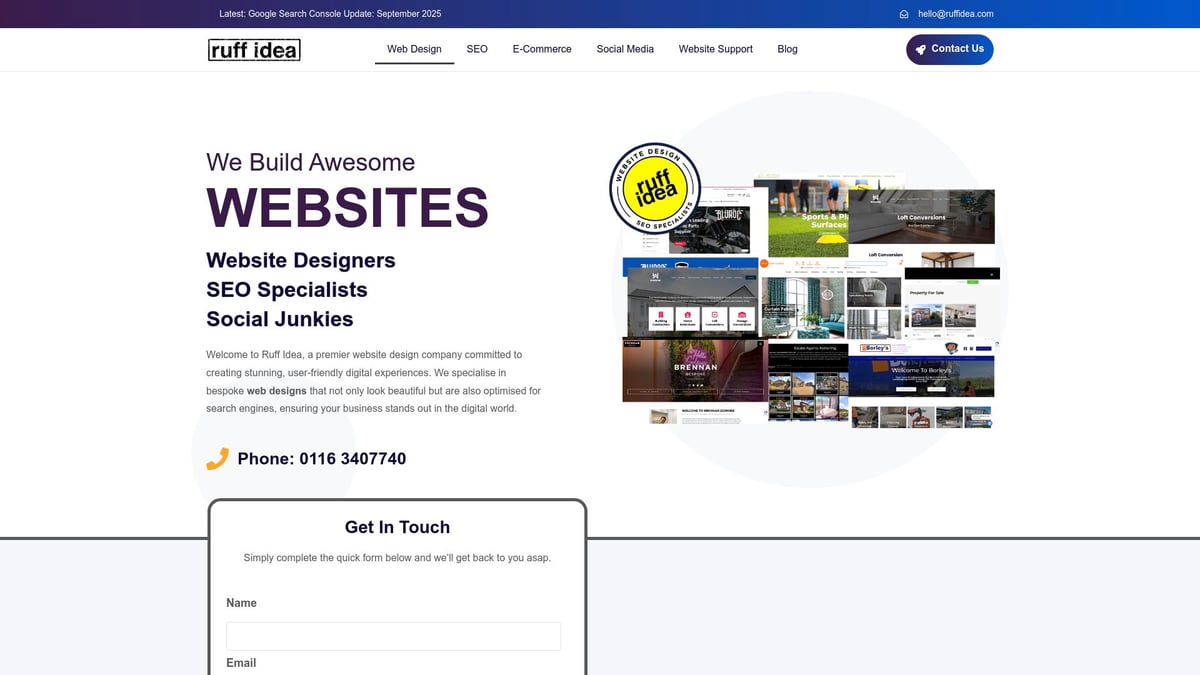
Clients benefit from a holistic approach, where every aspect from site speed to structured data is handled by professionals. For example, Ruff Idea’s collaboration with K. Borley & Son Ltd resulted in significant sales growth and improved online visibility. This partnership model ensures your website is not just visually appealing, but also primed for search performance.
How to Choose the Right Web Design Partner
Selecting the right partner for your seo website design project is essential for long-term success. Start by reviewing portfolios and client testimonials to assess their track record. Proven SEO expertise, transparent communication, and up-to-date knowledge of industry trends are must-haves.
Consider these criteria:
- Demonstrated results in similar industries
- Comprehensive aftercare and support packages
- Ability to integrate latest SEO developments
Ask about their approach to ongoing optimisation and request concrete examples of past successes. Watch out for red flags such as outdated techniques, lack of technical understanding, or poor post-launch support. Careful vetting ensures your investment drives sustainable growth.
Preparing Your Business for the Future of SEO Website Design
Future-proofing your seo website design is an ongoing process, not a one-off project. Regular optimisation, algorithm awareness, and team upskilling are all vital. Collaborating with an expert agency can provide valuable insights, ensuring your site adapts quickly to changes in search technology.
Invest in continuous training for in-house teams, and leverage your agency’s knowledge to enhance your digital presence. Build with scalability and flexibility in mind, so your website can evolve as user behaviour and SEO requirements shift. Begin implementing these strategies now to secure your competitive edge in 2026.
After exploring these future focused SEO website design tips, you can see how much impact thoughtful design and optimisation have on your long term online success. Whether you’re aiming to boost visibility, enhance user experience or stay ahead as search evolves, every step you take now lays a stronger foundation for 2026 and beyond. If you’d like tailored advice or want to discuss how we can help craft a high performing, visually stunning site that’s built for growth, don’t hesitate to Get in touch. We’re here to partner with you on your next digital milestone.