Online SEO marketing has evolved from a simple keyword stuffing exercise into a sophisticated discipline that requires technical expertise, strategic content creation, and a deep understanding of user intent. For businesses in Leicestershire and beyond, mastering search engine optimisation means competing effectively in an increasingly crowded digital marketplace. Whether you operate a boutique store, manage an e-commerce platform, or run a trades business, implementing robust online SEO marketing strategies can transform your visibility and drive sustainable organic growth.
Understanding the Foundations of Online SEO Marketing
Search engine optimisation represents the intersection of technical website architecture, compelling content, and strategic authority building. Modern online SEO marketing demands a holistic approach that considers how search engines crawl, index, and rank content whilst simultaneously delivering genuine value to human visitors.
The fundamentals remain consistent: search engines reward websites that demonstrate expertise, authority, and trustworthiness. Google's algorithms have become increasingly sophisticated, moving beyond simple keyword matching to evaluate semantic relevance, user engagement signals, and the overall quality of the information presented. This evolution means that businesses must invest in comprehensive strategies rather than quick fixes.
Core Components of Effective SEO Strategy
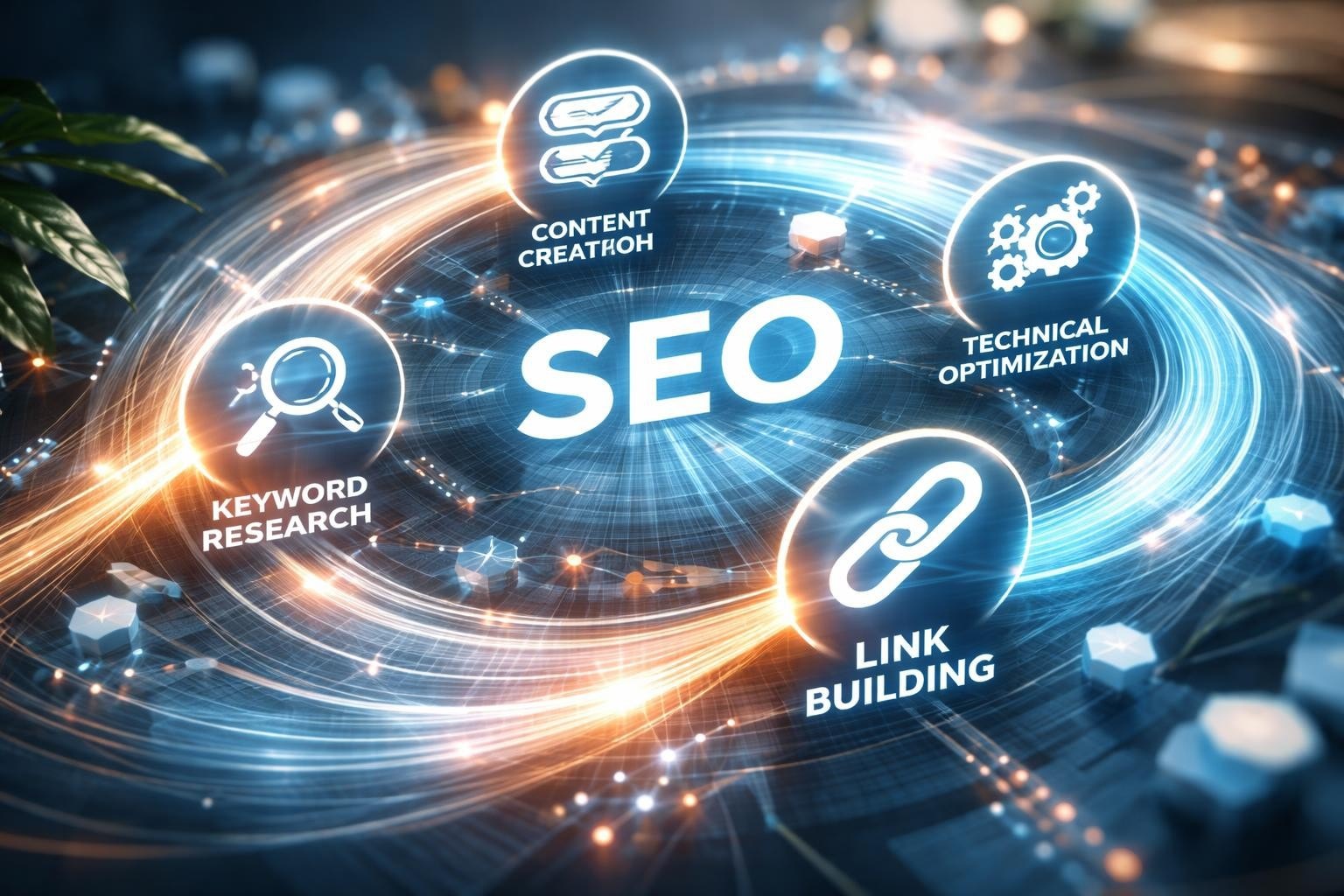
Successful online SEO marketing rests on three interconnected pillars that work together to improve search visibility:
- Technical optimisation ensures search engines can efficiently discover, crawl, and index your content
- Content excellence addresses user queries with comprehensive, well-researched information
- Authority signals demonstrate your website's credibility through quality backlinks and brand mentions
- User experience keeps visitors engaged and encourages conversions
- Local relevance connects your business with nearby customers searching for your services
Each component requires dedicated attention and ongoing refinement. Technical issues can prevent even the most brilliant content from ranking, whilst poor content undermines the value of technical perfection. Similarly, authoritative sources strengthen content credibility and improve how search engines evaluate your expertise.

Technical SEO: Building a Solid Foundation
Technical optimisation creates the infrastructure that allows search engines to understand and value your website. Without proper technical foundations, even exceptional content struggles to achieve visibility.
| Technical Element | Purpose | Impact on Rankings |
|---|---|---|
| XML Sitemaps | Guide search engine crawlers to important pages | High |
| Site Speed | Reduces bounce rates and improves user experience | Very High |
| Mobile Responsiveness | Ensures usability across all devices | Critical |
| Structured Data | Helps search engines understand page content | Medium-High |
| SSL Certificates | Secures user data and signals trustworthiness | Medium |
Implementing these technical elements requires careful attention to detail. Start by ensuring your website loads quickly across all devices. Research shows that pages loading in under three seconds retain significantly more visitors than slower alternatives.
Optimising Site Architecture
Your website's structure profoundly influences how search engines distribute ranking authority throughout your pages. A well-organised hierarchy ensures that important pages receive adequate crawl budget and that link equity flows logically through your site.
Creating clear navigation paths helps both users and search engines understand relationships between different pages. For businesses offering multiple services, this might mean organising content into distinct categories that reflect customer search behaviour. The category structure you establish should mirror how potential clients conceptualise your offerings.
Internal linking plays a crucial role in distributing authority and guiding visitors through relevant content. Strategic internal links help search engines discover new pages whilst encouraging users to explore related topics that address their broader needs.
Content Strategy for Online SEO Marketing Success
Content represents the primary vehicle through which online SEO marketing delivers value. Search engines exist to connect users with information that answers their questions, solves their problems, or fulfils their commercial intent.
Developing effective content begins with thorough keyword research that identifies what your target audience actually searches for. This research reveals not just individual terms but clusters of related queries that indicate user intent and information needs.
Creating Search-Optimised Content
Quality content satisfies multiple objectives simultaneously. It must appeal to human readers whilst incorporating elements that help search engines understand relevance and context.
Essential content elements include:
- Clear, descriptive titles that accurately reflect page content
- Comprehensive coverage that addresses topic depth and breadth
- Natural keyword integration that maintains readability
- Supporting media including images, videos, and infographics
- Regular updates that keep information current and accurate
The balance between optimisation and readability requires careful judgement. Keyword density should feel natural rather than forced. For online SEO marketing content specifically, mentioning your target phrase between 15-25 times in a 2000-word article provides adequate signal without overwhelming readers.

Search engines increasingly prioritise content that demonstrates genuine expertise and authority. Building authoritative content requires drawing on credible sources, citing research where appropriate, and presenting information with depth and nuance. Superficial content that merely scratches the surface rarely achieves sustained rankings in competitive niches.
Link Building and Authority Development
External links pointing to your website function as endorsements that signal credibility and relevance. Quality backlinks remain one of the most influential ranking factors, though their acquisition has become increasingly challenging as search engines combat manipulative link schemes.
Ethical Link Acquisition Strategies
Modern link building focuses on earning rather than creating links through genuine value creation. This approach aligns with search engine guidelines whilst building sustainable authority.
Effective tactics include:
- Publishing original research or data that others naturally reference
- Creating comprehensive guides that become go-to resources in your industry
- Contributing expert commentary to industry publications
- Building relationships with complementary businesses for reciprocal promotion
- Participating meaningfully in professional communities and forums
The quality of linking domains matters far more than sheer quantity. A single link from a highly authoritative, relevant website delivers more value than dozens of low-quality directory listings. Authority links transform SEO performance by validating your expertise to search engines whilst potentially driving direct referral traffic.
Guest posting remains viable when focused on genuine value exchange rather than link manipulation. Contributing genuinely useful content to respected industry publications builds visibility whilst establishing your credentials with new audiences.
Local SEO for Service-Based Businesses
For businesses serving specific geographic areas, local search optimisation represents crucial opportunity. Local online SEO marketing helps connect your services with nearby customers at the exact moment they're searching for solutions.
Optimising for Local Discovery
Google Business Profile optimisation forms the cornerstone of local search visibility. A complete, accurate profile with regular updates, photos, and customer reviews significantly improves local ranking potential.
| Local SEO Factor | Optimisation Priority | Implementation Difficulty |
|---|---|---|
| Google Business Profile | Critical | Easy |
| Local Citations | High | Medium |
| Review Generation | Very High | Medium |
| Location Pages | High | Medium-Hard |
| Local Link Building | Medium-High | Hard |
Local citations ensure consistent name, address, and phone number (NAP) information across directories and listing sites. Inconsistencies confuse search engines and dilute local ranking signals. Regular citation audits identify and correct discrepancies that might undermine local visibility.
Customer reviews influence both rankings and conversion rates. Encouraging satisfied clients to share their experiences creates powerful social proof whilst signalling service quality to search algorithms. Responding professionally to all reviews demonstrates engagement and customer focus.
Measuring Online SEO Marketing Performance
Effective measurement transforms online SEO marketing from guesswork into data-driven strategy. Understanding which metrics matter and how they interconnect enables continuous improvement and resource allocation optimisation.
Key Performance Indicators
Different metrics reveal different aspects of SEO performance. Comprehensive measurement requires tracking multiple indicators that collectively paint a complete picture.
Primary metrics include:
- Organic traffic volume and trend direction
- Keyword rankings for target search terms
- Click-through rates from search results
- Conversion rates from organic visitors
- Page load speeds and technical health scores
- Backlink profile growth and quality
Google Search Console provides invaluable insights into how search engines interact with your website. Regular monitoring reveals indexing issues, search query performance, and opportunities for improvement that might otherwise remain invisible.

Analytics platforms reveal user behaviour patterns that inform content strategy and technical optimisation priorities. Understanding which pages attract visitors, how long they engage, and where they exit helps identify both successful elements and improvement opportunities.
Advanced Online SEO Marketing Techniques
As basic optimisation becomes universal, competitive advantage increasingly comes from advanced techniques that require deeper expertise and more sophisticated implementation.
Semantic Search Optimisation
Modern search algorithms attempt to understand user intent and contextual meaning rather than simply matching keywords. Optimising for semantic search means creating content that addresses topics comprehensively whilst incorporating related concepts and terminology.
Topic clusters organise content around pillar pages that cover broad subjects comprehensively, supported by cluster content addressing specific subtopics. This structure helps search engines understand topical authority whilst creating logical user journeys through related content.
Schema markup provides explicit context that helps search engines understand specific page elements. Product schema, review schema, and local business schema can enhance search result displays whilst clarifying content meaning to algorithms.
Adapting to Algorithm Updates
Search algorithms evolve continuously as engines refine their ability to identify quality content and combat manipulative tactics. Google’s approach to authoritative sites and quality assessment changes regularly, requiring ongoing attention and adaptation.
Successful long-term online SEO marketing requires monitoring algorithm update announcements and analysing their impact on your website's performance. Sudden ranking changes following updates often indicate areas where your approach misaligns with current quality signals.
Building strategies on fundamental principles rather than temporary tactics provides resilience against algorithm volatility. Websites that genuinely serve user needs, load quickly, and demonstrate expertise typically weather updates better than those optimised purely for algorithmic manipulation.
Integration with Broader Digital Marketing
Online SEO marketing delivers maximum value when integrated with complementary digital channels rather than operating in isolation. Cohesive strategies amplify results across all platforms.
Social media presence, whilst not directly influencing rankings, expands content reach and can generate natural backlinks as your content gets discovered and shared. Email marketing to engaged subscribers drives consistent traffic that signals content value to search algorithms.
Paid advertising campaigns generate immediate visibility whilst SEO strategies build long-term organic presence. The combination provides both short-term results and sustainable growth. Insights from paid campaigns often inform keyword targeting and content development for organic efforts.
Content marketing and online SEO marketing overlap substantially. High-quality content created for audience value naturally incorporates elements that support search visibility. The key lies in prioritising genuine usefulness over algorithmic gaming.
Common Pitfalls in Online SEO Marketing
Even experienced marketers occasionally fall into traps that undermine their online SEO marketing efforts. Awareness of common mistakes helps avoid wasted resources and potential penalties.
Mistakes to Avoid
Keyword stuffing remains tempting but counterproductive. Search engines easily identify unnatural keyword density and may suppress rankings for pages that prioritise algorithms over readability. Focus instead on comprehensive topic coverage that naturally incorporates relevant terminology.
Additional pitfalls include:
- Neglecting mobile optimisation despite mobile-first indexing
- Ignoring technical errors that prevent proper indexing
- Building low-quality backlinks that signal manipulation
- Duplicating content across multiple pages
- Failing to update content as information becomes outdated
Expecting immediate results leads to frustration and premature strategy abandonment. Online SEO marketing typically requires 3-6 months before significant ranking improvements become apparent. This timeline reflects the time search engines need to crawl updates, reassess authority signals, and adjust rankings accordingly.
Copying competitor strategies without understanding their context rarely succeeds. What works for established brands with substantial domain authority may fail for newer websites. Focus instead on identifying genuine gaps in existing content that you can address more comprehensively.
Future Trends Shaping Online SEO Marketing
Search technology continues evolving rapidly, introducing new opportunities and challenges for online SEO marketing practitioners. Staying ahead requires understanding emerging trends and adapting strategies proactively.
Voice search changes query patterns as people phrase spoken searches differently from typed ones. Optimising for conversational queries and question-based searches addresses this growing segment. Featured snippets often provide voice search answers, making snippet optimisation increasingly valuable.
Artificial intelligence increasingly influences both search algorithms and content creation capabilities. Understanding how AI-powered search engines evaluate content helps future-proof your optimisation approach. The challenge lies in creating genuinely valuable content that satisfies both algorithmic assessment and human needs.
Video content continues gaining prominence in search results. Creating optimised video content and ensuring proper metadata helps capture this growing search vertical. Transcripts make video content crawlable whilst serving accessibility needs.
Mastering online SEO marketing requires balancing technical precision with creative content development whilst maintaining focus on genuine user value. The strategies outlined here provide a comprehensive foundation for businesses seeking to improve organic visibility and drive sustainable growth through search channels. Ruff Idea partners with Leicestershire businesses to implement bespoke SEO strategies alongside visually striking web design, creating digital presences that not only rank well but convert visitors into customers through expert optimisation, ongoing support, and integration with broader marketing efforts.