By 2026, UK e-commerce is projected to exceed £260 billion, making the online marketplace more competitive than ever. For business owners and digital marketers, staying ahead requires more than just an attractive storefront. The right e commerce site design can be the difference between thriving and falling behind.
This guide delivers expert insights and practical steps to help you future-proof your online store. You will discover the latest design trends, UX/UI essentials, technology integrations, SEO strategies, robust security, and ongoing optimisation techniques.
Ready to outperform the competition? Let’s explore how to create a high-performing e-commerce site for 2026 and beyond.
Understanding E-Commerce Site Design in 2026
E commerce site design is evolving rapidly as the UK online retail sector surges toward 2026. With consumer expectations shifting and technology advancing, businesses must rethink their digital storefronts to stay competitive. In this section, we explore the trends, technologies, and essential principles shaping high-performing e-commerce sites for the years ahead.

The Evolving Landscape of Online Shopping
The projected value of the UK e-commerce market in 2026 is expected to exceed £260 billion, reflecting significant growth since the pandemic. This surge is driven by consumers who now demand seamless online experiences, fast delivery, and flexible payment options. Businesses are adapting by prioritising convenience and speed across their digital channels.
Mobile commerce has become the dominant force, with more than 60% of transactions now taking place on smartphones. Omnichannel strategies are also gaining traction, enabling customers to shop effortlessly across devices and platforms. For more insight, see the UK e-commerce market growth projections.
To remain relevant, e commerce site design must respond to these evolving behaviours and preferences.
Key Trends Shaping E-Commerce Design
Personalisation is at the heart of modern e commerce site design. AI-driven product recommendations are now standard, tailoring suggestions based on browsing history and real-time data. This not only boosts engagement but also increases average order values.
The integration of AR and VR technologies allows shoppers to visualise products in their own space, driving confidence in purchase decisions. Leading brands are using 3D product views and interactive tools, providing a richer, more immersive experience. Competitors embracing these innovations are setting new benchmarks for customer engagement and satisfaction.
Staying ahead means adopting these cutting-edge features as part of your e commerce site design strategy.
The Role of Branding and Visual Identity
Cohesive branding is essential for building trust and recognition in e commerce site design. A unified visual identity — from colour palettes and typography to imagery and tone — creates a memorable impression and reassures visitors of your credibility.
Successful e-commerce brands, like ASOS and Gymshark, leverage strong branding to stand out in a crowded market. Their sites feature consistent visual elements that reinforce their brand story at every touchpoint. This approach not only attracts new customers but also fosters loyalty among returning shoppers.
Investing in clear, consistent branding is a cornerstone of effective e commerce site design.
Accessibility and Inclusivity in Modern Design
Legal and ethical standards in the UK require e commerce site design to be accessible to all users, regardless of ability. This means implementing features like high-contrast colour schemes, descriptive alt text for images, and keyboard-friendly navigation.
Accessible design is not just a compliance issue — it is a business advantage. Sites that are easy to use for everyone often see higher conversion rates and broader customer reach. Data shows that accessible websites can boost sales by up to 20%, making inclusivity a smart investment for any digital retailer.
Prioritising accessibility ensures your e commerce site design welcomes and serves every potential customer.
Step-by-Step Guide to Designing Your E-Commerce Site
Designing a future-ready e commerce site design requires a structured approach. By following these seven essential steps, business owners and digital marketers can ensure their online presence is optimised for performance, user experience, and growth in 2026.

Step 1: Defining Your Audience and Goals
Every successful e commerce site design starts with a clear understanding of your audience. Begin by conducting detailed market research and creating buyer personas. Identify their needs, shopping behaviours, and digital touchpoints.
Align your website’s objectives with your business KPIs, such as sales growth, lead generation, or brand awareness. Data shows that brands tailoring their e commerce site design to targeted personas see improved ROI and higher engagement rates.
By knowing exactly who you are designing for and what you want to achieve, you lay a strong foundation for every design decision that follows.
Step 2: Mapping the User Journey
A seamless user journey is critical in e commerce site design. Map out each step a customer takes, from landing on your homepage to completing a purchase. Identify all key touchpoints, including product discovery, cart, and checkout.
Use customer journey maps to visualise pain points and highlight opportunities for improvement. Top-performing sites simplify navigation and reduce friction, ensuring users never feel lost or overwhelmed.
A well-mapped journey keeps visitors on track, increases satisfaction, and supports the overall effectiveness of your e commerce site design.
Step 3: Wireframing and Prototyping
Wireframes are essential tools in e commerce site design, allowing you to plan layouts and structure before development. Use digital tools like Figma or Sketch to create interactive prototypes and rapidly test ideas with stakeholders.
Competitors are embracing interactive wireframes to validate user experience and catch issues early. For a deep dive into layout strategies and trends, explore E-commerce web design best practices for actionable guidance.
This stage helps ensure your e commerce site design meets user expectations before any code is written, saving time and resources.
Step 4: Visual Design and Branding Implementation
Visual consistency is key in e commerce site design. Select a cohesive colour palette, readable typography, and authentic imagery that reflect your brand’s identity. Consistent branding builds trust and recognition, making your store memorable.
Leading e-commerce brands use strong visual identities to stand out and foster loyalty. Ensure every visual element aligns with your brand guidelines for a polished and professional appearance.
A well-executed branding strategy in your e commerce site design enhances credibility and encourages repeat visits.
Step 5: Building Responsive and Mobile-First Layouts
With over 60 percent of UK e-commerce traffic coming from mobile devices, your e commerce site design must be mobile-first. Prioritise touch-friendly navigation, fast load times, and layouts that adapt seamlessly to any screen size.
Competitors investing in responsive e commerce site design see higher engagement and lower bounce rates. Use flexible grids and scalable images to ensure consistency across devices.
A mobile-optimised e commerce site design ensures you meet modern shopper expectations and capture every conversion opportunity.
Step 6: Integrating Essential E-Commerce Features
A comprehensive e commerce site design includes robust features like advanced product search, intuitive filters, wishlists, customer reviews, and a secure checkout. These features streamline shopping and build trust.
Upselling and cross-selling modules can increase average order value. Study top competitors to see how they implement these features effectively within their e commerce site design.
Incorporate must-have modules early to avoid costly changes later and ensure your site is both functional and user-friendly.
Step 7: Testing, Feedback, and Iteration
Continuous improvement is vital in e commerce site design. Conduct usability testing using A/B tests and user panels to identify friction points. Gather feedback from real users before launch to uncover hidden issues.
Studies show that iterative updates based on feedback can boost conversion rates significantly. Monitor analytics and adjust your e commerce site design regularly to stay ahead of evolving customer expectations.
Testing and refining your e commerce site design ensures long-term success and maximises your return on investment.
UX/UI Essentials for E-Commerce Success
Delivering a seamless user experience is no longer optional in e commerce site design. In 2026, UX/UI is the backbone of successful online stores, directly influencing customer satisfaction and conversion rates. By mastering essential elements such as navigation, product pages, checkout flows, and accessibility, digital businesses can stand out in a crowded marketplace. Let us explore the core components that will define high-performing e commerce site design in the years ahead.
Navigation and Site Structure
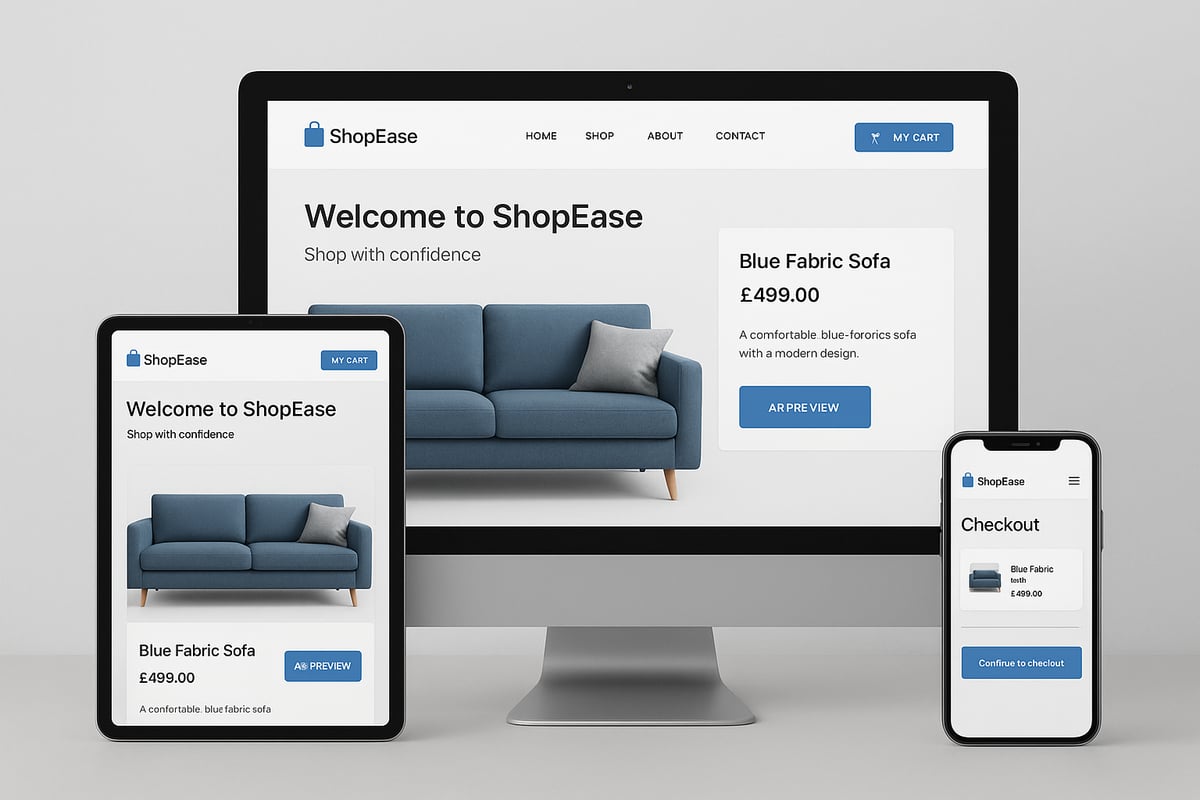
Intuitive navigation is the cornerstone of effective e commerce site design. Users expect to find products quickly and easily, so logical categorisation and clear menus are essential. Features such as breadcrumbs and mega menus help users orient themselves, reducing friction and boosting engagement.
Consider these common navigation enhancements:
- Simple, persistent top menus with clear categories
- Breadcrumb trails for easy backtracking
- Mega menus for large product catalogues
Leading UK retailers often showcase these elements, resulting in smoother browsing and higher conversion rates. For a deeper dive into creating intuitive layouts, see user-friendly website design essentials. Prioritising streamlined navigation ensures visitors stay longer and convert more often.
Product Page Optimisation
High-performing e commerce site design relies on product pages that inform and inspire. Essential components include high-resolution images, detailed descriptions, and trust signals like badges and reviews. Incorporating AR or 360-degree product views lets shoppers examine items closely, bridging the gap between online and in-store experiences.
Consider using:
- Multiple product images and demo videos
- AR or 360-degree views for interactive exploration
- Clear pricing, stock status, and trust badges
Competitor data shows enhanced product pages can increase conversion rates by up to 30 percent. Investing in engaging visuals and comprehensive details pays dividends in customer confidence and sales.
Checkout Experience and Cart Design
A streamlined checkout flow is vital for modern e commerce site design. Shoppers expect minimal steps from cart to confirmation, with options to check out as guests and clear progress indicators guiding the way. One-page checkouts are now standard, reducing abandonment caused by lengthy forms.
Best practices include:
- Single-page checkout with minimal required fields
- Visible progress bars or step indicators
- Multiple payment and delivery options
Top-performing sites that implement frictionless checkouts often report up to 20 percent lower abandonment rates. Prioritising simplicity and clarity here can significantly boost your revenue.
Personalisation and Dynamic Content
Personalisation has become a defining factor in e commerce site design, with AI-driven product recommendations and dynamic content increasing engagement and average order values. By tailoring offers and pricing based on user behaviour, brands create unique shopping journeys that drive loyalty.
Key personalisation strategies:
- AI-powered product suggestions
- Customised promotions and discounts
- Dynamic content such as recently viewed items
Case studies reveal that personalisation can lift average order value by 10 to 15 percent. Leveraging data-driven content keeps your site relevant and appealing to every visitor.
Accessibility and Usability Best Practices
Accessible e commerce site design is both a legal requirement and a business advantage. Adhering to WCAG standards ensures your store is usable by everyone, including those with disabilities. Features such as high-contrast colours, descriptive alt text, and keyboard navigation are essential.
Accessibility checklist:
- Strong contrast for text and buttons
- Alt text for all product images
- Fully navigable by keyboard
Research shows accessible sites enjoy higher conversion rates and broader audience reach. Embedding usability and inclusivity into your design process future-proofs your online store and fosters trust.
Integrating Technology and Automation
Staying ahead with e commerce site design means integrating the latest technologies and automation tools. The right systems not only streamline operations but also set the foundation for scalable, secure, and high-performing online shops. In this section, we break down the essential technology considerations for 2026, from platform choices to analytics.

Choosing the Right E-Commerce Platform
Selecting the foundation for your e commerce site design is critical. Popular options like Shopify, WooCommerce, and Magento each offer unique benefits. Shopify is user friendly and perfect for rapid deployment, while WooCommerce provides flexibility for WordPress users. Magento, with its robust features, is ideal for larger businesses seeking advanced customisation.
When evaluating platforms, consider scalability, integration capabilities, and ease of use. For instance, Shopify excels in managed hosting, while WooCommerce offers plugin extensibility. Magento supports complex catalogues and global operations. Comparing these options helps you align technical choices with your business growth plans.
For deeper insights into the impact of platform selection on e commerce site design, visit E-commerce web designing insights.
Payment Gateways and Secure Transactions
A seamless checkout experience is a must for modern e commerce site design. Leading payment gateways such as PayPal, Stripe, and Apple Pay offer fast, secure transactions, boosting customer trust. Look for PCI compliance and SSL certificates as standard requirements to protect sensitive data.
Competitors often use multi-gateway setups to provide customers with choice and redundancy. Integrating these gateways should be straightforward, with clear payment flows and visible security badges. Monitoring transaction failures and fraud attempts is also essential for maintaining reputation and compliance.
Prioritise user experience by ensuring payments are processed quickly and that customers are reassured at every step. Secure payment systems are now a baseline expectation in every e commerce site design.
Inventory, Order, and Shipping Management
Efficient inventory and order management underpin successful e commerce site design. Integrating stock control systems, shipping providers, and customer relationship management (CRM) tools can automate much of the fulfilment process. Real-time inventory updates minimise overselling and improve customer satisfaction.
Top-performing sites offer flexible shipping options and real-time tracking. Automation tools can send order confirmations, update stock levels, and trigger shipping notifications without manual input. This seamless backend workflow not only saves time but also reduces errors.
Automated order processing is now an industry standard, so ensure your e commerce site design supports scalable integrations with logistics partners and CRM platforms.
Marketing Automation and CRM Integration
Modern e commerce site design must incorporate marketing automation for sustained growth. Email marketing, abandoned cart recovery, and loyalty programmes are proven tools for increasing customer retention. Integrating with leading CRM systems enables personalised marketing based on user behaviour and purchase history.
Case studies show that automation can boost repeat purchase rates and overall revenue. Features like dynamic email content, automated segmentation, and scheduled promotions help turn one-time buyers into loyal customers. Seamless CRM integration ensures that sales and support teams have full context for every customer interaction.
Automation is no longer optional for e commerce site design; it is a necessity for brands aiming to compete in 2026.
Analytics and Reporting Tools
Data-driven decision making is at the heart of effective e commerce site design. Essential analytics tools include Google Analytics 4, heatmaps, and detailed e commerce reports. These tools provide insights into user behaviour, conversion funnels, and product performance.
Competitors use real-time dashboards to monitor KPIs and adapt quickly to trends. Setting up automated reports allows you to identify bottlenecks and optimise continuously. Advanced analytics also support A/B testing, helping you refine site elements for higher conversions.
Regularly reviewing analytics ensures your e commerce site design evolves alongside your audience, driving sustained growth and profitability.
SEO, Conversion Optimisation, and Performance
Optimising your e commerce site design for 2026 requires a comprehensive approach that balances visibility, user experience, and technical excellence. Success hinges on combining SEO fundamentals, compelling content, rigorous conversion strategies, and high performance across devices.
E-Commerce SEO Fundamentals for 2026
Effective e commerce site design begins with strong SEO foundations. Optimise every product page with unique titles, keyword-rich meta descriptions, and structured schema markup to help search engines understand your content.
Mobile optimisation is essential, as over 60 percent of UK shoppers use mobile devices. Ensure fast loading times, intuitive navigation, and responsive layouts. Competitors are already prioritising clean URLs, breadcrumb navigation, and internal linking to improve visibility.
Regularly audit your e commerce site design for broken links and outdated content. This helps maintain high rankings and ensures users find what they need quickly.
Content Marketing and Product Descriptions
Unique, informative content is central to effective e commerce site design. Craft product descriptions that are clear, detailed, and naturally incorporate your target keywords. This not only boosts SEO but also builds trust with shoppers.
Incorporate high quality images, demo videos, and user generated content to engage visitors. Many top brands use buying guides and how to articles to attract organic traffic and educate their audience.
A consistent content strategy supports long term growth by establishing your e commerce site design as a trusted resource in your niche.
Conversion Rate Optimisation (CRO) Techniques
Maximising conversions is a vital part of e commerce site design. Use split testing to compare different layouts, call to action buttons, and messaging. Add trust signals such as security badges, customer reviews, and clear returns policies to reassure buyers.
Urgency tactics like low stock alerts or countdown timers can prompt quicker decisions. Integrate live chat to answer pre purchase questions and reduce barriers to checkout. For more actionable strategies, explore these increasing e-commerce sales tips.
Every change should be backed by data to achieve the highest return on investment.
Site Speed, Core Web Vitals, and Technical SEO
Site speed is a cornerstone of modern e commerce site design. Google’s Core Web Vitals measure how quickly your site loads, how stable it feels, and how soon it becomes interactive.
Optimise images using next gen formats like WebP, implement lazy loading, and use a content delivery network for faster global access. Regularly monitor metrics such as Largest Contentful Paint and Cumulative Layout Shift.
Studies show that even a one second delay can increase bounce rates and reduce revenue. By prioritising technical SEO, you ensure your e commerce site design delivers results now and in the future.
Security, Compliance, and Future-Proofing Your Store
Building trust and credibility is essential for any e commerce site design. As regulations tighten and cyber threats evolve, security and compliance become non-negotiable. Future-proofing your store means staying ahead of these demands while providing a seamless customer experience.
Data Protection and GDPR Compliance
In 2026, UK GDPR compliance remains a cornerstone of trustworthy e commerce site design. E-commerce businesses must implement clear privacy policies, obtain valid cookie consent, and manage customer data transparently.
Key requirements include:
- Explicit consent for data collection and marketing.
- Secure storage and access controls for personal information.
- Clear options for users to manage or delete their data.
Competitors leading in compliance display visible cookie banners, provide easy-to-find privacy settings, and update customers on policy changes. Prioritising these elements in your e commerce site design not only avoids hefty fines but also reassures visitors that their data is handled responsibly.
Fraud Prevention and Secure User Accounts
Protecting customers from fraud is a top priority for modern e commerce site design. Two-factor authentication, strong password policies, and anti-fraud monitoring tools are now standard.
Best practices include:
- Enabling multi-factor authentication for all accounts.
- Using fraud detection systems to monitor suspicious activity.
- Encrypting sensitive information during transactions.
Learning from high-profile breaches, many leading brands now educate users about security and provide instant alerts for unauthorised access attempts. By integrating these measures into your e commerce site design, you safeguard both your business and your customers.
Maintaining Trust with Transparent Policies
Trust is built on transparent, accessible policies. An effective e commerce site design features easy-to-navigate pages outlining returns, refunds, and shipping processes.
Essentials for customer trust:
- Clear, concise returns and refund policies.
- Detailed shipping timelines and options.
- Prominent display of customer reviews and ratings.
Competitor analysis shows that stores with transparent policies and active review management see higher conversion rates. Integrating these elements into your e commerce site design creates a sense of reliability, encouraging repeat purchases and positive word of mouth.
Future-Proofing: Scalability and Ongoing Optimisation
The future of e commerce site design depends on scalability, flexibility, and ongoing optimisation. Modular layouts, API integrations, and headless commerce solutions allow your store to adapt to new technologies and customer expectations.
Key strategies include:
- Regular security updates and monitoring.
- Performance audits to ensure site speed and uptime.
- Adopting emerging trends in UX and compliance, as highlighted in E-commerce UX/UI trends for 2026.
By investing in a future-ready e commerce site design, you position your business to grow and evolve with the market, ensuring long-term success.
Partnering with E-Commerce Design Experts: The Ruff Idea Advantage
Choosing the right partner for your e commerce site design is crucial for long term success. Ruff Idea, based in Leicester, stands out for its commitment to creating bespoke, high performing online stores tailored to UK businesses.
Our team excels in UX/UI, SEO, and mobile optimisation, ensuring every e commerce site is both visually appealing and conversion focused. Whether you run a boutique shop or a scaling brand, we offer ongoing support and solutions designed around your unique needs.
Ready to future proof your online store? Learn more about Ruff Idea’s e-commerce solutions and discover how our expertise can help your business thrive in the evolving digital landscape.
As you look to future proof your e commerce site for 2026, it’s clear that standing out means blending cutting edge design, seamless usability and ongoing optimisation. We’ve explored the latest trends, best practices and actionable steps to help you shape a high performing online presence. If you’re ready to take your store to the next level and want expert support tailored to your business goals, we’re here to help. Let’s work together to create a site that not only looks fantastic but delivers real results.
Get in touch