Business site design is changing rapidly, reshaping how brands are seen and how companies grow in 2025. Today, standing out online means more than just looking good—innovative design is now a true competitive advantage.
In this article, you will find seven forward-thinking business site design ideas that can elevate your brand and drive real results. Business owners, marketers, and web designers alike will discover practical inspiration and strategies to stay ahead.
Expect insights on immersive experiences, AI integration, accessibility, personalisation, and more. Read on to transform your approach and ensure your business thrives in the new digital era.
The Importance of Modern Business Site Design in 2025
Modern business site design is crucial for companies aiming to thrive in 2025. How your website looks and functions shapes the first impression visitors form of your brand. In a world where competition is just a click away, a professional, strategic approach to business site design can mean the difference between gaining a loyal customer and losing a lead.
The role of web design in business growth
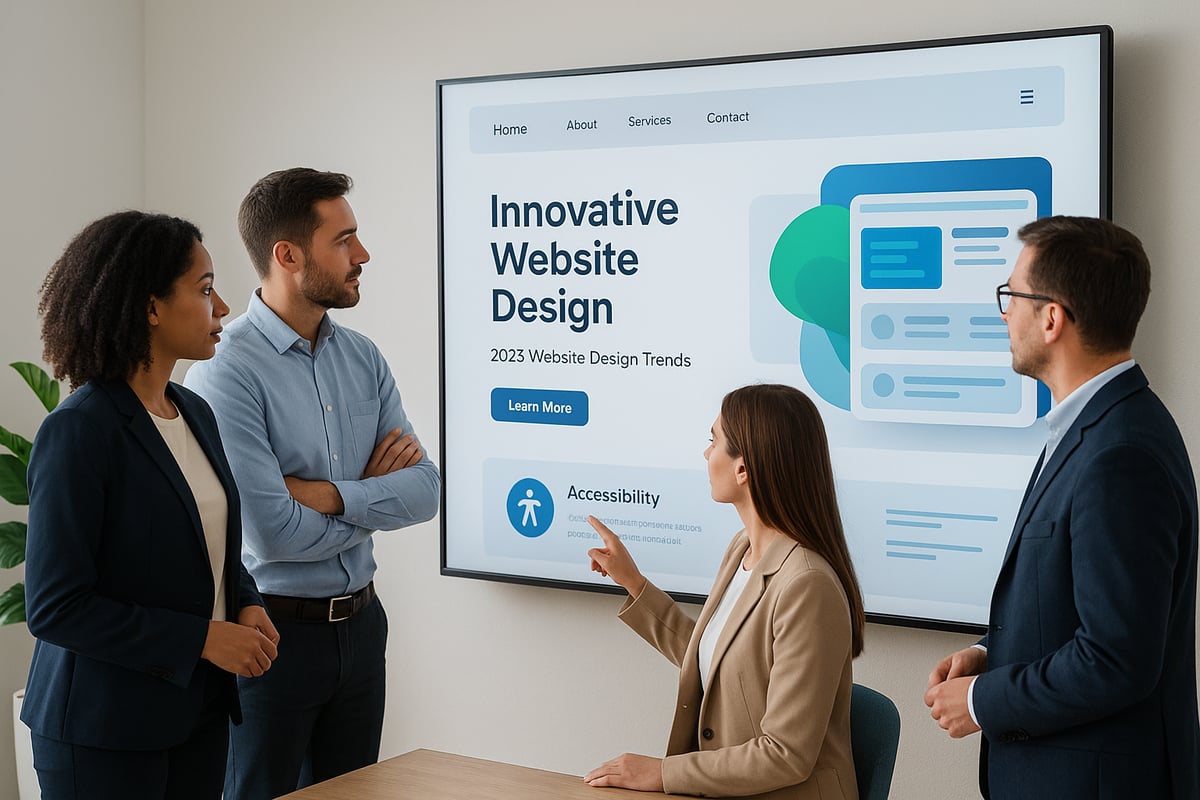
Your business site design directly impacts trust, credibility, and conversion rates. Research shows that 94% of first impressions are based on website design, highlighting its influence on whether visitors stay or bounce. Companies with award-winning sites often lead their industries, as their designs instil confidence and reflect professionalism.
Poor business site design can quickly undermine your efforts. High bounce rates, lost leads, and negative brand perception are common outcomes when sites feel outdated or hard to use. Investing in a strong visual presence ensures your business stands out and encourages visitors to explore further.
Key trends shaping 2025 business websites
Business site design in 2025 is defined by minimalism, interactivity, AI, and accessibility. Minimalist layouts with bold visuals create clarity, while interactive features keep users engaged. AI integration personalises content and streamlines user journeys, making sites smarter and more responsive.
Mobile-first and responsive design are now essential, as users expect seamless experiences across all devices. There is also a growing emphasis on sustainability and ethical practices, with brands adopting eco-friendly hosting and transparent data policies. For a deeper dive into these trends and the numbers driving them, view the latest Web Design Statistics 2025.
User experience (UX) as a conversion driver
User experience lies at the core of effective business site design. Intuitive navigation, fast loading times, and clear calls to action keep visitors engaged and guide them towards conversion. Leading examples, such as Lacoste Heritage and FPP, demonstrate how streamlined UX can boost satisfaction.
Statistics reveal that improving UX can increase conversion rates by up to 400 percent. Incorporating best practices, from logical menu structures to accessible design elements, helps turn visitors into customers and builds long-term loyalty.
The business case for investing in design
Investing in professional business site design delivers measurable returns. Bespoke solutions offer greater flexibility, scalability, and brand alignment compared to generic templates. While DIY options may seem cost-effective initially, they often fall short in SEO, discoverability, and long-term adaptability.
Competitor insights consistently show that businesses with tailored, strategic designs outperform those relying on off-the-shelf solutions. Prioritising professional design not only elevates your online presence but also drives growth and future-proofs your brand.
7 Inspiring Business Site Design Ideas for 2025 Success
The digital landscape is evolving rapidly, and business site design has become a catalyst for growth and brand differentiation in 2025. Forward-thinking companies are embracing new trends, technologies, and strategies to ensure their websites stand out and deliver measurable results.
In this section, we explore seven transformative business site design ideas, each backed by real-world examples, actionable insights, and industry data. These trends are not just about aesthetics—they are about creating memorable experiences, driving conversions, and future-proofing your online presence.
1. Immersive Storytelling and Interactive Experiences
Immersive storytelling has redefined business site design, turning static pages into engaging narratives that captivate visitors. By weaving your brand’s story into the fabric of your site, you can create deeper emotional connections and encourage users to spend more time exploring your content.
Examples like Sprite’s “Hall of Zero Limits” and 1917: In the Trenches showcase how interactive features—such as animations, parallax scrolling, and micro-interactions—bring stories to life. These dynamic elements draw users in, making journeys through your business site design memorable and enjoyable.
The benefits are substantial:
- Stronger emotional engagement
- Increased dwell time
- Higher conversion rates
Data from Demand Gen Report shows that interactive content can generate twice as much engagement compared to static elements.
To implement this trend:
- Use video backgrounds to set the scene
- Integrate interactive scroll effects for narrative flow
- Add dynamic content that responds to user actions
However, it is crucial to balance creativity with usability. Overuse of animations or interactive features can hinder navigation and slow down your business site design. Always test with real users to ensure accessibility and performance remain top priorities.
For more inspiration on trends shaping 2025, see Web Design and Development Trends to Watch in 2025.
2. Hyper-Personalisation and Smart Content
Hyper-personalisation is reshaping business site design by delivering tailored experiences based on individual user behaviour, location, and preferences. Today’s visitors expect more than generic content—they want websites that recognise their needs and adapt in real time.
Spotify Design excels at this, using dynamic content and custom user journeys to keep users engaged. AI-powered engines analyse browsing history and interactions, presenting recommendations or offers that feel truly relevant. For e-commerce, this could mean showing unique deals to returning customers or suggesting products based on browsing patterns.
Why prioritise personalisation in your business site design?
- Higher relevance boosts customer loyalty
- Improved retention and longer sessions
- Increased sales through targeted offers
To get started:
- Leverage in-depth analytics to understand audience segments
- Implement personalisation engines that adapt content or layouts
- Use smart pop-ups or banners for location-based promotions
Remember, personalisation must be balanced with privacy. Ensure compliance with GDPR and data protection laws by being transparent about data use.
By integrating smart content, your business site design becomes an ongoing conversation, not just a digital storefront. This approach can set you apart in a crowded online marketplace.
3. Accessibility and Inclusive Design as Standard
Accessibility is now a non-negotiable standard in business site design, driven by both legal requirements and a commitment to inclusivity. An accessible website ensures everyone, regardless of ability, can engage with your content, products, and services.
Companies like Mubasic have set the bar with approachable and inclusive design, using clear language, readable fonts, and intuitive layouts. Following WCAG 2.2 guidelines, such as providing alt text for images, enabling keyboard navigation, and ensuring sufficient colour contrast, is essential.
The business case for accessible business site design is clear:
- Reaches a wider audience (1 in 5 people in the UK have a disability, according to Scope)
- Enhances SEO and search performance
- Strengthens brand reputation and trust
Practical steps include:
- Conducting accessibility audits regularly
- Testing with assistive technologies
- Using tools to check colour contrast
Neglecting accessibility can result in legal action and lost opportunities. By making inclusive design a cornerstone of your business site design, you build a foundation for long-term success and social responsibility.
4. Seamless Mobile-First and Multi-Device Experiences
Mobile-first thinking is essential for business site design in 2025, as the majority of web traffic now comes from smartphones and tablets. Responsive layouts and adaptive navigation are no longer optional—they are critical for keeping users engaged across all devices.
Competitors have shown that sites which adapt seamlessly to different screens see lower bounce rates and improved engagement. Hyer’s use of generous whitespace and simplified mobile navigation is a standout example, making content easy to read and interact with on any device.
Key benefits of mobile-first business site design:
- Higher user engagement
- Lower bounce rates
- Enhanced SEO rankings
Best practices include:
- Designing with touch-friendly buttons and menus
- Prioritising fast load times with optimised assets
- Testing layouts across a range of devices
According to Statcounter, over 60 percent of UK web traffic is now mobile. Tools like Google’s Mobile-Friendly Test and responsive frameworks can help ensure your business site design meets modern expectations. Prioritising mobile-first design helps your brand stay ahead in an increasingly mobile world.
5. Sustainable and Ethical Web Design Practices
Sustainability and ethics are rising priorities in business site design. Companies are expected to minimise their digital carbon footprint and operate transparently, reflecting broader societal values.
Sustainable web design focuses on energy efficiency, using green hosting, minimal code, and optimised images. Ethical considerations include clear privacy policies, honest communication, and accessibility for all users. Minimalist layouts and “green” websites—such as those with dark mode or lightweight frameworks—are gaining traction.
Why pursue sustainable business site design?
- Reduces environmental impact (the internet accounts for around 3.7 percent of global emissions, says the BBC)
- Enhances brand perception and trust
- Meets growing consumer demand for ethical practices
Practical tips:
- Optimise images and videos for faster loading
- Choose eco-friendly hosting providers
- Maintain transparent privacy and data usage policies
By embedding sustainability and ethics into your business site design, your company demonstrates leadership and responsibility, setting a positive example for the industry.
6. Advanced SEO and Content-Driven Architecture
Integrating SEO from the outset is vital for effective business site design. A content-driven approach ensures your website is structured for both users and search engines, increasing discoverability and authority.
Competitors now offer packages that include SEO strategy as a core part of business site design. This means planning information architecture, mapping keywords, and implementing structured data before the first pixel is placed.
Benefits of this approach:
- Improved search engine rankings and visibility
- Easier navigation for users and crawlers
- Stronger domain authority and trust
Steps for content-driven business site design:
- Use schema markup for rich search results
- Build clear navigation and internal linking structures
- Integrate a blog for ongoing content updates
For example, Toast Design’s websites feature logical content hierarchies and seamless internal links, supporting both UX and SEO. According to HubSpot, 75 percent of users never scroll past the first page of search results, making advanced SEO a must-have for business site design in 2025.
7. AI-Powered Automation and Real-Time Support
AI is revolutionising business site design by enabling automation, instant support, and smarter user experiences. Chatbots, virtual assistants, and predictive search functions are now standard features for leading business websites.
Dynamic, interactive tools powered by AI can handle up to 80 percent of customer queries, according to IBM. This frees up human teams for complex tasks while ensuring users receive fast, accurate responses at any time.
Benefits of AI in business site design:
- 24/7 customer support
- Data-driven insights into user behaviour
- Increased efficiency and satisfaction
Implementation tips:
- Integrate AI chatbots for FAQs and support
- Use predictive search to help users find relevant content
- Employ platforms like Drift or Intercom for seamless automation
It is important to maintain the human touch for nuanced or sensitive queries. By blending AI automation with personal service, your business site design can deliver the best of both worlds—efficiency and empathy.
How to Choose the Right Design Approach for Your Business
Selecting the right business site design is a strategic decision that shapes your brand’s digital presence. The process involves a careful balance of understanding your goals, knowing your audience, and ensuring your site remains adaptable for future needs.

Assessing your business goals and audience
Begin by defining what you want to achieve with your business site design. Are you aiming for lead generation, increased e-commerce sales, or improved customer support? Each objective requires a different approach.
Equally important is understanding your target audience. Consider their needs, browsing habits, and any accessibility requirements. Research competitor strategies and take time to plan before jumping into visuals. A tailored business site design ensures your message resonates with the right visitors from the very first interaction.
Balancing innovation with usability
Innovation is vital for standing out, but never let creativity compromise usability. An effective business site design blends fresh ideas with intuitive navigation and clarity.
For example, sites like Unseen Studio demonstrate how to introduce creative elements while keeping the user journey clear and logical. Prioritise features like easy-to-find menus, concise messaging, and a consistent layout. Remember, the most impressive designs are those that invite users to explore, not confuse them. For further guidance, review the 19 Critical Aspects of Business Websites to ensure you cover all essential bases.
Budgeting for future-proof design
Budget is a key factor when planning your business site design. Compare the options of template-based sites versus bespoke builds. Templates can be cost-effective, but they may limit scalability and uniqueness. Bespoke solutions require a higher investment upfront, yet they offer flexibility and long-term value.
Consider ongoing costs, such as updates, support, and scalability. Review competitor pricing models and think about phased development if needed. Investing in a future-proof business site design means you can adapt to trends and growth without starting from scratch.
Measuring success and iterating over time
To ensure your business site design delivers results, set clear KPIs such as website traffic, user engagement, conversions, and accessibility compliance. Use analytics tools and gather user feedback to identify areas for improvement.
Regularly update your site’s content and features based on performance data. Competitor insights highlight the importance of ongoing support and updates. Continuous iteration will keep your business site design aligned with changing trends and user expectations, driving sustainable growth.
Best Practices and Expert Tips for Implementing 2025 Design Ideas
Keeping up with the fast pace of business site design is essential for ongoing success in 2025. Adopting proven best practices and expert strategies ensures your site remains effective, user-focused, and future-ready. The following tips will help you implement innovative design ideas with confidence.

Collaborate with experienced professionals
Selecting the right partner for your business site design is fundamental. Experienced web design professionals offer strategic guidance, technical know-how, and ongoing support, all of which are vital for building a site that stands out in a competitive market.
These experts understand how to blend creativity with best practices, ensuring your site meets modern standards for performance, security, and accessibility. By working with agencies offering in-house, end-to-end solutions, you benefit from a seamless process from concept to launch.
For more insight into what sets top-performing sites apart, review the Qualities of a Great Website. Prioritising expertise from the start helps guarantee that your business site design delivers measurable results.
Prioritise content and SEO from day one
Content should always take the lead in business site design. A clear content strategy ensures every visual and technical element serves your brand’s goals, rather than distracting from them. Begin with detailed keyword research, competitor analysis, and mapping user journeys.
Integrating SEO at the earliest stages enables your site to reach its target audience, improve visibility, and drive organic growth. Competitor workflows consistently show that content planning comes before visual design for maximum impact.
By aligning your content and SEO strategies from the outset, your business site design will not only attract visitors but also convert them into loyal customers.
Test, optimise, and maintain your site
Continuous improvement is a hallmark of successful business site design. Regular testing of usability, speed, accessibility, and SEO ensures your site adapts to changing user needs and industry standards.
Utilise A B testing, heatmaps, and analytics to gain actionable insights. These tools highlight areas for refinement, improving user experience and boosting key metrics over time.
Ongoing maintenance, including content updates and proactive security patches, prolongs your site’s effectiveness. By committing to optimisation, your business site design remains robust and competitive.
Stay ahead with continuous learning and adaptation
The digital landscape is always evolving, making it crucial to stay informed about emerging trends in business site design. Engage with design communities, participate in webinars, and follow industry leaders to keep your knowledge fresh.
Embrace agile methodologies and feedback loops to adapt quickly to new technologies and user expectations. Regularly revisiting your site’s performance ensures it continues to deliver value.
By fostering a culture of learning and adaptation, your business site design will remain innovative and resilient, ready to meet the challenges of 2025 and beyond.
Frequently Asked Questions on Business Site Design for 2025
As business site design evolves rapidly, many business owners and marketers have questions about best practices for 2025. Below, we answer the most common queries to help you make informed decisions when planning or updating your online presence.
What are the most important features for a business website in 2025?
The essentials of business site design in 2025 centre around mobile-first layouts, accessibility, personalisation, speed, SEO, and robust security. Responsive designs ensure your site looks and works perfectly on any device, while accessibility guarantees all users can interact with your content.
Personalised experiences, powered by AI, keep visitors engaged and improve conversion rates. Fast load times are crucial, as slow websites lose potential customers. SEO-friendly structures make your business site design visible in search results. For a deeper dive into user experience and accessibility, see User-Friendly Design Principles.
Security, such as SSL certificates and regular updates, builds trust and protects your brand. Together, these features create a future-ready website that attracts and retains customers.
How much should I budget for a modern business site redesign?
Budgeting for business site design depends on the approach and functionality required. Template-based sites may start from £1,000 to £5,000, offering basic customisation and faster turnaround. Bespoke business site design projects, tailored to specific needs with advanced features, can range from £7,000 to £30,000 or more.
| Design Type | Typical Budget Range | Features |
|---|---|---|
| Template | £1,000–£5,000 | Basic design, faster launch, limited custom |
| Bespoke | £7,000–£30,000+ | Unique build, advanced functions, scalability |
| Ongoing Support | £500–£2,000/yr | Maintenance, updates, security |
Costs may also include ongoing support, content creation, and regular updates. Investing in scalable, updatable solutions ensures your business site design remains relevant and competitive over time.
How can I ensure my business site stands out from competitors?
To make your business site design truly distinctive, focus on unique branding, immersive storytelling, and user-centred features. Use high-quality visuals, engaging copy, and interactive elements to convey your brand’s personality.
Award-winning examples often combine clear messaging with innovative layouts and strong calls to action. Prioritise accessibility and seamless navigation to enhance the user journey. Regularly review competitor sites and identify gaps or areas for improvement in your own design.
Consider integrating features such as dynamic content, personalised recommendations, and interactive sections. These approaches help your business site design capture attention and foster deeper connections with visitors.
What is the best way to keep my site updated and secure?
Maintaining and securing your business site design requires regular updates to content, plugins, and security features. Schedule routine checks for broken links, outdated information, and emerging vulnerabilities.
Collaborate with a reliable web partner who offers ongoing support, proactive maintenance, and quick response to issues. Implement strong passwords, SSL certificates, and automated backups to safeguard your data.
Stay informed about the latest trends and compliance requirements to ensure your business site design remains modern and trustworthy. For more on keeping your site fresh, explore Website Redesigns: What to Know.
As you explore these seven forward-thinking design ideas, it’s clear that the right website can elevate your brand, connect with your audience, and drive real results in 2025. Whether you’re looking to refresh your online presence or build something new from the ground up, having a partner who understands both design innovation and practical business needs is essential. At Ruff Idea, we combine creativity with proven strategies in web design, SEO, and ongoing support. If you’re ready to take the next step and turn inspiration into action, I invite you to Get in touch.