
In 2026, standing out online is no longer optional, it is essential for every business. As competition intensifies, a skilled seo specialist can be the difference between digital success and obscurity.
This guide is designed for both aspiring and practising seo specialists. Discover how to adapt to evolving algorithms, leverage new technologies, and understand changing user behaviours.
We will cover the expanding responsibilities of the seo specialist, critical skills, proven ranking strategies, the impact of AI and automation, and forward-looking career advice. Prepare to master search success with actionable insights from industry experts.
The Evolving Role of the SEO Specialist in 2026
The seo specialist role in 2026 is more dynamic and influential than ever. As digital competition intensifies, businesses are increasingly looking to seo specialist professionals to drive measurable growth and long-term value.

Expanding Responsibilities and Job Titles
Today’s seo specialist wears many hats. No longer confined to technical audits or keyword lists, they now act as strategists, analysts, and digital marketers. In leading UK agencies, a seo specialist routinely manages tasks such as:
- Technical SEO audits and site speed optimisation
- Content planning and editorial calendar development
- Conversion rate and user experience optimisation
- KPI tracking and ROI reporting
The rise of hybrid roles is significant. Many professionals now blend expertise as an SEO + CRO or SEO + Content Strategist. This flexibility is crucial for meeting client expectations and adapting to rapid industry changes. Demand is especially high within niche sectors, including e-commerce, healthcare, legal, and enterprise SEO.
Salary bands reflect this evolution. Junior seo specialist roles typically command £22,000–£32,000, while a head of SEO can earn £50,000–£80,000. Freelancers often charge £100–£250 per day, according to Prospects.ac.uk.
Diversity and inclusion are increasingly central. Agencies prioritise varied teams, believing a broad range of perspectives leads to more effective campaigns. For more on the shifting landscape, see the latest SEO trends for 2024 and beyond.
The SEO Specialist’s Place in the Digital Ecosystem
A seo specialist’s role is now fully integrated within the wider digital marketing ecosystem. Collaboration is essential. Specialists work closely with web developers, designers, content creators, and paid media teams to deliver seamless, omnichannel strategies.
For example, agencies such as SEO Works have adopted a holistic approach, blending technical SEO with digital PR, content strategy, and analytics. This teamwork ensures consistent brand visibility across all touchpoints.
The shift from “SEO as a silo” to “SEO as a core business driver” is clear. Effective communication and client-facing skills are now just as valuable as technical know-how. A seo specialist must be able to translate complex data into actionable business insights for stakeholders.
As the digital landscape continues to evolve, the seo specialist remains at the forefront, adapting to new technologies and user behaviours. Their expanding influence makes them an indispensable asset to any ambitious organisation.
Essential Skills, Qualifications, and Tools for 2026 SEO Success
The role of the seo specialist is evolving rapidly, demanding a blend of technical expertise, creative insight, and adaptability. In 2026, mastering these core skills, qualifications, and tools is essential for anyone aiming to stand out in the search landscape.

Core Technical and Analytical Skills
To succeed as a seo specialist in 2026, technical proficiency is non-negotiable. Mastery of HTML, CSS, and JavaScript allows specialists to conduct thorough technical SEO audits, troubleshoot site issues, and ensure smooth implementation. Understanding how to resolve crawl errors, improve site speed, and optimise Core Web Vitals is now standard.
Advanced keyword research is another pillar. Modern tools leverage AI for semantic search and user intent analysis, helping identify valuable opportunities. Familiarity with Google Analytics, GA4, Search Console, and emerging AI analytics platforms is crucial for data-driven decision-making.
A typical technical audit now includes:
- Site speed analysis
- Core Web Vitals assessment
- Structured data validation
For a deeper dive on the critical abilities needed, review this guide to essential SEO skills for 2026.
Content, UX, and Conversion Skills
Content remains at the heart of every seo specialist’s strategy. Developing a content plan based on user intent and detailed SERP analysis ensures relevance and authority. On-page optimisation focuses on metadata, heading structures, and internal linking to enhance both ranking and user engagement.
User experience and conversion rate optimisation are increasingly intertwined with SEO. Specialists now map user journeys, streamline navigation, and run A/B tests to improve conversions. For example, agencies that combine SEO and UX recommendations report higher e-commerce conversion rates.
Key focus areas include:
- Content gap analysis
- UX best practices for navigation
- Structured A/B testing for CTAs
Qualifications and Continuous Learning
While degrees in marketing, computer science, or data analytics can be beneficial, the seo specialist role values practical experience above all. Industry certifications such as Google Analytics IQ, Moz SEO Essentials, and SEMrush SEO Toolkit are highly regarded.
Continuous learning is vital. Bootcamps, short courses (like those on Udemy and Future Learn), and apprenticeships (Level 4–6) provide accessible pathways. UK agencies increasingly seek candidates who demonstrate ongoing professional development.
Comparison Table: Qualifications and Learning Options
| Pathway | Benefit | Typical Duration |
|---|---|---|
| University Degree | Broad foundational skills | 3–4 years |
| Industry Certification | Targeted, up-to-date skills | 1–6 months |
| Bootcamp/Short Course | Practical, hands-on learning | 2–12 weeks |
| Apprenticeship | On-the-job experience | 1–2 years |
SEO Tools and Platforms
An effective seo specialist leverages a suite of industry-standard tools to drive results. For keyword research, platforms like SEMrush, Ahrefs, and Moz are essential. Technical audits are streamlined with Screaming Frog and Sitebulb, enabling deep analysis of site health.
Content optimisation relies on tools such as SurferSEO and Clearscope, while reporting is managed through Data Studio and Looker. AI-powered platforms are increasingly important for automating analysis, monitoring trends, and generating actionable recommendations.
Key tool categories for 2026:
- Keyword research and SERP analysis
- Technical site auditing
- Content optimisation platforms
- Automated reporting and dashboards
- AI-driven analytics tools
Staying current with these platforms ensures the seo specialist remains agile and effective in a constantly changing digital environment.
The SEO Specialist’s Step-by-Step Process: Mastering Search Success
Achieving sustained search visibility in 2026 demands a methodical, data-driven approach. Every SEO specialist must master a series of interconnected steps, blending technical expertise, analytical thinking, and creative strategy. Let’s break down the essential process that drives measurable results for modern businesses.
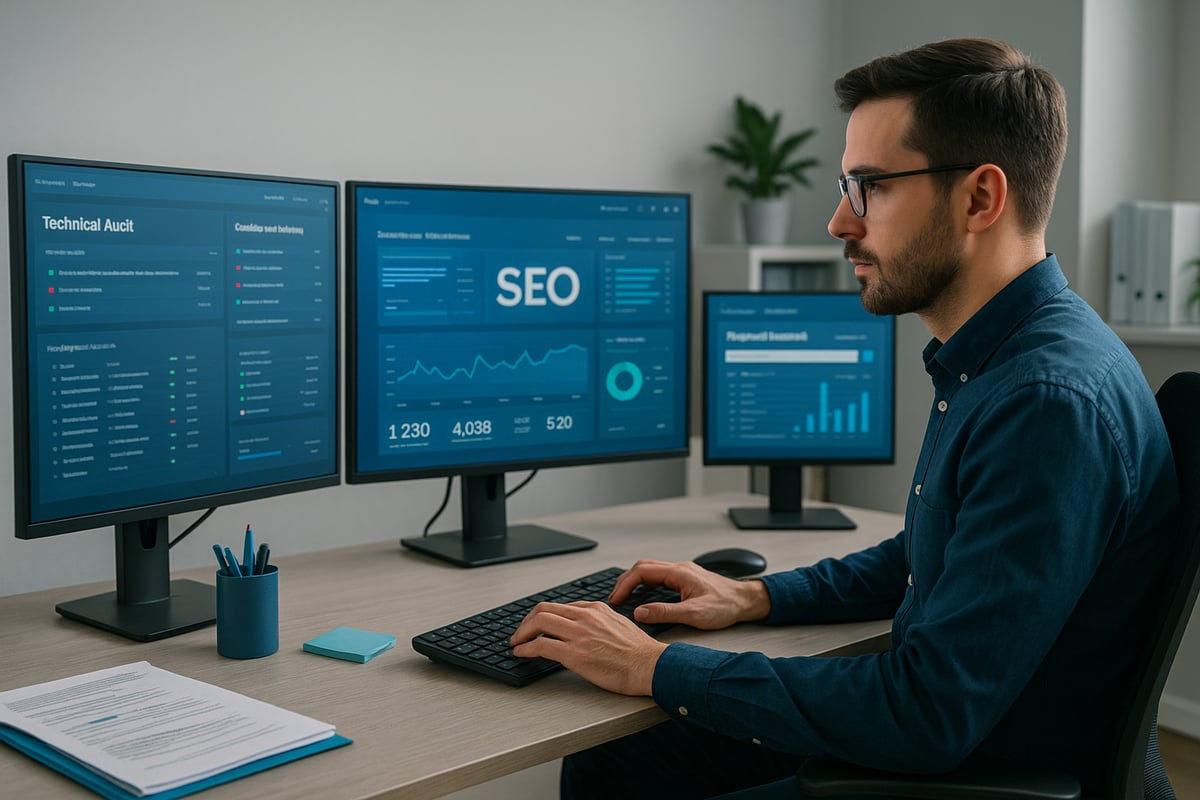
Step 1: Comprehensive Website and Competitor Audit
The process begins with a robust audit. An SEO specialist uses advanced tools like SEMrush and Screaming Frog to assess site structure, crawlability, and identify technical barriers to ranking. This includes reviewing site speed, mobile responsiveness, and Core Web Vitals.
A typical audit also benchmarks against competitors, uncovering keyword gaps, backlink profiles, and content strengths. For example, UK consultancies often deliver in-depth technical and content audits as the foundation of their client engagements.
Site speed is a critical factor for both rankings and user experience. For a practical guide to optimising this aspect, see Technical SEO and site speed.
The SEO specialist documents all findings, creating a baseline for measurable improvement.
Step 2: Keyword and Search Intent Research
Once technical foundations are clear, the SEO specialist focuses on keyword research. Modern strategies go beyond search volume, analysing user intent and mapping keywords to different stages of the buyer’s journey.
AI-powered tools help identify long-tail, local, and voice search opportunities. Agencies now prioritise intent-driven keyword clusters for higher conversion rates. By analysing competitor keywords and SERP features, the SEO specialist ensures content aligns with what users truly seek.
Mapping keywords to content opportunities is an essential step for targeted growth.
Step 3: Content Strategy and On-Page Optimisation
Next, the SEO specialist builds a content strategy informed by audit and research data. This involves optimising existing pages for relevance, structure, and user engagement, as well as creating new content to fill identified gaps.
On-page optimisation covers metadata, heading hierarchies, and internal linking. A focus on E-E-A-T (Experience, Expertise, Authoritativeness, Trustworthiness) is paramount for establishing credibility in 2026.
Content audits and strategic content creation are now core services for many consultancies, helping clients outperform competitors.
Step 4: Technical SEO Implementation
With strategy in place, the SEO specialist implements technical improvements. Tasks include fixing crawl errors, resolving broken links, and enhancing mobile usability. Structured data and schema markup are added to help search engines better understand site content.
Site architecture is refined for logical navigation and indexability. During major updates or migrations, the SEO specialist closely monitors for potential SEO impact.
Technical SEO health checks and migration support are now standard offerings, ensuring ongoing site performance.
Step 5: Off-Page SEO and Digital PR
Building authority and visibility requires a strong off-page approach. The SEO specialist develops link-building strategies, leveraging digital PR campaigns and competitor backlink analysis for high-quality, relevant links.
Local SEO is another priority, including Google My Business optimisation and citation building. Digital PR campaigns help secure authoritative backlinks and boost local presence.
Effective off-page work not only increases rankings but also drives targeted traffic to the site.
Step 6: Conversion Rate and UX Optimisation
Driving traffic is only half the battle. The SEO specialist analyses user journeys with heatmaps and analytics, identifying bottlenecks and opportunities for improvement.
Conversion Rate Optimisation (CRO) techniques such as A/B testing, improved CTAs, and streamlined checkout processes are employed. Agencies often see significant conversion lifts for e-commerce clients when combining SEO and UX recommendations.
Providing actionable UX insights is now a routine part of the SEO specialist’s remit.
Step 7: Performance Tracking, Reporting, and Iteration
Finally, the SEO specialist sets clear KPIs and tracks progress using dashboards and automated reports. Metrics like organic traffic, rankings, conversions, and ROI are monitored regularly.
Transparent, client-facing reporting is essential for building trust and demonstrating value. Strategies are iterated based on data insights, competitor moves, and algorithm updates.
Regular reviews keep campaigns agile, ensuring long-term search success for every client.
AI, Automation, and the Future of SEO in 2026
The digital landscape in 2026 is being redefined by rapid advances in artificial intelligence and automation. For every SEO specialist, these changes open up new opportunities and challenges across the search ecosystem. Understanding how AI is reshaping workflows, algorithms, and user expectations is now essential to stay ahead.

The Impact of AI on SEO Specialist Workflows
Artificial intelligence now sits at the heart of a SEO specialist’s toolkit. From keyword research to content optimisation and technical audits, AI-powered platforms streamline tasks once considered time-consuming. For example, machine learning algorithms analyse massive datasets to uncover keyword trends and suggest content improvements in real time.
Routine tasks such as reporting, site monitoring, and competitor tracking are now largely automated. This frees up the SEO specialist to focus on strategy and creative problem-solving. Agencies leveraging AI are delivering faster, more accurate audits and actionable recommendations, resulting in improved client outcomes. According to AI’s Impact on SEO in 2026, AI-driven search engine features are also influencing click-through rates and user engagement, requiring professionals to adapt their tactics.
Adopting these technologies enables the SEO specialist to handle larger, more complex projects and deliver measurable results at scale.
Evolving Search Algorithms and User Behaviours
In 2026, search engines like Google are increasingly relying on AI to interpret search intent and rank content. This means a SEO specialist must keep pace with rapidly evolving algorithms that reward relevance, authority, and quality. The rise of voice search, visual search, and multimodal queries demands a more sophisticated approach to optimisation, including structured data and schema markup for diverse content formats.
AI-driven search engines are also accelerating the shift towards zero-click behaviour, where users find answers directly on the results page. This trend is transforming how a SEO specialist measures success, placing greater emphasis on brand visibility, featured snippets, and local results. As highlighted in AI’s Disruptive Role in Search, adapting to these changes is vital for sustaining organic growth.
Understanding these shifts allows the SEO specialist to anticipate user needs and build campaigns that stand out in an AI-first search environment.
The Human Element: Creativity, Strategy, and Ethics
Despite the rise of automation, the human touch remains indispensable. A SEO specialist brings creative insight, strategic thinking, and ethical judgement to every campaign. AI can process data and automate workflows, but it cannot replicate the nuanced understanding of brand voice, audience empathy, or content originality.
Brands increasingly value agencies and specialists who blend AI expertise with creative content development and robust ethical standards. This ensures that campaigns resonate with target audiences while adhering to best practices and search engine guidelines.
For the SEO specialist, balancing automation with creativity is the key to delivering lasting results and maintaining a competitive edge.
Preparing for the Next Wave: Continuous Learning and Adaptation
The future belongs to the adaptable SEO specialist. Continuous learning is essential, with ongoing updates to algorithms, emerging tools, and shifts in user behaviour. Leading professionals commit to regular training, experimentation, and industry engagement to stay at the forefront of their field.
Blending technical, analytical, and creative skills will define the next generation of SEO specialists. Staying curious, open to new technologies, and proactive in professional development will ensure long-term success in a landscape shaped by AI and automation.
By embracing innovation while honing human expertise, the SEO specialist is well positioned to thrive in the future of search.
Career Development, Specialisation, and Opportunities for SEO Specialists
Navigating a career as an seo specialist in 2026 is both exciting and challenging. The industry offers a wealth of paths, allowing professionals to tailor their journeys to their interests, strengths, and ambitions. Whether you are just starting out or seeking to advance, understanding the landscape is essential for long-term success.
Building a Successful SEO Career Path
An seo specialist can begin their journey through various entry points, such as junior roles, internships, or digital marketing apprenticeships. Many start by gaining hands-on experience, gradually progressing to roles like SEO manager, head of SEO, or freelance consultant.
Salary expectations in the UK reflect this progression:
| Role | Salary Range (£) | Freelance Rate (£/day) |
|---|---|---|
| Junior SEO Specialist | 22,000 – 32,000 | 100 – 150 |
| SEO Manager | 35,000 – 50,000 | 150 – 200 |
| Head of SEO | 50,000 – 80,000+ | 200 – 250 |
Developing a strong foundation in effective strategies is crucial. For example, mastering Effective SEO strategies for startups can set you apart from the competition and showcase your ability to drive results.
Specialisation Opportunities in SEO
As the field evolves, an seo specialist can choose from a range of specialisations. These include technical SEO, content optimisation, e-commerce SEO, mobile and local SEO, voice search, and even industry-specific roles such as healthcare, legal, or enterprise SEO.
Niche expertise is increasingly sought after by agencies and brands alike. For example, professionals with in-depth knowledge of e-commerce platforms or structured data implementation are in high demand. Selecting a specialisation can open doors to leadership roles or lucrative freelance opportunities.
Freelancing, Agency, or In-House: Pros and Cons
Choosing between freelancing, agency, or in-house roles is a critical decision for any seo specialist. Each path offers unique advantages and challenges.
- Freelancing: Offers flexibility, autonomy, and the ability to select projects. However, it also comes with irregular income and the need for self-promotion.
- Agency roles: Provide teamwork, access to a variety of clients, and ongoing learning. The pace can be fast, and client demands may be high.
- In-house positions: Allow deep focus on a single brand and strong integration with the wider business. These roles offer stability but may limit exposure to diverse industries.
Hybrid and remote roles are now common, with many specialists enjoying the freedom to work from anywhere or on short-term contracts.
Essential Soft Skills and Professional Networking
To thrive as an seo specialist, technical skills are just one part of the equation. Communication, project management, and relationship-building are equally important.
Engaging with industry communities, such as Women in Tech SEO and other networking groups, can expand your professional network and provide valuable support. Attending conferences, webinars, and workshops helps keep your knowledge current and demonstrates commitment to continuous learning.
Diversity and inclusion initiatives are also shaping the profession, encouraging a broader range of voices and perspectives in SEO teams.
Showcasing Results and Building a Personal Brand
In a competitive market, an seo specialist must stand out by showcasing results and ongoing development. Building a portfolio with detailed case studies, certifications, and measurable outcomes is essential.
Leverage platforms like LinkedIn, personal websites, and industry awards to highlight your achievements. Staying informed about the latest search trends and algorithm updates, such as those outlined in Google’s content algorithm update insights, signals expertise and adaptability.
A strong personal brand helps attract high-profile clients and opportunities, positioning you as a trusted authority in the SEO community.
As we’ve explored, mastering SEO in 2026 means blending technical know-how with creativity and a deep understanding of your users. If you’re ready to elevate your online presence or want expert support to help your business thrive in this ever-evolving landscape, you don’t have to do it alone. At Ruff Idea, we combine bespoke web design, advanced SEO strategies, and ongoing partnership to deliver results that last. Whether you’re just starting out or looking to refine your approach, our team is here to help you achieve measurable search success.
Get in touch